
HMS Cormorant
1781 sloop
Vessel Wikidata
* This information from Wikidata is available under the Creative Commons Attribution-ShareAlike License
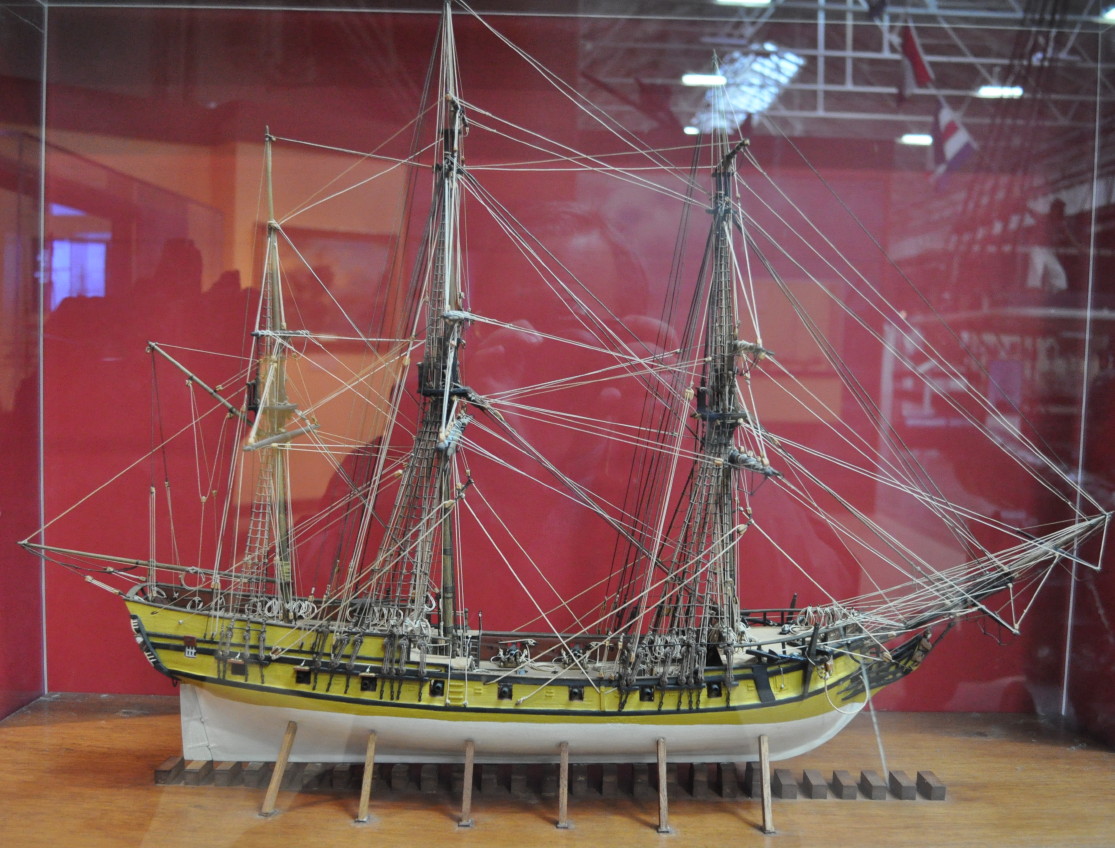
HMS Cormorant was an 18-gun ship sloop of the Royal Navy, originally built as the Massachusetts privateer Rattlesnake, likely launched in 1780 at Plymouth, Massachusetts. She was a lightly built vessel, reputed for her speed and agility, with the appearance of a miniature frigate featuring a detached quarterdeck and forecastle. The vessel was probably drawn by John Peck of Boston. Commissioned on 12 June 1781 under Commander Mark Clark (or Clarke), Rattlesnake set out on her first cruise but was quickly captured by the 44-gun HMS Assurance on 17 June 1781. She was sent into New York City, arriving on 8 July, where the Royal Navy purchased her on 28 July. After her acquisition, she was initially named Rattlesnake but was renamed HMS Cormorant in November 1781 to avoid confusion with an existing ship of the same name. She underwent fitting at Plymouth from November 1781 to February 1782. During her service, Cormorant was active in recapturing vessels, notably recapturing the ship Marine in July 1782. She also captured the French privateer cutter Téméraire in July 1782, which was armed with ten 6-pounder guns and carried a crew of 50. Téméraire was found to be nine days out of Brest, carrying dispatches, which she threw overboard before surrendering. In August 1783, the Royal Navy renamed her Rattlesnake again, but she returned to the name Cormorant in 1783 when Commander John Melcombe recommissioned her. She sailed for the Mediterranean in November 1783. One notable incident in her service occurred in November 1784 when, while escorting the merchantman Countess of Tuscany, she was intercepted by an Algerine squadron and detained in Algiers for five days before being released. Cormorant’s service concluded when she was paid off in July 1786. She was subsequently sold on 10 October 1786, marking the end of her brief but active career in the Royal Navy. Her history reflects the swift and often perilous nature of naval service during the late 18th century, especially for vessels initially serving as privateers.
This description has been generated using GPT-4.1-NANO based on the Vessel's wikidata information and then modified by ShipIndex.org staff.