
SS Columbia
American cargo and passenger steamship (1880-1907)
Vessel Wikidata
* This information from Wikidata is available under the Creative Commons Attribution-ShareAlike License
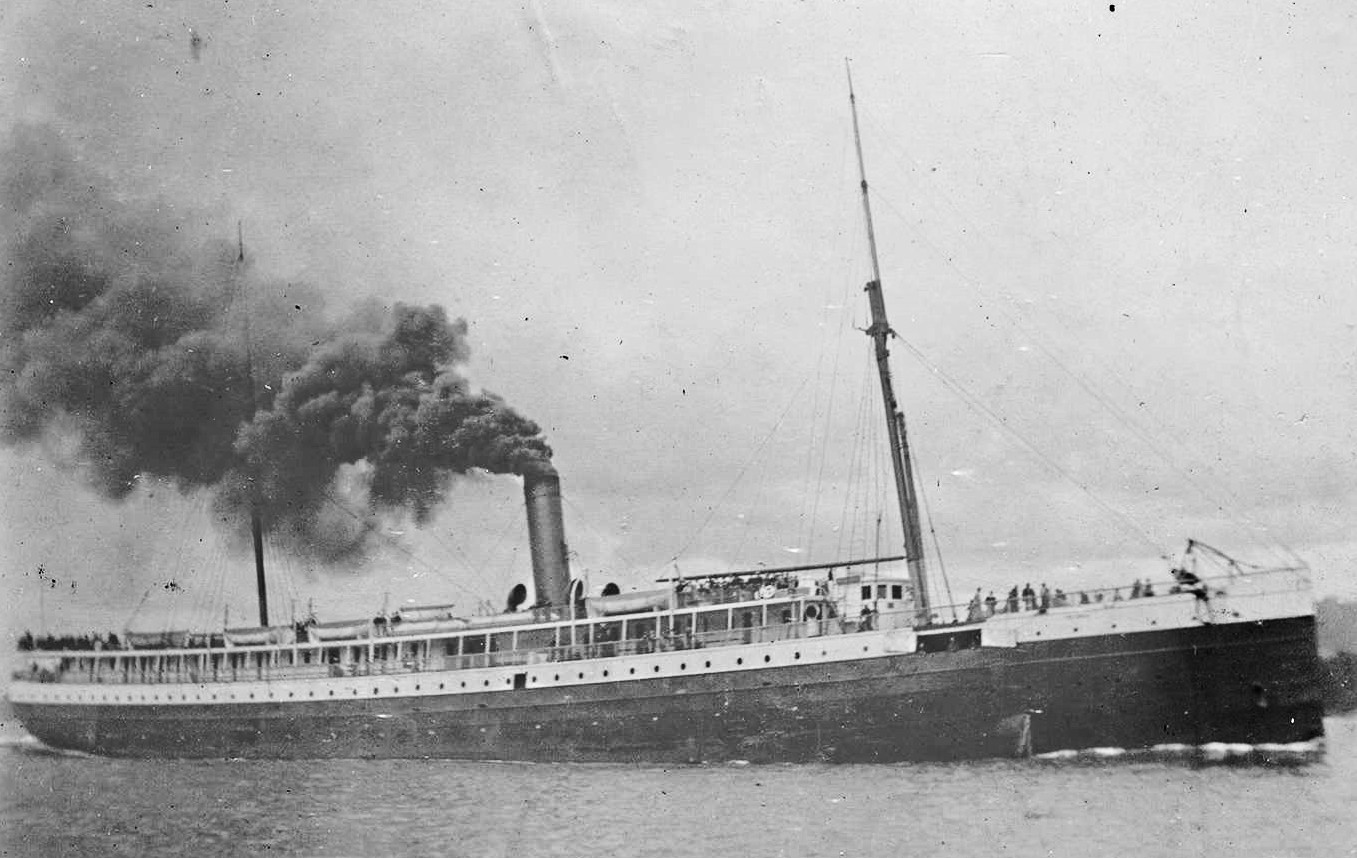
The SS Columbia, constructed in 1880 by John Roach & Sons at the Delaware River Iron Ship Building and Engine Works in Chester, Pennsylvania, was a groundbreaking cargo and passenger steamship notable for its innovative electrical systems and luxurious amenities. Measuring approximately 300 feet in length with a beam of 38 feet 6 inches and a depth of 23 feet, Columbia featured a steel hull divided into four watertight compartments, enhancing its safety features. Her design incorporated three decks: the Spar deck (entirely iron), the Main deck (a mix of wood and iron), and the Hurricane deck, all supported by iron framing. Propelled by two compound condensing steam engines driving a single 16-foot diameter Hirsch four-bladed propeller, Columbia could reach speeds of up to 16 knots. Her power source included six boilers with a working pressure of 80 psi, fueled by coal stored in bunkers capable of holding 300 tons. An auxiliary steam engine powered essential systems such as bilge pumps and electrical lighting, which was revolutionary for her time. Equipped with both steam and sail rigging, she carried over 15,000 yards of canvas on two iron masts. Columbia’s interior epitomized luxury, featuring first-class accommodations for 250 passengers and space for 600 steerage travelers. The passenger cabins and saloons boasted ornate wood paneling, fine furniture, and electric lighting—an unprecedented feature in maritime travel. Her electric lighting system, powered by four Edison dynamos, was the first commercial application of electric bulbs on a ship, providing enhanced safety and comfort. The ship also included refrigeration for fresh provisions, ventilation, heating, and modern communication tools like telephones. Service-wise, Columbia operated primarily between Portland and San Francisco, demonstrating remarkable reliability and record-breaking speeds. Her notable service included carrying locomotives and railroad supplies around Cape Horn and acting as a pioneer in electric lighting aboard ships. Her maritime significance lies in her technological innovations and influence on subsequent vessel design, despite her tragic end—a collision with the lumber schooner San Pedro off Shelter Cove, California, on July 21, 1907. The sinking resulted in the loss of 88 lives and remains a significant event in Pacific maritime history.
This description has been generated using GPT-4.1-NANO based on the Vessel's wikidata information and then modified by ShipIndex.org staff.