
HMS Liverpool
1937 Gloucester-class light cruiser
Vessel Wikidata
* This information from Wikidata is available under the Creative Commons Attribution-ShareAlike License
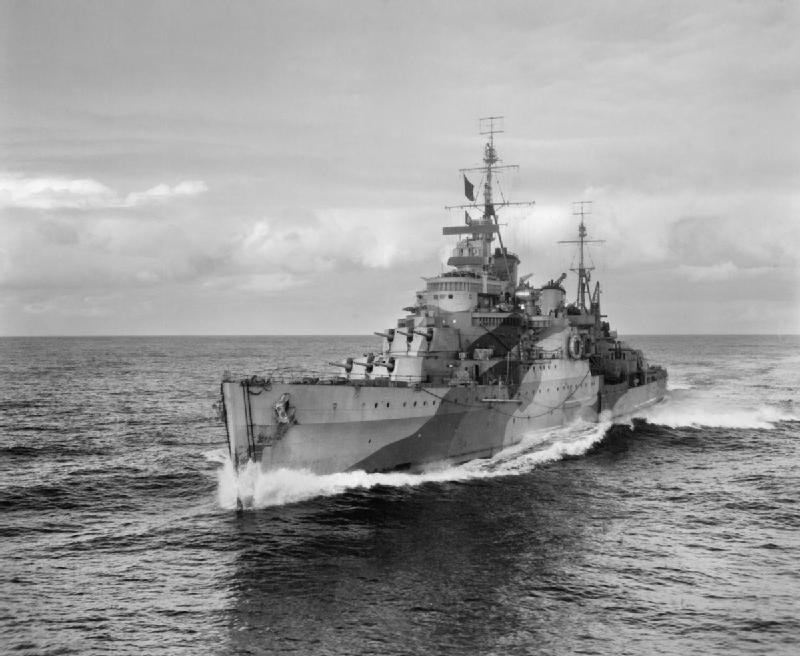
HMS Liverpool was a Town-class light cruiser of the Royal Navy, commissioned in 1938 and decommissioned in 1952. Displacing approximately 9,394 long tons at standard load and reaching a deep load of about 11,930 tons, she measured 591 feet in length, with a beam of 64 feet 10 inches, and a draught of 20 feet 7 inches. Propelled by four Parsons geared steam turbines powered by Admiralty 3-drum boilers, Liverpool could achieve a maximum speed of 32.3 knots, with a range of 6,000 nautical miles at 14 knots. Her armament comprised twelve 6-inch (152 mm) guns in four triple turrets, supplemented by eight 4-inch dual-purpose guns, anti-aircraft weapons including pom-poms and Vickers machine guns, and torpedo tubes for 21-inch torpedoes. Constructed at the Fairfield shipyard in Govan, her keel was laid on 17 February 1936, and she was launched on 24 March 1937. She was the first cruiser launched at this yard since the County class Norfolk. After her commissioning on 2 November 1938, Liverpool was initially assigned to the East Indies Station and later served on the China Station, where she became involved in a notable diplomatic incident by intercepting the Japanese liner Asama Maru off Japan in January 1940, which strained relations with Japan. Throughout WWII, HMS Liverpool saw extensive service, participating in key battles such as the engagement off Calabria and convoy operations supporting Malta. She was damaged multiple times, notably torpedoed by an Italian aircraft in October 1942, which led to her bow being separated from the hull. She was subsequently repaired in the United States, where her bow was reconstructed, and her anti-aircraft defenses were upgraded. She also served in the Arctic convoys, escorting vessels through dangerous waters under attack from U-boats and aircraft. After the war, Liverpool served as flagship of the Mediterranean Fleet, participating in diplomatic visits and supporting British interests in the region. She was decommissioned in 1952 and eventually broken up in 1958. Her service history highlights her role as a versatile and resilient cruiser, integral to Royal Navy operations during WWII and the early Cold War period, with her legacy preserved by her bell displayed at Liverpool Anglican Cathedral.
This description has been generated using GPT-4.1-NANO based on the Vessel's wikidata information and then modified by ShipIndex.org staff.