
SS Mariposa
Matson Lines ocean liner
Vessel Wikidata
* This information from Wikidata is available under the Creative Commons Attribution-ShareAlike License
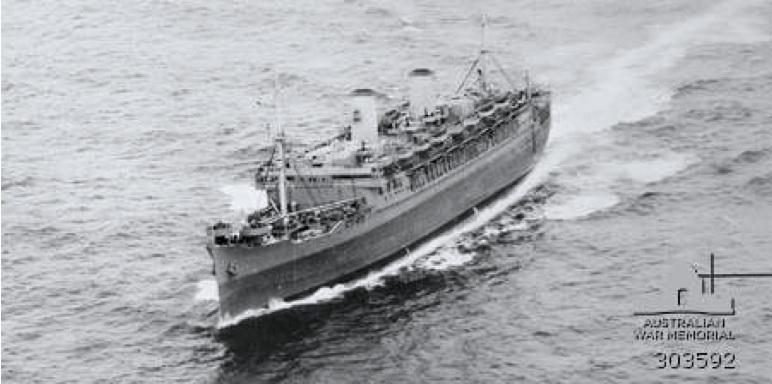
The SS Mariposa, launched in 1931, was a prominent ocean liner and a key vessel within Matson Lines' "White Fleet," alongside ships such as SS Monterey, SS Malolo, and SS Lurline. Built by the Bethlehem Shipbuilding Corporation in Quincy, Massachusetts, she was completed in December 1931. The vessel measured 604.0 feet (184.1 meters) in length, with a beam of 79.3 feet (24.2 meters) and a depth of 30.5 feet (9.3 meters). Her tonnage was 18,017 gross register tons (GRT) and 10,580 net register tons (NRT). Propulsion was provided by twin screws, each powered by three steam turbines connected via single reduction gearing, enabling her to reach speeds of approximately 20.5 knots. Designed for Pacific service, the Mariposa's itinerary included ports along the U.S. West Coast, Hawaii, Samoa, Fiji, New Zealand, and Australia. Her maiden voyage commenced on January 16, 1932, from New York City, passing through Havana and the Panama Canal before reaching Los Angeles. The voyage also included a tour of 10 countries across the south and west Pacific. During World War II, the Mariposa operated under the War Shipping Administration, serving as a fast troop carrier for the U.S. Army, though not officially designated as an Army Transport. She could carry up to 4,165 troops and maintained a speed of 20.5 knots, often sailing without escort to deliver supplies, support forces, and rescue stranded persons in war zones. Post-war, she was laid up for six years before being acquired by Home Lines, which renamed her SS Homeric. After undergoing reconstruction at Trieste to accommodate 1,243 passengers (147 first class and 1,096 tourist class), her gross tonnage slightly increased to 18,563, and her length extended to 641 feet (195.5 meters). She operated primarily between North Atlantic ports, including a route between New York and Nassau, Bahamas. Notable incidents include a collision in 1956 with the Greek Line's Columbia in Quebec. Her service continued into the early 1970s until a major fire in 1973 led to her being scrapped in Taiwan in 1974. Her legacy includes her role as a fast, versatile vessel that served both civilian and military purposes during a significant period of maritime history.
This description has been generated using GPT-4.1-NANO based on the Vessel's wikidata information and then modified by ShipIndex.org staff.