
HMS Salvia
1940 Flower-class corvette
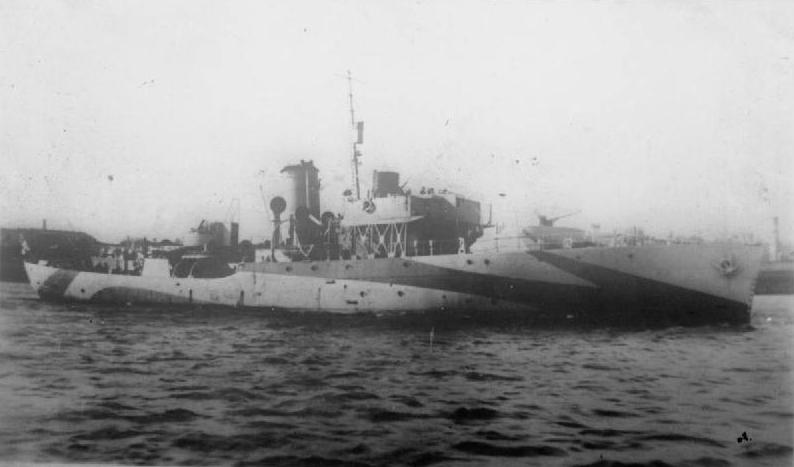
Vessel Wikidata
* This information from Wikidata is available under the Creative Commons Attribution-ShareAlike License
HMS Salvia (K97) was a Flower-class corvette of the Royal Navy, constructed during the early stages of World War II. She was ordered on July 25, 1939, as part of the second batch of Flower-class corvettes, which totaled 30 ships. Built by William Simons and Company in Renfrew, Scotland, her keel was laid on September 26, 1939. She was launched on August 6, 1940, and commissioned into service on September 20, 1940. As an unmodified Flower-class vessel, Salvia featured a raised forecastle, a well deck, a bridge, and a continuous deck running aft, designed primarily for convoy escort and minesweeping duties. Salvia's early service saw her participating in convoy escort operations across the Atlantic and Mediterranean. Notably, she was involved in Operation Collar in November 1940, escorting a convoy from Liverpool. She became part of Force F, the first corvettes to join the British Mediterranean Fleet, and participated in the Battle of Cape Spartivento in late 1940, defending merchant ships against Italian attack. Throughout early 1941, she was active in convoy escort and minesweeping operations in the Mediterranean, including supporting the evacuation of Commonwealth forces during the Battle of Greece and participating in the evacuation from Kapsali Bay in April 1941. On December 23, 1941, while escorting convoy TA 5 from Tobruk to Alexandria, Salvia rescued approximately 100 survivors from the prison ship SS Shuntien, which had been torpedoed and sunk by German U-559 off the coast of Cyrenaica. Unfortunately, a few hours later, Salvia was herself torpedoed by U-568, which broke her in two. The sinking, caused by a torpedo strike that ignited her bunker oil, resulted in the loss of all hands aboard, including her commanding officer, Lt Cdr John Isdale Miller, DSO, RD. His bravery was recognized posthumously with a bar to his Distinguished Service Cross. Salvia's service history highlights her role in the crucial convoy escort and minesweeping operations in the Mediterranean during the early years of the war, and her sinking exemplifies the peril faced by Allied vessels in those contested waters.
This description has been generated using GPT-4.1-NANO based on the Vessel's wikidata information and then modified by ShipIndex.org staff.