
SS Georgic
British steamship of the White Star Line
Vessel Wikidata
* This information from Wikidata is available under the Creative Commons Attribution-ShareAlike License
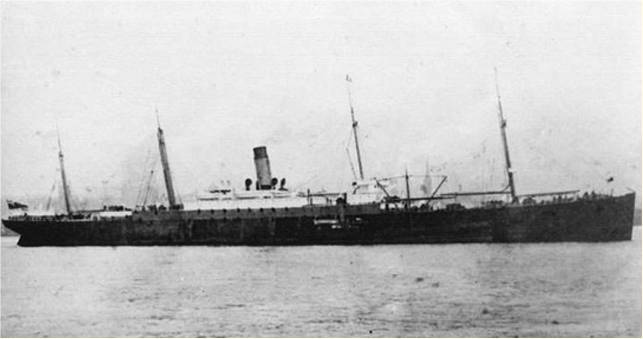
The SS Georgic was a significant steamship constructed by Harland & Wolff for the White Star Line, primarily intended to replace the lost SS Naronic. Launched in 1895, she was initially named the Fordic but was renamed Georgic just weeks before her debut. At the time of her entry into service, she was the largest cargo ship in the world, boasting a deadweight tonnage of approximately 12,000 tons. Designed chiefly to transport livestock, her considerable size allowed her to operate mainly across the North Atlantic, especially between the United Kingdom and New York. Her physical dimensions and capacity made her a prominent vessel of her era, though her large size limited her to specific routes, notably restricting her to North Atlantic service. In October 1909, Georgic was transferred to the Australia service alongside vessels like the Bovic and Cevic, calling at ports such as Adelaide and Sydney. Throughout her career, Georgic experienced numerous accidents, reflecting her somewhat accident-prone nature. She collided twice with the dock entrance at Liverpool—in 1896 and 1901—and was involved in several other collisions, including a 1902 crash with the barque Oakhurst, which was badly damaged, and a 1903 collision with the SS Saxon King, which rammed her off Flemish Cap. In 1904, she collided with SS Kalabia in St George’s Channel, and in 1908, she rammed the US schooner SS Finance in fog off Sandy Hook, resulting in the sinking of Finance and the loss of four lives. During World War I, Georgic was repurposed for wartime logistics, transporting horses, mules, oil, and wheat for the Allies. Her service ended tragically when, on 10 December 1916, she was intercepted by the German merchant raider SMS Möwe while en route from Philadelphia. The Möwe crew took Georgic’s crew of 142 aboard, then placed explosive charges and scuttled her, making her the largest ship sunk by the Möwe. Her career reflects her importance as a large, versatile cargo vessel and her involvement in significant maritime events of the early 20th century.
This description has been generated using GPT-4.1-NANO based on the Vessel's wikidata information and then modified by ShipIndex.org staff.