
SS Storstad
sunken collier
Vessel Wikidata
* This information from Wikidata is available under the Creative Commons Attribution-ShareAlike License
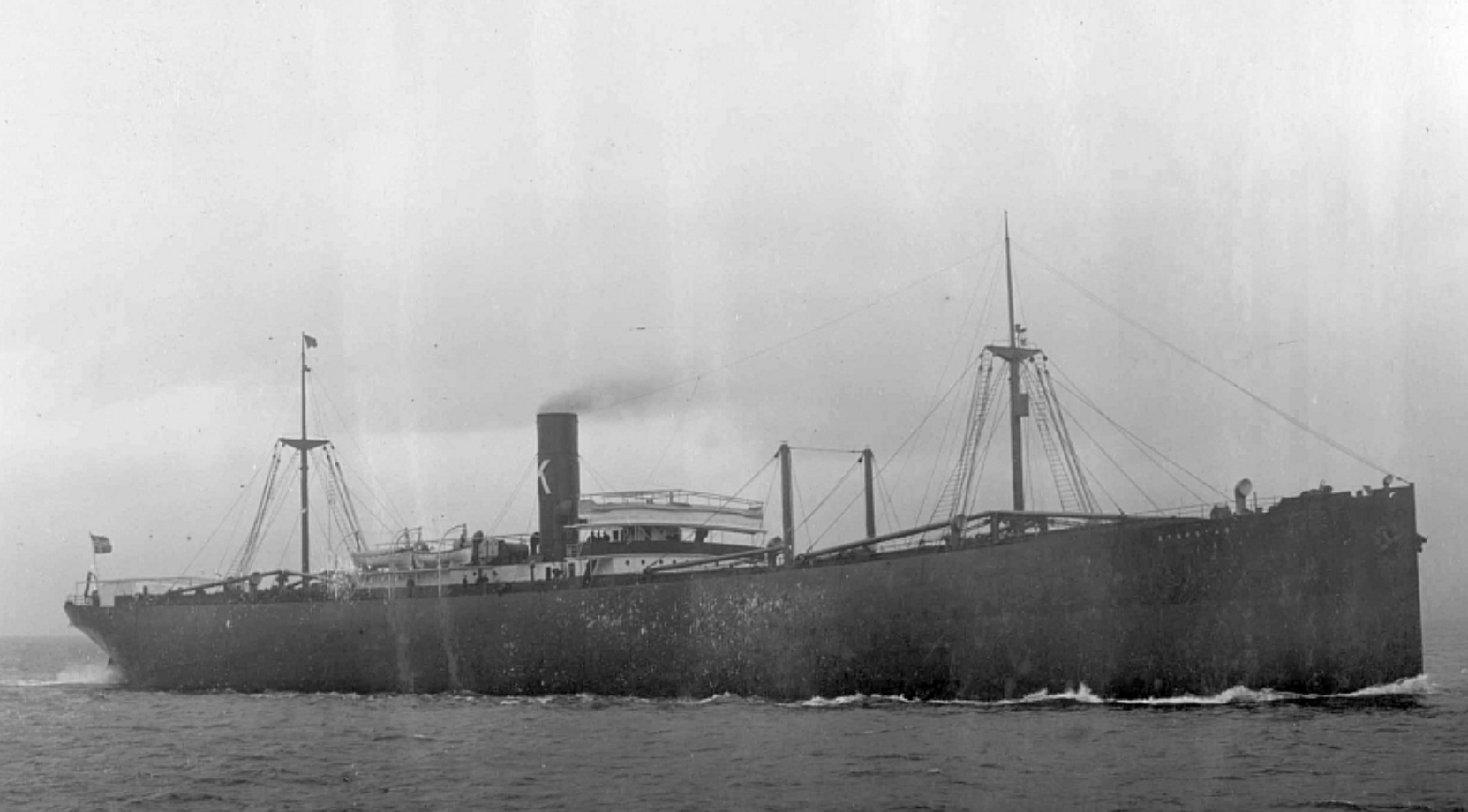
The SS Storstad was a steam cargo vessel constructed in 1910 by Armstrong, Whitworth & Co Ltd at their Low Walker shipyard in Newcastle. Launched on October 4, 1910, with yard number 824, she was the largest vessel built using the Isherwood longitudinal framing principle at the time. The ship measured approximately 440 feet (134.1 meters) in length between perpendiculars and had a beam of 58.1 feet (17.7 meters), with a mean draft of 24 feet 6 inches (7.47 meters). Her steel hull housed a single triple-expansion steam engine generating 447 nominal horsepower, driving a single screw propeller, which enabled her to reach speeds of up to 13 knots (15 mph). Designed primarily for ore and coal transportation, Storstad featured large hatches and ten powerful winches for efficient cargo handling. Her gross register tonnage was 6,028 GRT, with a net register tonnage of 3,561 NRT, and she had a deadweight tonnage of approximately 10,650 tons. Upon her completion, she embarked on her maiden voyage from Newcastle to Narvik in February 1911, subsequently engaging in various trades including iron ore, coal, phosphate rock, cotton, and general cargo across North America, Europe, and South America. A notable event in her service history occurred on May 29, 1914, when she was involved in the collision that sank the ocean liner RMS Empress of Ireland. The collision happened in fog near Rimouski on the Saint Lawrence River, where Storstad’s bow tore a significant gash into the liner's starboard side. Despite efforts to stem the flooding, the Empress of Ireland capsized and sank within minutes, resulting in over 1,000 deaths. Storstad assisted in rescue operations, pulling 485 survivors from the icy waters. Her damaged bow was a testament to the collision, and she was detained in Montreal afterward. The incident led to a lawsuit, and due to her inability to pay damages, she was awarded to the Canadian Pacific Railway and later sold to an insurance company. During World War I, the vessel’s maritime career ended when she was torpedoed and sunk by German U-boat U-62 on March 8, 1917, in the Atlantic Ocean near the Fastnet Rock, with the loss of three crew members. Throughout her operational life, SS Storstad was a significant vessel in early 20th-century maritime trade and is remembered notably for her tragic role in the sinking of RMS Empress of Ireland.
This description has been generated using GPT-4.1-NANO based on the Vessel's wikidata information and then modified by ShipIndex.org staff.