
HMS Lutine
1779 Magicienne-class fifth-rate frigate
Vessel Wikidata
* This information from Wikidata is available under the Creative Commons Attribution-ShareAlike License
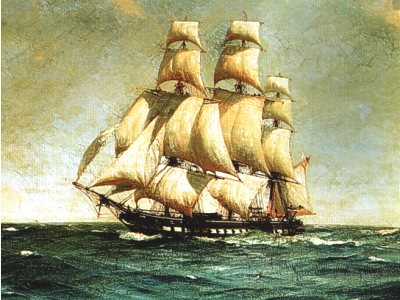
HMS Lutine was originally a French Magicienne-class frigate launched in 1779 at Toulon, armed with 32 guns. Constructed as a frigate of the French Navy, she served in various Mediterranean missions, escorting convoys to ports such as Smyrna, Malta, and Athens during the early 1780s under commanders including Cambray, Garnier de Saint-Antonin, Flotte, and Gineste. Her design was typical of fifth-rate frigates, optimized for speed and agility, with her armament later increased to 38 guns when rebuilt by the British in 1795 following her transfer to the Royal Navy. In 1793, Lutine was handed over to the British during the Siege of Toulon, where she was converted into a bomb vessel capable of firing mortars at enemy positions, notably under the command of Captain Lancelot Skynner. After her commissioning as HMS Lutine, she served primarily in the North Sea, including participation in the blockade of Amsterdam. Her role was to escort transports and guide ships through treacherous shoals around North Holland during the French Revolutionary Wars. The vessel’s most notable event occurred on 9 October 1799, when she sank during a storm off the island of Vlieland in the West Frisian Islands. While carrying a substantial cargo of gold and silver—estimated at around £1.2 million at the time—she was driven onto a shifting sandbank by a heavy gale and tidal currents. The sinking resulted in the loss of over 200 lives, with only one survivor. The wreck site, located in a notoriously difficult area due to shifting sands and strong currents, has been the focus of numerous salvage efforts over the years. The loss of her cargo had significant economic and historical implications, particularly for Lloyd's of London, which preserved her famous bell—the Lutine Bell—used for ceremonial purposes ever since. Lutine's wreck remains a symbol of maritime disaster and salvage history, and her bell continues to be rung for ceremonial and memorial purposes, especially in connection with significant national events and funerals. Her construction, service, and tragic sinking exemplify the perilous nature of naval and merchant shipping in the age of sail, as well as the enduring fascination with maritime wrecks and treasure recovery.
This description has been generated using GPT-4.1-NANO based on the Vessel's wikidata information and then modified by ShipIndex.org staff.