
HMS Opossum
1895 Sunfish-class destroyer
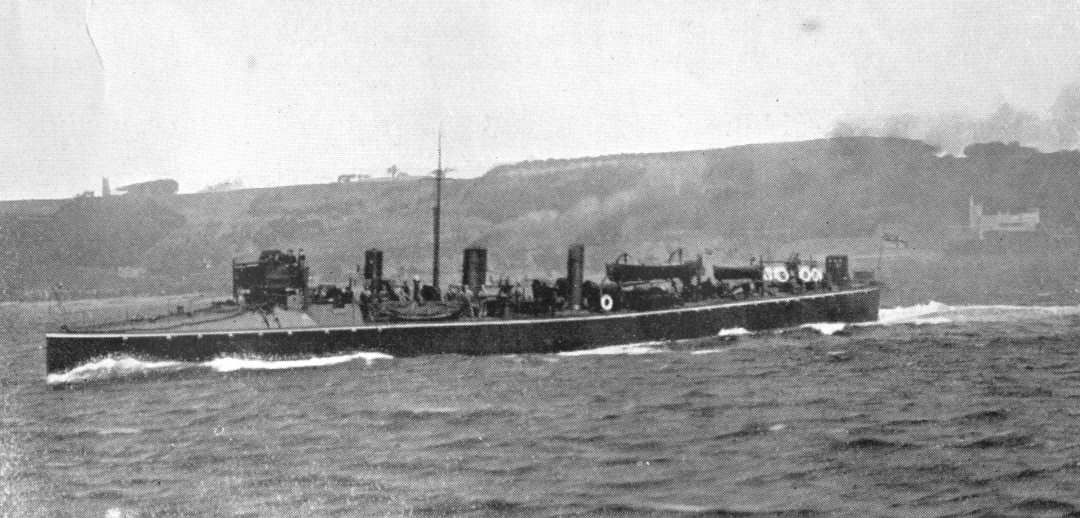
Vessel Wikidata
* This information from Wikidata is available under the Creative Commons Attribution-ShareAlike License
HMS Opossum was a British Royal Navy "twenty-seven knotter" torpedo boat destroyer, built by Hawthorn Leslie on Tyneside, and launched in 1895. The vessel measured approximately 204 feet in overall length, with a beam of 19 feet and a draught of 8 feet 7 inches. Displacing around 310 long tons light and 340 long tons at full load, Opossum was powered by eight Yarrow boilers feeding two triple-expansion steam engines, rated at 4,000 indicated horsepower, which enabled her to reach a top speed of over 28 knots during sea trials. Her armament comprised a single quick-firing 12-pounder 12 cwt gun, three 6-pounder guns, and two 18-inch torpedo tubes, with the capacity to remove one torpedo tube to add more guns. She carried a crew of 53 officers and men. Laid down as Yard Number 326 at Hawthorn Leslie's Hebburn shipyard on 17 September 1895, she was launched on 9 August 1895 and completed in February 1896. Notably, during her sea trials, she exceeded her contracted speed, reaching 28.24 knots. HMS Opossum participated in significant events, including the naval review at Spithead in 1897 for Queen Victoria’s Golden Jubilee and the 1901 Royal Navy Naval Manoeuvres. By 1905, she was considered outdated by naval standards but remained in service, undergoing a boiler refit at Chatham Dockyard from late 1907 to mid-1908. She was classified as an "A class" destroyer after 1913. Throughout her service, Opossum was primarily assigned to local duties based at Devonport. During World War I, she engaged in patrols and salvage operations, notably assisting in the sinking of the German submarine UC-49 on 8 August 1918. The destroyer’s anti-submarine efforts involved hydrophone detection, depth charges, and tactical maneuvers, culminating in the confirmed destruction of UC-49. Following the war, she remained with the Devonport Local Defence Flotilla until she was laid up in reserve in 1919 and was eventually sold for scrap in 1920. Her service exemplifies the transition from early torpedo boat destroyers to more modern naval vessels during the late 19th and early 20th centuries.
This description has been generated using GPT-4.1-NANO based on the Vessel's wikidata information and then modified by ShipIndex.org staff.