
HMS Safari
1941 S-class submarine
Vessel Wikidata
* This information from Wikidata is available under the Creative Commons Attribution-ShareAlike License
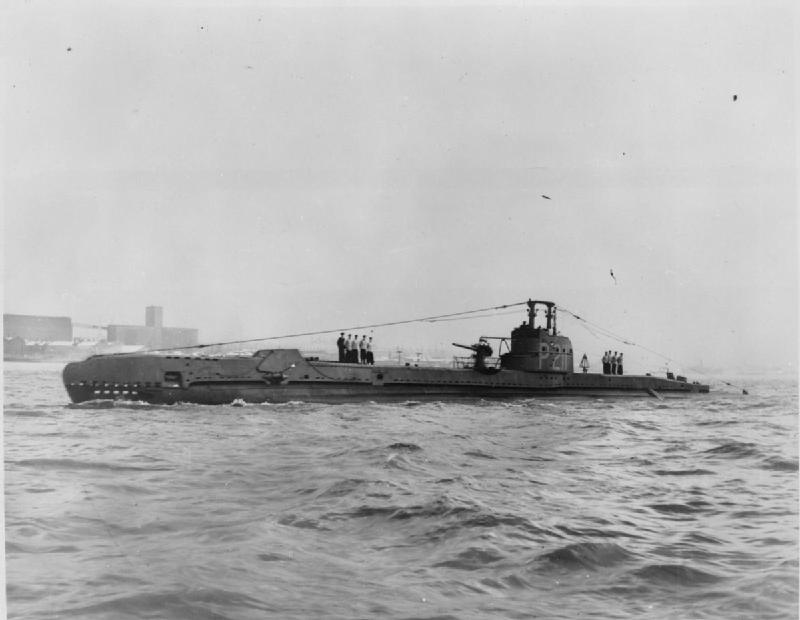
HMS Safari was a third batch S-class submarine constructed for the Royal Navy during World War II, embodying the typical specifications of its class. She measured 217 feet (66.1 meters) in length, with a beam of 23 feet 9 inches (7.2 meters) and a draught of 14 feet 8 inches (4.5 meters). Displacing 842 long tons (856 tonnes) on the surface and 990 long tons (1,010 tonnes) submerged, she was designed for patrols in restricted waters such as the North Sea and Mediterranean. Her crew numbered 48 officers and ratings, and she was capable of diving to depths of 300 feet (91.4 meters). Power was provided by two 950-brake-horsepower (708 kW) diesel engines for surface propulsion, each driving a propeller shaft, and electric motors of 650 horsepower (485 kW) for submerged operation. She could reach speeds of 15 knots (28 km/h; 17 mph) on the surface and 10 knots (19 km/h; 12 mph) underwater, with an operational range of 6,000 nautical miles (11,100 km) at 10 knots on the surface. Armament included six 21-inch (533 mm) torpedo tubes located in the bow, with six reload torpedoes, allowing her to carry a total of twelve torpedoes, or alternatively, twelve mines. She was also equipped with a three-inch (76 mm) deck gun and was fitted with ASDIC and early-warning radar systems. Laid down on 5 June 1940 by Cammell Laird in Birkenhead, she was launched on 18 November 1941 and commissioned on 14 March 1942 at Holy Loch. Her service was prolific; she operated primarily in the Mediterranean, sinking 25 ships, most of which were Italian, including merchant vessels, sailing ships, and smaller craft. Notable missions included escorting the Allied convoy during Operation Pedestal and conducting reconnaissance and special operations off Sicily, Sardinia, and North Africa. Safari’s operational history was marked by aggressive patrols, engagements with enemy vessels, and her role in supporting Allied invasions. She sustained minor damage from German aircraft and Italian destroyers but remained active until the end of the war. After the war, she was placed in reserve and was sold for scrap on 7 January 1946; however, she sank off Portland en route to the shipbreaking yard. Her service exemplifies the vital role of the S-class submarines in the Allied war effort across the Mediterranean and Atlantic theaters.
This description has been generated using GPT-4.1-NANO based on the Vessel's wikidata information and then modified by ShipIndex.org staff.