
HMCS Wentworth
1943 River-class frigate
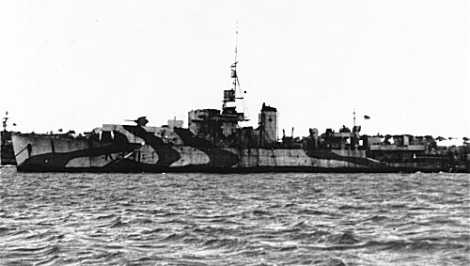
Vessel Wikidata
* This information from Wikidata is available under the Creative Commons Attribution-ShareAlike License
HMCS Wentworth was a River-class frigate that served with the Royal Canadian Navy during World War II, primarily as a convoy escort in the Battle of the Atlantic. Laid down on 11 November 1942 by Yarrows Ltd at Esquimalt, British Columbia, she was launched on 6 March 1943 and commissioned on 7 December 1943 at Victoria, British Columbia. The River-class design, conceived by William Reed of Smith's Dock Company, was an evolution of earlier corvette classes, offering significant improvements. These ships featured enhanced accommodations, increased range—up to 7,200 nautical miles at 12 knots—and better armament tailored for anti-submarine warfare. Her armament included a twin 4-inch gun mount forward, a 12-pounder aft, Hedgehog anti-submarine mortars, and depth charge rails with side-mounted throwers. She was also equipped with advanced sonar technology such as the 147B Sword horizontal fan echo sonar transmitter, along with radar and direction-finding equipment, allowing her to track submarines more effectively even during attack. HMCS Wentworth's service included transiting from Victoria to Halifax and Bermuda for working-up exercises. She encountered mechanical defects during training, necessitating repairs in Halifax, but soon completed her trials in St. Margaret's Bay. In June 1944, she was assigned to the Mid-Ocean Escort Force, escort group C-4, serving as a trans-Atlantic convoy escort. She became the Senior Officer’s Ship within the group in August 1944 and continued this role until February 1945. Following a major refit at Shelburne, Nova Scotia from March to August 1945—by which time the European war had concluded—Wentworth was deemed surplus to requirements. She was paid off on 10 October 1945, laid up in Bedford Basin, and eventually sold for scrap in 1947. Her wartime service exemplifies the critical role played by Canadian-built River-class frigates in safeguarding Atlantic convoys and combating U-boat threats during WWII, marking her as a notable vessel in Canadian naval history.
This description has been generated using GPT-4.1-NANO based on the Vessel's wikidata information and then modified by ShipIndex.org staff.