
SS Oronsay
British ocean liner and World War II troopship
Vessel Wikidata
* This information from Wikidata is available under the Creative Commons Attribution-ShareAlike License
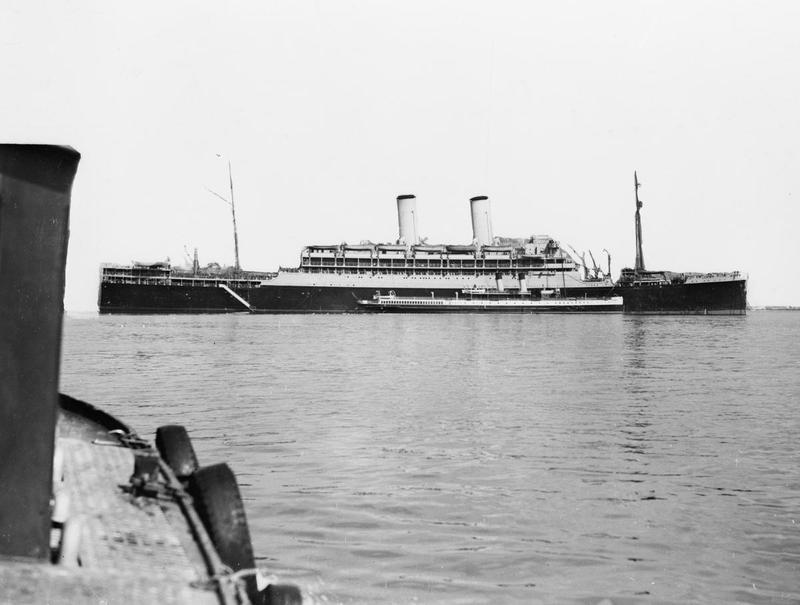
The SS Oronsay was a British ocean liner constructed for the Orient Steam Navigation Company, launched in 1924 from Clydebank. She was a notable passenger vessel, measuring approximately 16,850 gross tons, with a length of about 580 feet. The ship was primarily used on the route between London and Australian ports, including Melbourne, Sydney, and Brisbane, beginning her maiden voyage on 7 February 1925. Her service extended to New Zealand once in 1938. The vessel's design and size made her a significant player in transoceanic passenger travel during the interwar period. During her peacetime career, the Oronsay transported various notable passengers, including the Australian military contingent for the 1937 coronation of King George VI and Queen Elizabeth. Film footage of her voyage from Colombo to Gibraltar exists, highlighting her role in regular passenger service. With the outbreak of World War II, the Oronsay was repurposed as a troopship. She participated in several critical military operations, including the Norwegian Campaign and Operation Alphabet, the secret evacuation of Narvik in June 1940. She was also involved in evacuations from France, notably at St Nazaire, where she was bombed and damaged during an air raid, resulting in casualties and damage to her bridge and communications facilities. Despite her injuries, she assisted in evacuating survivors from the sinking RMS Lancastria. In 1940, she also evacuated children from Malta and was part of a convoy carrying troops from the Clyde to Egypt. On 8 October 1940, she was bombed by German aircraft off Ireland but managed to return to port. Her most tragic loss occurred on 9 October 1942, when the Oronsay was torpedoed and sunk by the Italian submarine Archimede while sailing unescorted in the Atlantic. She was carrying military personnel, rescue crews, copper, and oranges. The sinking resulted in the loss of six crew members, but 321 survivors were rescued by HMS Brilliant after 12 days at sea. Some survivors, including notable figures such as the Antarctic explorer James McIlroy and future diplomat Archie Lamb, were interned in Dakar. The sinking of the Oronsay marked a significant event in wartime maritime history, exemplifying the perils faced by troopships during the conflict.
This description has been generated using GPT-4.1-NANO based on the Vessel's wikidata information and then modified by ShipIndex.org staff.