
RMS Persia
steamship built in 1856
Vessel Wikidata
* This information from Wikidata is available under the Creative Commons Attribution-ShareAlike License
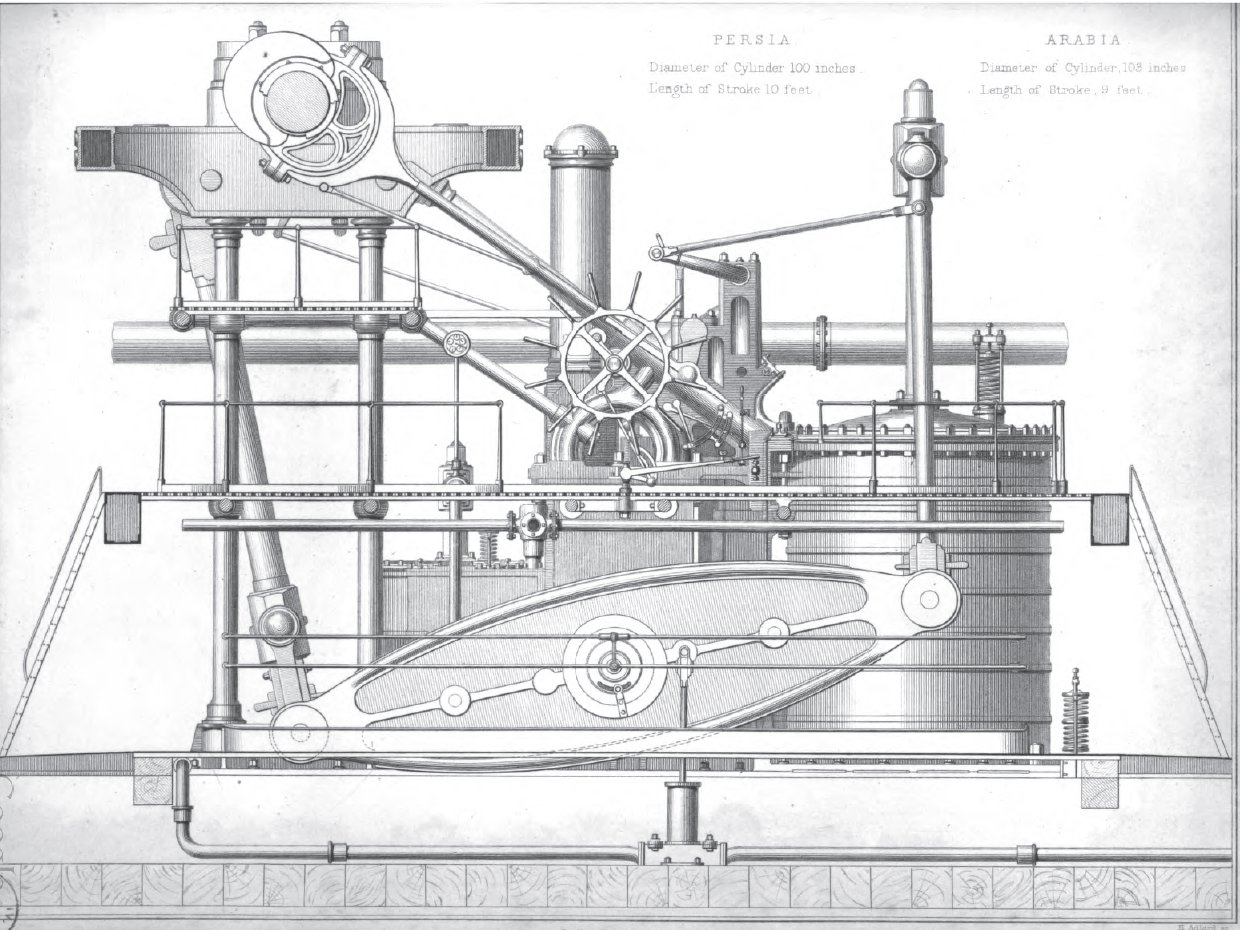
RMS Persia was a pioneering British passenger liner operated by the Cunard Line, notable for her technological advancements and record-breaking achievements in the mid-19th century. Launched in July 1855, Persia was constructed of iron, making her the first Atlantic record breaker built from this material, and at her time of launch, she was the largest ship in the world. Designed by Robert Napier and Sons of Glasgow, Persia measured 16% larger than the wooden Collins liners and 50% larger than Cunard's earlier paddle steamers, reflecting a significant leap forward in ship design. Powered by a two-cylinder side-lever engine producing 3,600 horsepower, Persia could reach a trial speed of 17 knots, though her typical service speed was limited to around 13 knots due to high fuel consumption—145 long tons of coal per day. Her passenger capacity included 250 in first class and 50 in second class. Her hull featured a clipper bow, which proved crucial during her maiden voyage in 1856 when she struck an iceberg but was saved by her robust construction. Persia achieved remarkable success in establishing transatlantic speed records, completing eastbound voyages in just 9 days, 10 hours, and 22 minutes, and westbound in 9 days, 16 hours, and 16 minutes in April 1856. These records stood until 1863. She played a role in the 1861 Trent incident, being the only ship to reach Quebec before ice closed the St. Lawrence River, underscoring her operational importance during that period. Despite her early successes, Persia's paddle wheel propulsion became inefficient compared to emerging screw propulsion technologies. She remained in service until 1868, after which her engines were removed, and she was sold to be converted into a sailing vessel—an effort that ultimately failed. The vessel was scrapped in 1872. Her brief but influential career marked a significant step in the transition from wooden to iron-hulled ships and the development of faster, more efficient transatlantic liners.
This description has been generated using GPT-4.1-NANO based on the Vessel's wikidata information and then modified by ShipIndex.org staff.