
USS Experiment
Vessel Wikidata
* This information from Wikidata is available under the Creative Commons Attribution-ShareAlike License
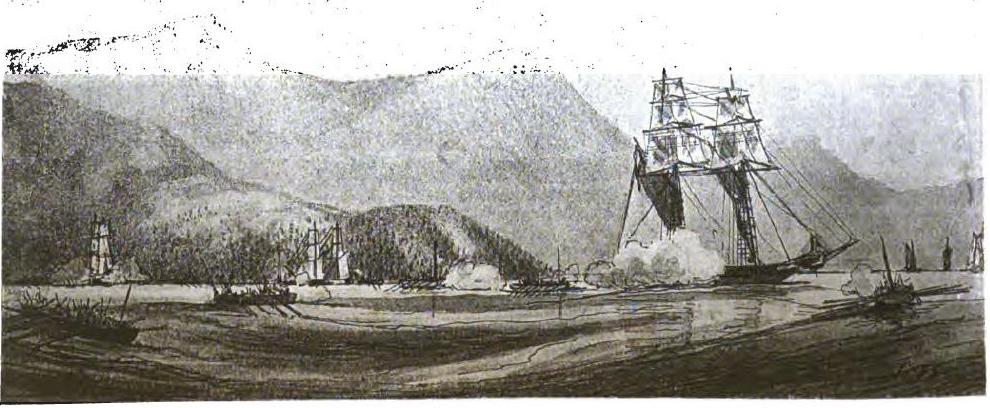
The USS Experiment was a 12-gun schooner of the United States Navy, launched in late November 1799 in Baltimore, Maryland. Designed as a Baltimore Clipper, the vessel was constructed to meet the Navy’s need for small, fast warships capable of patrolling and defending American merchant shipping during the Quasi-War with France. Under the command of Lieutenant William Maley, the Experiment featured a sleek, agile hull suited for swift engagements and rapid maneuvering in the Caribbean. During its service, the Experiment joined Captain Silas Talbot’s squadron off Saint-Domingue, where it cruised for approximately seven months against French privateers. Notable for its resilience, the schooner participated in the action of January 1, 1800, in the Gulf of Gonâve. While becalmed with a convoy of merchant ships, Experiment was attacked by 14 armed barges loyal to Brigadier-General André Rigaud. Despite the disadvantage, Experiment sank two barges and inflicted casualties on their crews, suffering only a single wounded man. Throughout its Caribbean patrols, Experiment captured numerous vessels, including the schooner Anne, the sloop, the schooner Amphitheater (which was later used as an armed tender for USS Constitution), and several privateers and enemy schooners such as L'Legere, Los Amigos, and Diana. It also seized a Danish schooner loaded with Rigaud’s troops and ammunition, disarming the cargo and sending prisoners ashore. The schooner demonstrated its effectiveness through repeated captures, recapturing vessels like the brig Zebra, brig Dove, and sloop Lucy from privateer hands. In September 1800, the Experiment resumed patrols under Lieutenant Charles Stewart, capturing additional French and Spanish vessels and engaging in a notable four-hour battle with the British schooner Louisa Bridges. The vessel’s service culminated in early 1801, including the rescue of shipwrecked sailors and civilians. Following its return to Norfolk and subsequent sale in Baltimore for $7,350 in October 1801, the USS Experiment exemplified the swift, agile warships vital for early American naval operations in the Caribbean.
This description has been generated using GPT-4.1-NANO based on the Vessel's wikidata information and then modified by ShipIndex.org staff.