
HMS Liverpool
1758 Coventry-class sixth-rate frigate
Vessel Wikidata
* This information from Wikidata is available under the Creative Commons Attribution-ShareAlike License
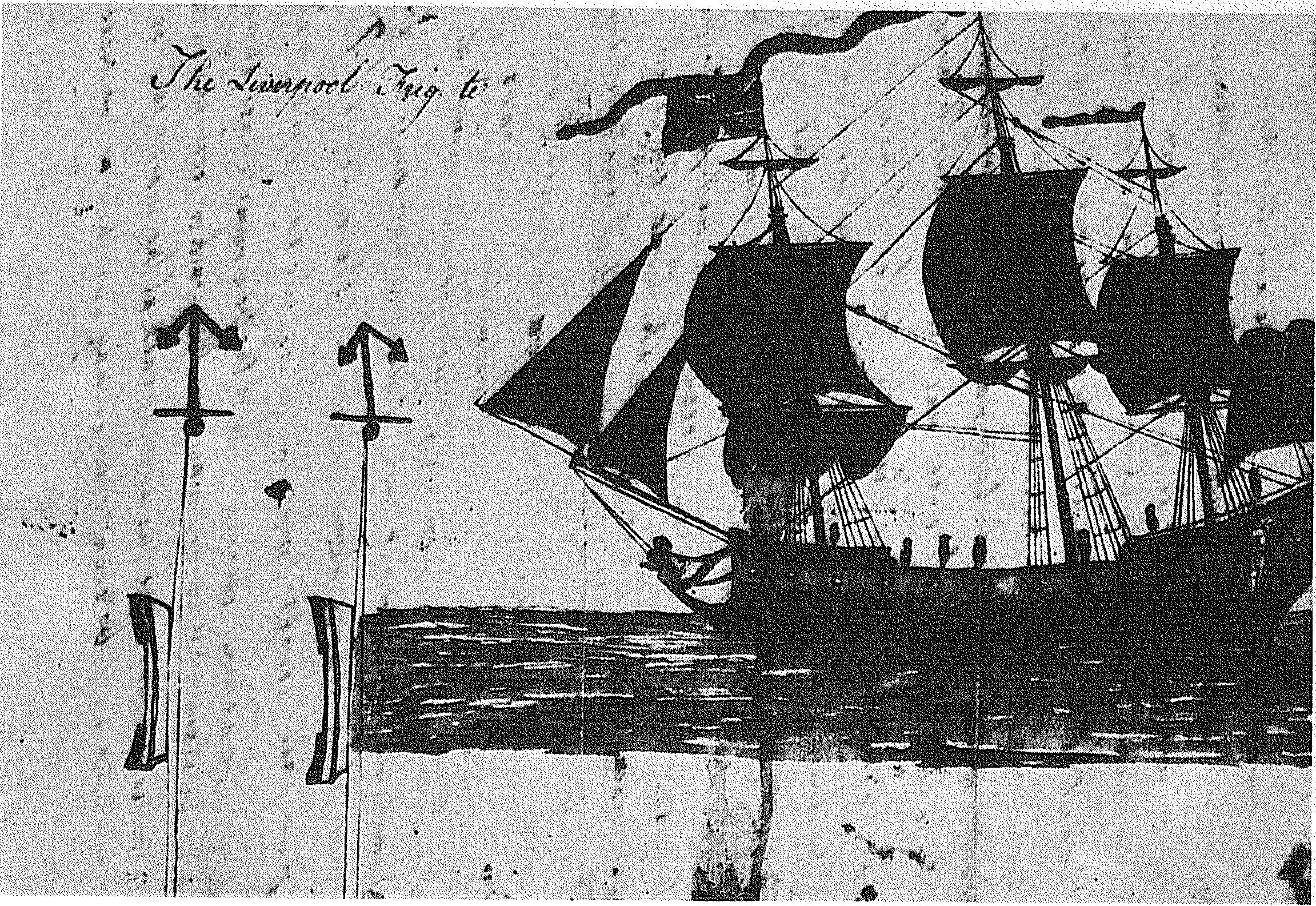
HMS Liverpool was a 28-gun Coventry-class sixth-rate frigate of the Royal Navy, launched on 10 February 1758. Constructed from oak, she was part of a class of 18 vessels modeled loosely on the design of HMS Tartar, notable for her broad-beamed, sturdy hull and relatively heavy armament. Her dimensions included a length of approximately 118 feet 4 inches (36.1 meters), a beam of 33 feet 8 inches (10.26 meters), and a keel length of 97 feet 7 inches (29.7 meters). The vessel's tonnage was measured at around 590 tons burthen. She was designed with broad, heavy masts and a hull that provided excellent stability and ample space for provisions, making her suitable for long deployments at sea, albeit at the cost of reduced maneuverability and slower speeds in light winds. Liverpool's initial armament consisted of 24 nine-pounder cannons on her gun deck, supported by four three-pounders on the quarterdeck and twelve swivel guns along her sides. Her complement was approximately 200 officers, sailors, marines, and support personnel, including a captain, a lieutenant, warrant officers, ratings, and additional crew members. Commissioned under Captain Richard Knight, Liverpool's early service saw her patrolling the English Channel and engaging in actions against French privateers. She achieved notable success, capturing several French vessels such as L'Emerillon, La Nouvelle Hirondelle, Le Glaneur, Le Grand Admiral, and Le Jacques. During her service, she participated in convoy protection, blockade duties, and offensive operations in European waters and North America. Her service record included participation in the bombardment of Norfolk, Virginia, during the American Revolutionary War, and she was part of fleet operations on the Delaware River. Tragically, her career ended when she was wrecked in Jamaica Bay near Long Island on 11 February 1778, marking the loss of this significant vessel after nearly two decades of active service.
This description has been generated using GPT-4.1-NANO based on the Vessel's wikidata information and then modified by ShipIndex.org staff.