
HMS Nottingham
1980 Type 42 guided missile destroyer
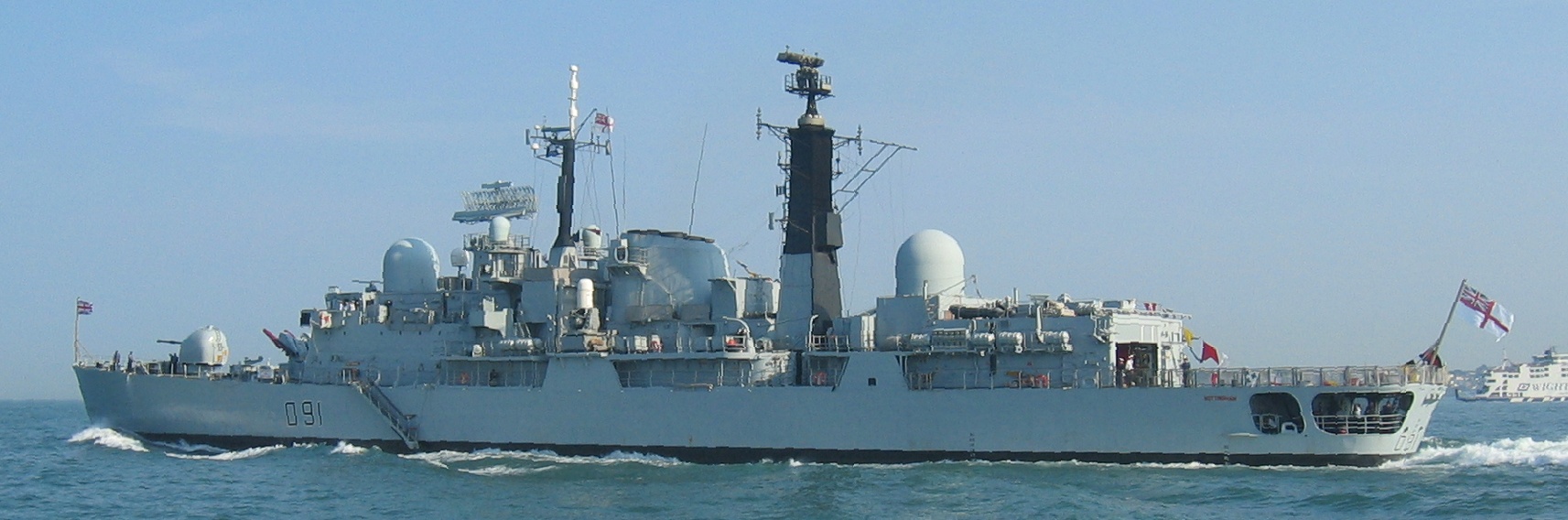
Vessel Wikidata
* This information from Wikidata is available under the Creative Commons Attribution-ShareAlike License
HMS Nottingham (D91) was a batch two Type 42 destroyer of the Royal Navy, launched on 18 February 1980 and commissioned on 8 April 1983. As a warship named after the city of Nottingham, she featured the typical design characteristics of the Type 42 class, built for fleet air defense with a focus on missile capability and surface combatant roles. Her construction included a robust hull designed to withstand maritime threats and extensive electronic and radar systems, notably upgraded during her service life. Throughout her operational history, HMS Nottingham was involved in various missions and notable events. A significant incident occurred on 7 July 2002, when she ran aground on Wolf Rock near Lord Howe Island, approximately 370 miles off Australia’s coast. The grounding resulted from navigational error during poor weather conditions while executing a maneuver to evacuate a crew member with a medical emergency. The damage was extensive, tearing a 160-foot hole from bow to bridge, flooding five compartments, and nearly causing her sinking. The vessel sustained £26 million worth of damage. Salvage efforts involved assistance from the Ministry of Defence's SALMO team, and she was stabilized at sea before being towed stern-first to Newcastle for repairs. Later, Nottingham was transported back to the UK aboard the heavy lifting vessel MV Swan, arriving at Portsmouth in December 2002. Extensive repairs included the removal of her Sea Dart missiles and a comprehensive refit costing approximately £39 million, completed by April 2004. She was recommissioned and returned to duty, notably commemorating the sinking of SS Mendi by laying wreaths at the site where the troopship was lost during World War I. HMS Nottingham was placed in extended readiness in April 2008, and ultimately decommissioned on 11 February 2010. She was sold for scrap in 2011 and towed to Turkey for dismantling. Her service record reflects her role as a key element of the Royal Navy’s fleet during the late 20th and early 21st centuries, marked by resilience and significant repair efforts following her grounding incident.
This description has been generated using GPT-4.1-NANO based on the Vessel's wikidata information and then modified by ShipIndex.org staff.