
Sadko
Soviet icebreaker ship (1913-1941)
Vessel Wikidata
* This information from Wikidata is available under the Creative Commons Attribution-ShareAlike License
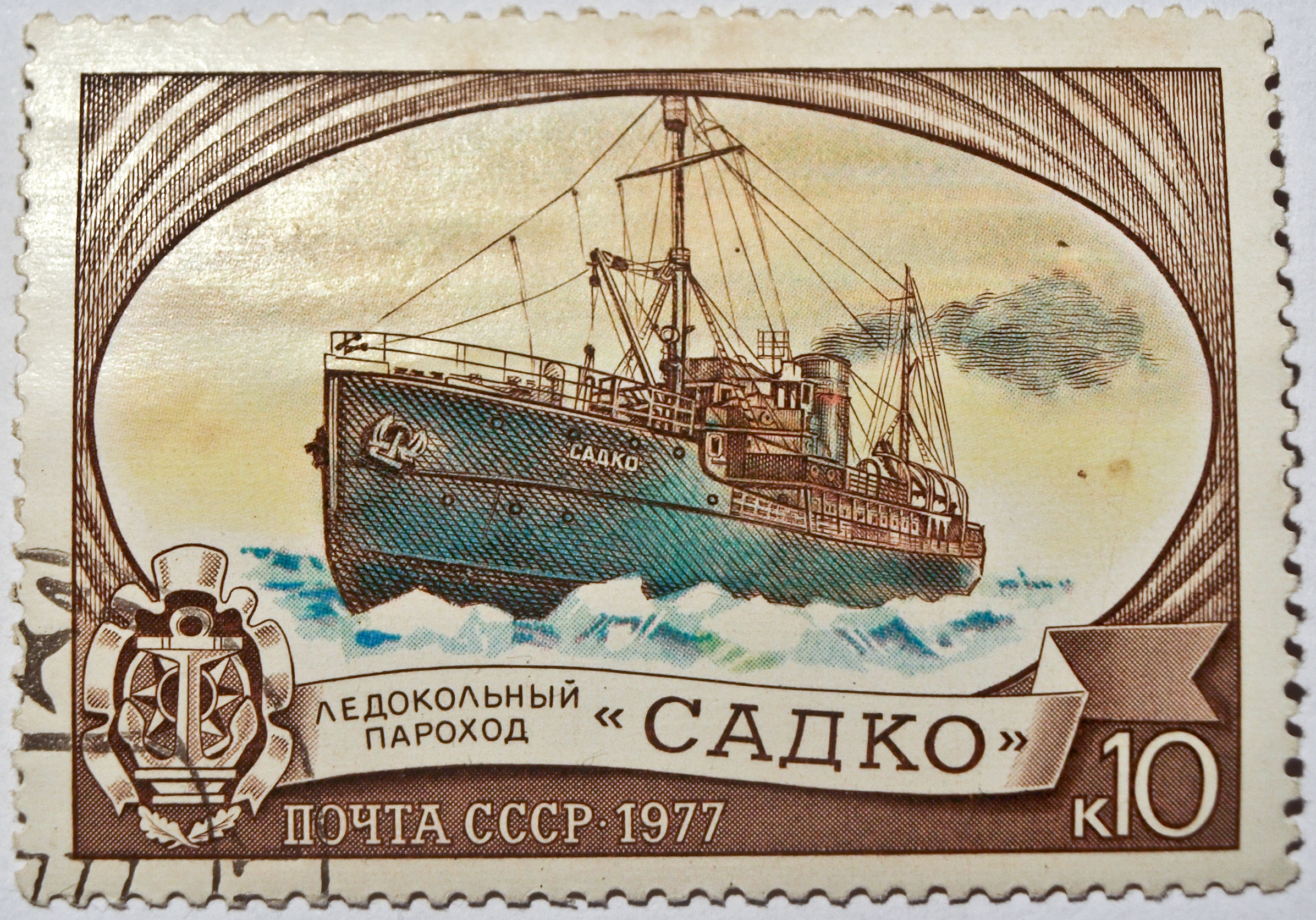
Sadko was a Soviet icebreaker with a notable history of Arctic exploration and scientific expeditions. Originally built in 1913 by Swan, Hunter & Wigham Richardson Ltd. at the Neptune Yard in Low Walker, England, she was launched as SS Lintrose for ferry service in Newfoundland, part of the Reid Newfoundland Company's Alphabet Fleet. The vessel was a passenger and freight steamer designed for icebreaking, measuring approximately 1913-built specifications, although exact dimensions are not specified in the provided content. During her service for Reid Newfoundland, she operated the ferry route between Port aux Basques and North Sydney. In 1915, amidst World War I, Lintrose was sold to the Russian Empire and renamed Sadko, after a Russian bylina hero. She was repurposed as an Arctic icebreaker and cargo ship, supporting Soviet scientific and exploration missions. Sadko sank in the Kandalaksha Gulf in 1916 with a cargo intended for railroad construction. She was salvaged in 1933 by the Soviet EPRON team, refloated, repaired, and returned to service, emerging in 1934 for her first post-restoration expedition. Throughout the 1930s, Sadko participated in significant Arctic expeditions, including attempts to reach Kvitøya in 1935 and to locate Sannikov Land in 1937–38. During the 1937 expedition, she became trapped in the ice near the New Siberian Islands, leading to a rescue operation involving aircraft and other icebreakers. Sadko was ultimately freed in August 1938 but sank again in September 1941 after running aground on an uncharted reef in the Kara Sea. Her crew was rescued by the icebreaker Lenin. Sadko's service contributed to Arctic scientific research and exploration, and she became a symbol of Soviet maritime achievements. Her legacy includes a geographical feature named after her in the Nordenskiöld Archipelago and commemoration on Soviet postage stamps. A scale model of the vessel is displayed in the Museum of the Murmansk Shipping Company.
This description has been generated using GPT-4.1-NANO based on the Vessel's wikidata information and then modified by ShipIndex.org staff.