
HMS Nairana
1943 Nairana-class escort carrier
Vessel Wikidata
* This information from Wikidata is available under the Creative Commons Attribution-ShareAlike License
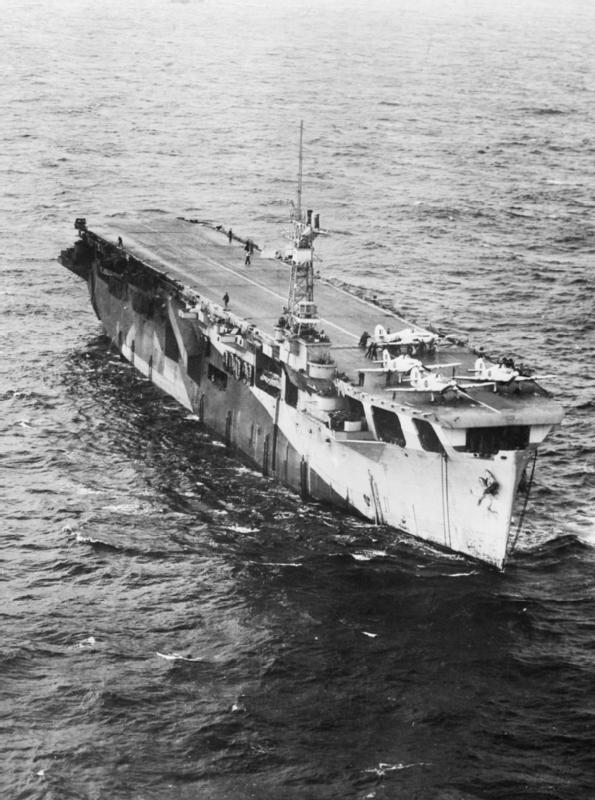
HMS Nairana was the lead vessel of the Royal Navy's Nairana-class escort carriers, built by John Brown & Company in Clydebank, Scotland. Launched on 20 May 1943 and completed by 12 December of the same year, she displaced approximately 14,050 long tons and measured 528 feet 6 inches in length with a beam of 68 feet 6 inches and a draught of 21 feet. Her hull was riveted steel, featuring a steel flight deck and a closed hangar. The ship's propulsion system consisted of diesel engines connected to two shafts, generating 11,000 horsepower, enabling her to reach a top speed of 17 knots. Designed primarily for convoy protection and anti-submarine warfare during WWII, Nairana's flight deck was 495 feet long, with a hangar measuring 231 by 61 feet. Her aircraft facilities included eight arrestor wires and a 45 by 34-foot aircraft lift. Her armament focused on anti-aircraft defenses, comprising two 4-inch dual-purpose guns, sixteen 20mm autocannons, and sixteen 2-pounder "Pom Pom" guns. Nairana operated extensively in the Atlantic and Arctic theaters, notably participating in convoy escort missions and anti-submarine patrols. She was involved in significant engagements, including the sinking of U-592 and the destruction of German Junkers Ju 290 aircraft during convoy defense in 1944. Her aircraft complement included Hawker Sea Hurricanes, Grumman Martlets, and Fairey Swordfish, which she used for patrol, fighter cover, and anti-submarine duties. During her wartime service, Nairana contributed to key convoy battles, including Arctic operations against German forces, and was part of large escort groups protecting vital supply routes to the Soviet Union. After WWII, she was transferred to the Royal Netherlands Navy in 1946, renamed HNLMS Karel Doorman, and served in the Dutch East Indies before being converted into a merchant ship, Port Victor, in 1948. She continued in commercial service until she was scrapped in 1968. Her service exemplifies the critical role of escort carriers in safeguarding Allied supply lines and her subsequent transfer highlights her maritime significance beyond wartime.
This description has been generated using GPT-4.1-NANO based on the Vessel's wikidata information and then modified by ShipIndex.org staff.