
HMS Dublin
1911 Chatham-class light cruiser
Vessel Wikidata
* This information from Wikidata is available under the Creative Commons Attribution-ShareAlike License
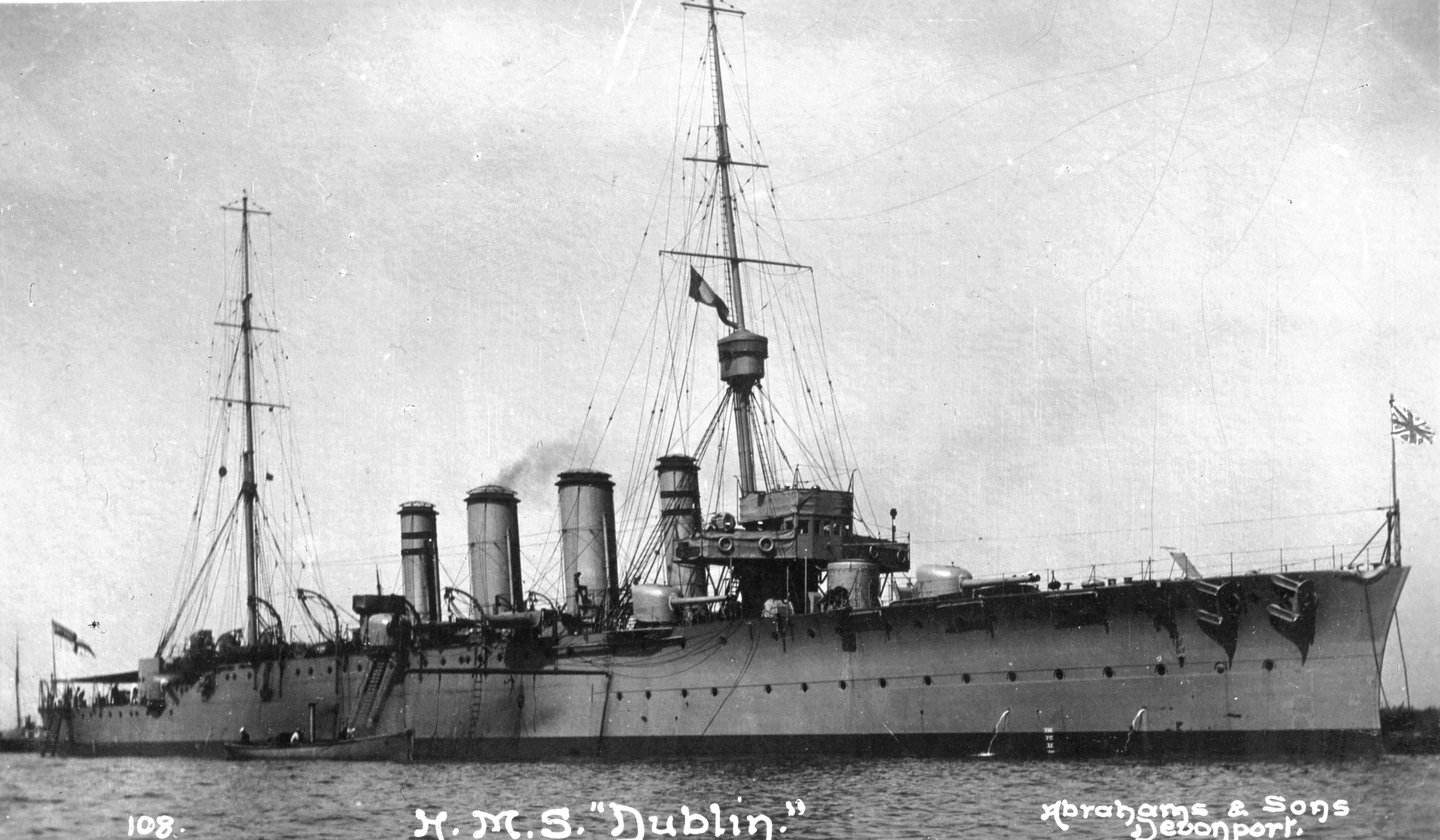
HMS Dublin was a Town-class light cruiser of the Chatham subgroup, constructed by Wm. Beardmore & Company in Dalmuir, Scotland. Laid down on April 11, 1911, she was launched on April 30, 1912, and completed in March 1913. The vessel displaced approximately 5,400 long tons at normal load, with an overall length of 457 feet and a beam of 49 feet. Her draught was 16 feet 9 inches. Powered by four Parsons steam turbines driving four shafts, she produced a total of 25,000 shaft horsepower, allowing a maximum speed of 25.5 knots. Her engines were fueled by 12 Yarrow boilers, with a coal capacity of 1,240 long tons and an additional 260 long tons of fuel oil sprayed on the coal to enhance burn efficiency. Operational range was 4,460 nautical miles at 10 knots, and her complement consisted of 475 officers and ratings. The armament included eight BL 6-inch Mk XI guns in single pivot mounts with gun shields, supplemented by four Vickers QF three-pounder guns and two submerged 21-inch torpedo tubes. An anti-aircraft gun, a QF three-inch 20 cwt, was added in 1915. The ship's nickel steel waterline armor belt was 2 inches thick, with protective deck armor ranging from 0.375 to 1.5 inches over critical areas. HMS Dublin's service history was marked by notable engagements early in WWI, including her pursuit of the German battlecruiser Goeben and participation in the Gallipoli landings in April 1915. She was torpedoed and damaged by an Austro-Hungarian submarine in June 1915 but returned to service after repairs. During the Battle of Jutland in May 1916, she fired 117 shells and, alongside HMS Southampton, attacked and sank a destroyer, though she sustained damage from German shellfire. In 1917, she engaged submarines and a Zeppelin in North Sea operations. Post-war, she served on the Africa Station before being placed in reserve in 1924. Ultimately sold for scrapping in 1926, she ran aground en route to the breakers but was refloated and dismantled in 1927. HMS Dublin played a significant role in early 20th-century naval operations, exemplifying the versatility and combat readiness of Town-class cruisers during wartime.
This description has been generated using GPT-4.1-NANO based on the Vessel's wikidata information and then modified by ShipIndex.org staff.