
HMS Lynx
1913 Acasta-class destroyer
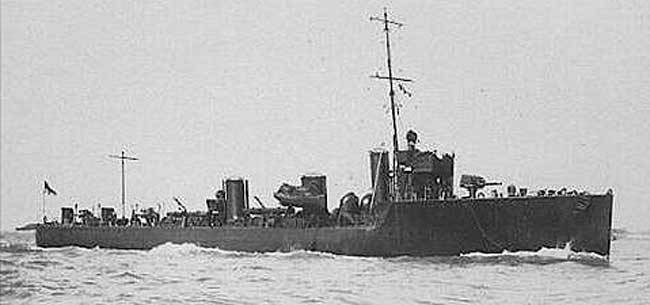
Vessel Wikidata
* This information from Wikidata is available under the Creative Commons Attribution-ShareAlike License
HMS Lynx was an Acasta-class destroyer built for the Royal Navy, commissioned in January 1914. She was constructed by the London and Glasgow Shipbuilding Company at their Govan yard, with her keel laid on 18 January 1912 and launched on 20 March 1913. The vessel measured approximately 267 feet 6 inches (82 meters) in length, with a beam of 27 feet (8.2 meters) and a normal draught of 9 feet 6 inches (2.9 meters). Displacing about 1,072 long tons (1,089 tons) at deep load, HMS Lynx was crewed by 73 officers and ratings. Powered by a single Parsons steam turbine driving two propeller shafts and fueled by four Yarrow boilers, Lynx's engines produced 24,500 shaft horsepower, enabling her to reach a top speed of approximately 31.9 knots during sea trials—surpassing her designed speed of 29 knots. Her operational range was around 1,540 nautical miles at a cruising speed of 15 knots. Armament comprised three BL 4-inch (102 mm) Mk VIII guns positioned with one on the forecastle and two aft of the superstructure, providing her with notable firepower for a destroyer of her time. She was also equipped with two single 21-inch (533 mm) torpedo tubes amidships, each with two reload torpedoes, making her a versatile threat against larger ships and submarines. HMS Lynx saw active service during World War I. Notably, on 15 December 1914, she departed Cromarty with the Fourth Destroyer Flotilla in response to the German bombardment of Scarborough. During an engagement on 16 December, she encountered German destroyers and cruisers, sustaining minor damage and one wounded crew member after being hit by shells. Her steering gear jammed during the skirmish, contributing to the failure of the pursuit. Tragically, HMS Lynx was sunk on 9 August 1915 after striking a mine off the Moray Firth, laid by the German raider Meteor. The sinking resulted in the loss of 63 men, including her captain, with only a handful of survivors among her officers and ratings. Her brief yet active service highlights her role in early wartime naval operations and her contribution to the Royal Navy’s destroyer fleet during the conflict.
This description has been generated using GPT-4.1-NANO based on the Vessel's wikidata information and then modified by ShipIndex.org staff.