
Sinaia
French steamboat built for the Fabre-Line
Vessel Wikidata
* This information from Wikidata is available under the Creative Commons Attribution-ShareAlike License
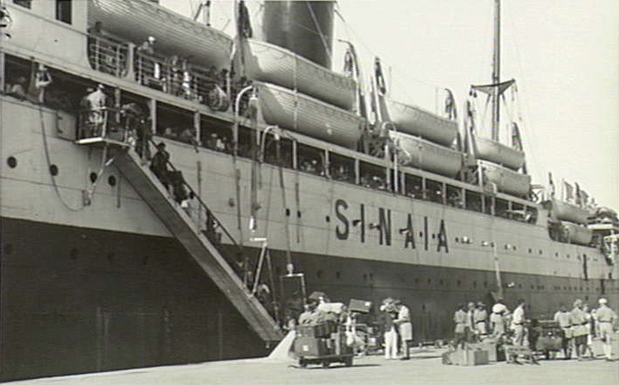
The SS Sinaia was an ocean liner constructed in 1924 by Barclay, Curle & Co. Ltd., a shipbuilding firm located in Whiteinch, Glasgow. As a passenger vessel operated by the Fabre Line, she was designed to facilitate transatlantic travel during the early 20th century. Although specific technical specifications such as her size, tonnage, and passenger capacity are not provided, her operational history indicates she was a vessel of notable significance. The Sinaia's maiden voyage to Providence, Rhode Island, took place on June 28, 1925, marking her entry into service as a transatlantic passenger liner. Throughout her career, she played a role in notable historical events. In 1931, she transported the body of the renowned Lebanese-American poet and philosopher Kahlil Gibran from Providence to Lebanon, which was then under French control. This poignant event underscores her role in significant cultural and diplomatic movements of the period. In 1939, amid the upheaval leading up to World War II, the Sinaia departed from the port of Sète with Spanish Republicans seeking asylum in Mexico, reflecting her involvement in the turbulent political landscape of the era. Her service continued until her ultimate fate in 1944 when she was scuttled, a deliberate sinking, likely to prevent her capture or destruction by enemy forces during the war. Overall, the SS Sinaia stands out as an early 20th-century ocean liner with a service record marked by cultural significance and wartime activity. Her participation in transporting notable figures and refugees, along with her eventual scuttling during wartime, highlights her as a vessel of historical importance in maritime history.
This description has been generated using GPT-4.1-NANO based on the Vessel's wikidata information and then modified by ShipIndex.org staff.