
HMCS Curlew
Vessel Wikidata
* This information from Wikidata is available under the Creative Commons Attribution-ShareAlike License
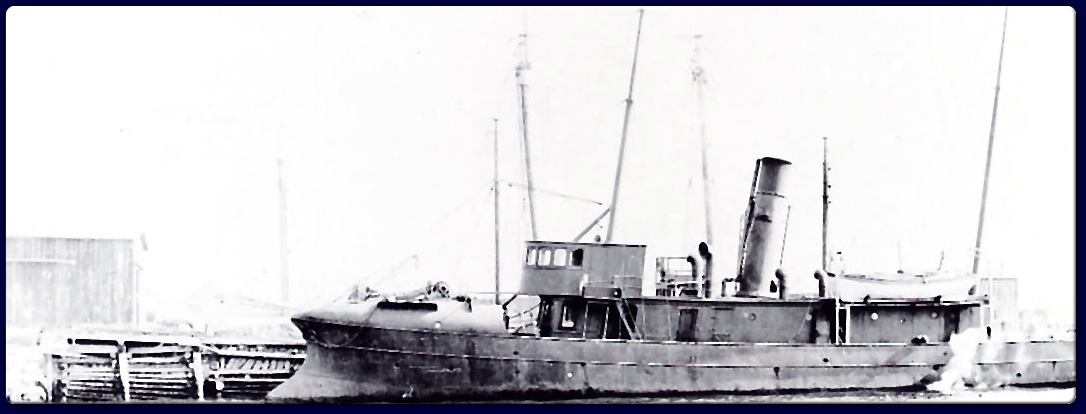
HMCS Curlew was a Canadian vessel with a rich history serving primarily in the early 20th century. Originally constructed in 1892 at Polson Iron Works in Owen Sound, Ontario, she was initially used as a fisheries patrol vessel for the Canadian government along the East Coast of Canada. The ship measured approximately 116 feet 3 inches (35.4 meters) in length, with a beam of 19 feet 8 inches (6.0 meters) and a draught of 11 feet 3 inches (3.4 meters). She had a gross register tonnage of 185 tons, which remained unchanged during her service as a minesweeper. Her propulsion system consisted of a compound steam engine driving a single screw, capable of producing 50 nominal horsepower, enabling her to reach a maximum speed of about 10 knots (19 km/h). The vessel's design featured a ram bow, giving her the appearance of a gunboat, and she was armed with three machine guns, with a crew complement of 23 personnel. Initially ordered by Charles Tupper, then Minister of Marine and Fisheries, Curlew was launched in 1892 from Polson Iron Works, alongside her sister ships Constance and Petrel. Her primary role was fisheries patrol duty, especially after a fishing treaty between Canada and the United States collapsed, prompting the Royal Navy to refrain from deploying vessels to monitor Atlantic Canadian fisheries. In 1912, Curlew was refitted as a minesweeper, marking her transition to a more military-oriented role. With the outbreak of the First World War in 1914, she was commissioned into the Royal Canadian Navy, serving on the East Coast as a patrol and minesweeping vessel. During her wartime service, she remained on patrol duties along Canada's Atlantic coast until the end of the conflict in 1918. After the war, she was decommissioned and sold in 1921, ending her notable service history. Her conversion from a fisheries patrol vessel to a minesweeper highlights her maritime adaptability and her role in Canada's naval defense during a pivotal period.
This description has been generated using GPT-4.1-NANO based on the Vessel's wikidata information and then modified by ShipIndex.org staff.