
HMCS Mayflower
1940 Flower-class corvette
Vessel Wikidata
* This information from Wikidata is available under the Creative Commons Attribution-ShareAlike License
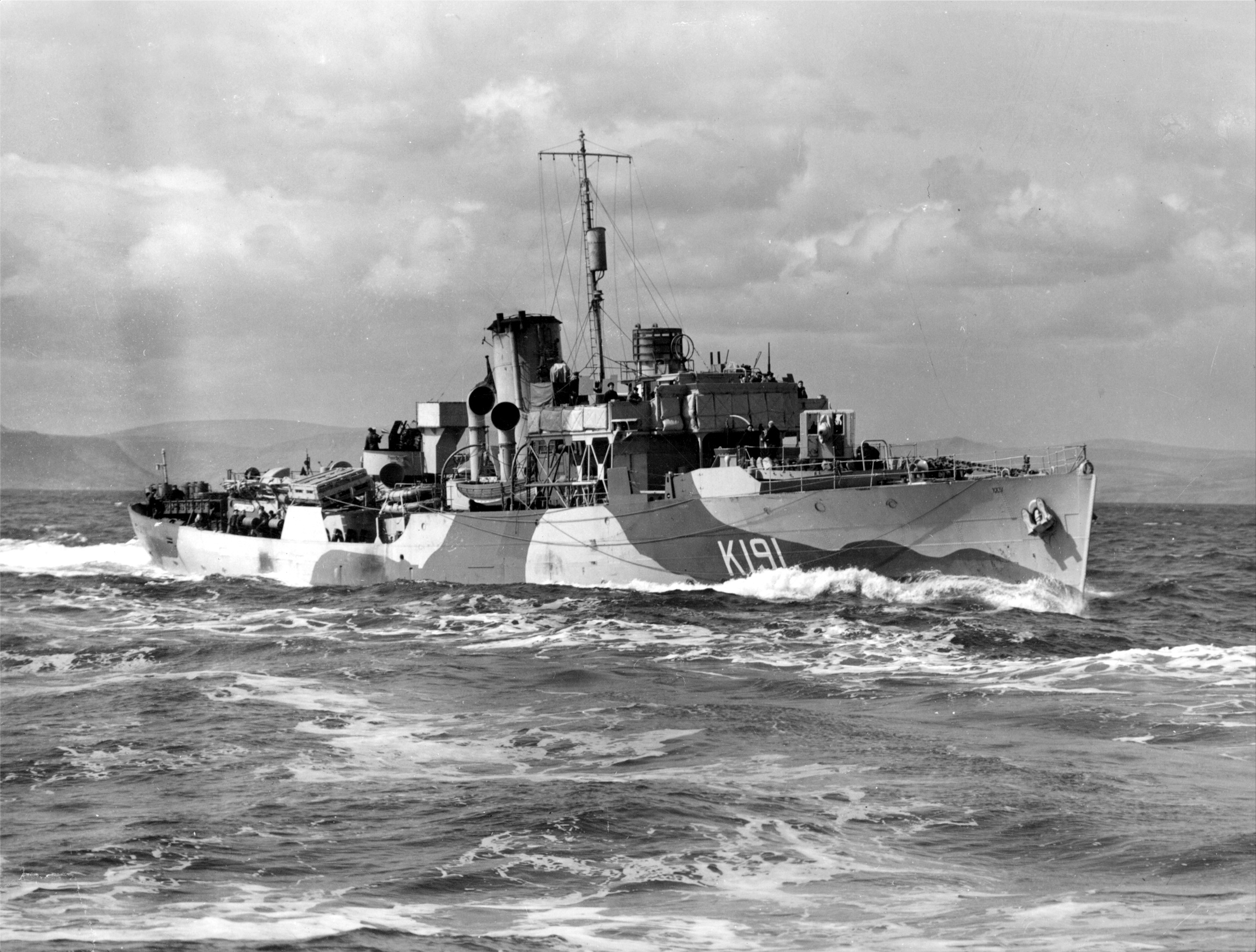
HMCS Mayflower was a Flower-class corvette that played an active role in the Royal Canadian Navy during the Second World War, with initial service under the Royal Navy. Constructed by Canadian Vickers Ltd. in Montreal, she was laid down on 20 February 1940, launched on 3 July 1940, and commissioned on 28 November 1940. The ship was built as part of the 1939-1940 Flower-class program, designed for escort duties in the Atlantic. She was completed in the United Kingdom on the Tyne River in May 1941 after sailing there in February of that year. As a Flower-class corvette, Mayflower was distinguished from earlier sail-driven vessels by her modern, wartime design based on a whaling ship model, optimized for escort and convoy protection. She lacked minesweeping gear, a characteristic that set her apart from other Canadian Flower-class ships, and featured her after gun tub positioned amidships. Throughout her service, Mayflower underwent three significant refits: the first in Charleston, South Carolina (December 1941–February 1942), the second in Pictou, Nova Scotia (October 1942–January 1943), and the third in Norfolk, Virginia (November 1943–February 1944), during which her forecastle was extended to improve seaworthiness. Initially serving under Royal Navy control, she was transferred to the Royal Canadian Navy in June 1941, operating primarily with Newfoundland Command. Her convoy escort duties included protecting transatlantic convoys from St. John’s to Iceland, notably participating in convoy SC 44, where she evacuated personnel from the torpedoed HMCS Levis. She also rescued 35 survivors from the British tanker San Florentino, torpedoed by U-94, in October 1941. Mayflower's operational duties included Atlantic convoy escorting under the Mid-Ocean Escort Force, first with group A-3 and later with C-3, until April 1944. She was then assigned to Western Approaches Command for Operation Neptune, supporting the Normandy invasion in June 1944, escorting blockships from Oban. After D-Day, she remained around the UK for the duration of the war. Post-war, she was returned to the Royal Navy on 31 May 1945, laid up at Grangemouth, and subsequently sold for scrap in 1949, being dismantled at Inverkeithing.
This description has been generated using GPT-4.1-NANO based on the Vessel's wikidata information and then modified by ShipIndex.org staff.