
HMCS Pictou
1940 Flower-class corvette
Vessel Wikidata
* This information from Wikidata is available under the Creative Commons Attribution-ShareAlike License
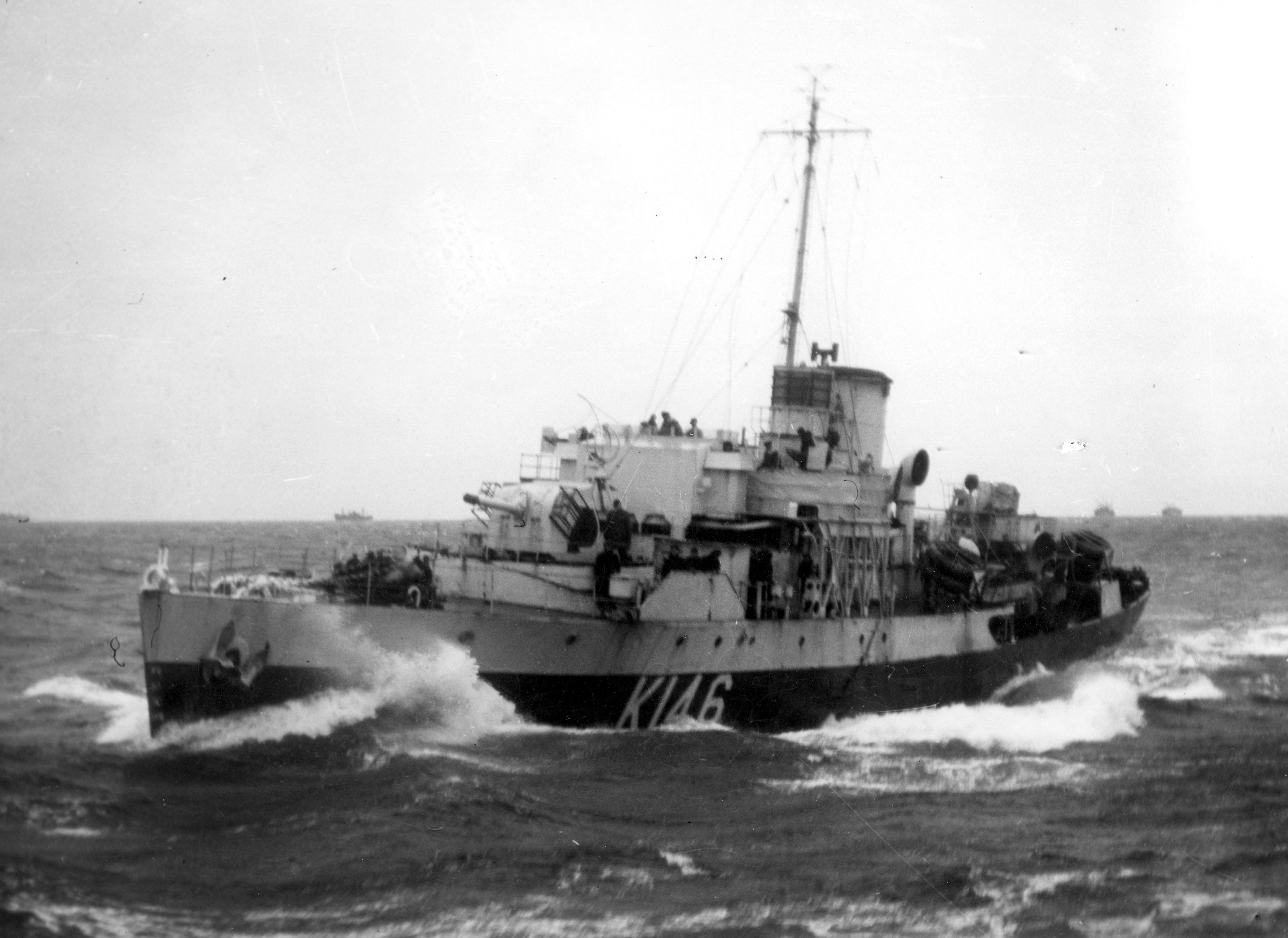
HMCS Pictou was a Flower-class corvette of the Royal Canadian Navy, primarily engaged in convoy escort duties during the Second World War, especially within the Battle of the Atlantic. Constructed as part of the 1939–1940 Flower-class building program, she was ordered on 22 January 1940, laid down by George T. Davie & Sons Ltd. at Lauzon on 12 July 1940, and launched on 5 October 1940. She was commissioned into the RCN on 29 April 1941 in Quebec City. The Flower-class corvettes, including Pictou, were smaller warships based on a whaling ship design, reactivated during WWII to serve as convoy escorts. Canadian corvettes like Pictou were generally named after communities, fostering a sense of local pride and connection to their crews. Originally intended for coastal auxiliary roles, Pictou was later modified to better serve on the open seas. Throughout her service, Pictou experienced multiple periods in dockyard repairs. Her first repairs occurred after being sent back three times during convoy duty due to mechanical problems, with work done at Halifax and Liverpool. A subsequent collision in August 1942 with the Norwegian merchant SS Hindanger caused severe damage to her stern, requiring further repairs. In December 1942, she faced serious mechanical issues that led to an extended refit, including a major overhaul in January 1944 at New York, where her fo'c'sle was extended. Pictou's operational career included joining the Newfoundland Escort Force and becoming one of the earliest Canadian trans-Atlantic Ocean escorts. She was assigned to escort groups C-4, C-2, and C-3 during her service, with periods of repairs interspersed. Notably, she was rammed in fog near St. John’s in August 1942, which caused significant damage. Her captain at one point was Lieutenant A.G.S. Griffin, a former life insurance man with only eight weeks of sea experience, who was entrusted with command due to wartime shortages. Decommissioned on 12 July 1945 at Sorel, Quebec, Pictou was later sold for mercantile conversion. In 1950, she reemerged as the whalecatcher Olympic Chaser, renamed Otori Maru No. 7 in 1956, and ultimately converted into a barge in 1963. Her service exemplifies the vital role of Canadian corvettes in Atlantic convoy protection and the broader maritime efforts of WWII.
This description has been generated using GPT-4.1-NANO based on the Vessel's wikidata information and then modified by ShipIndex.org staff.