
HMS Calcutta
1788 fourth-rate frigate
Vessel Wikidata
* This information from Wikidata is available under the Creative Commons Attribution-ShareAlike License
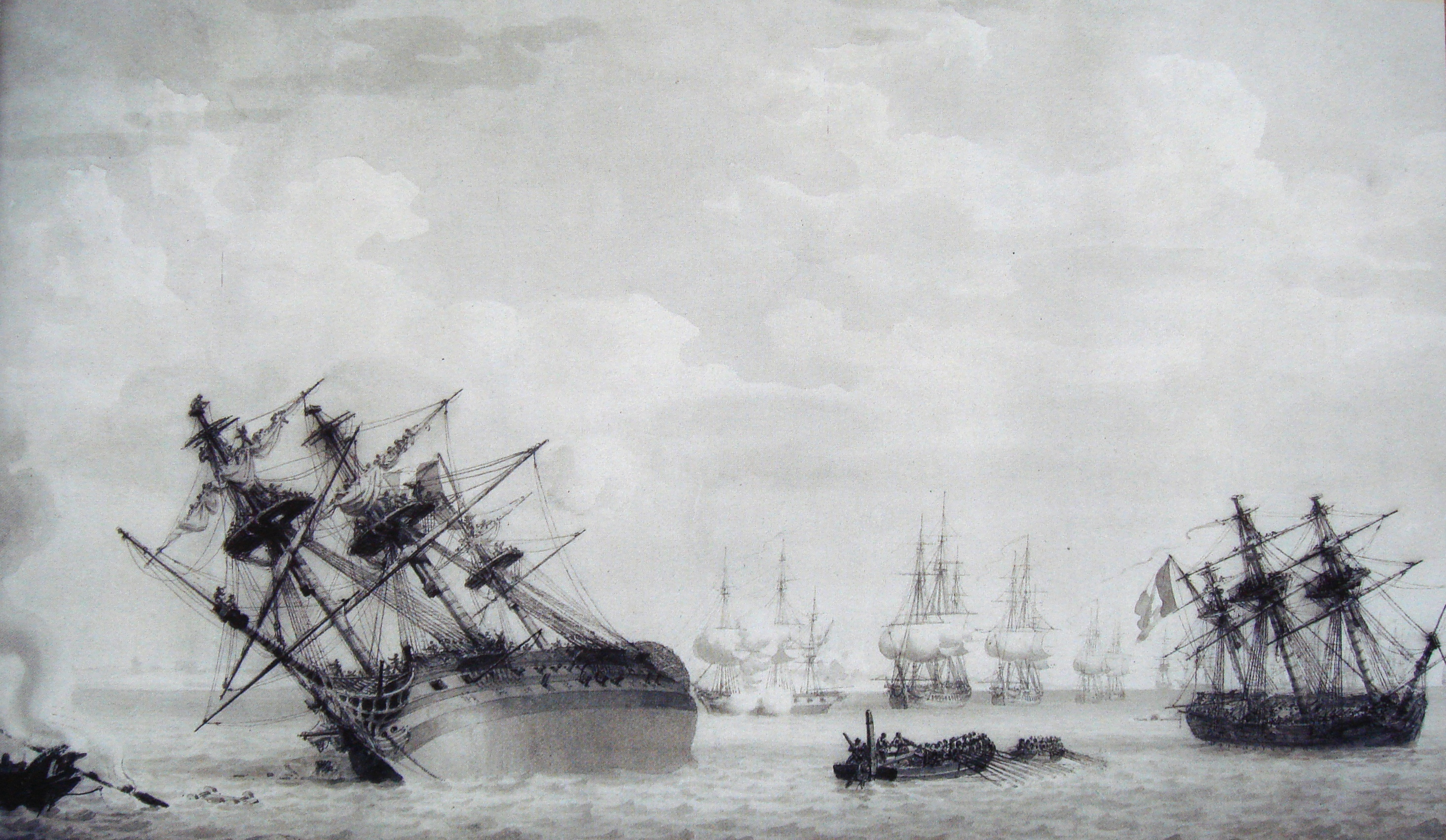
HMS Calcutta was a 56-gun fourth-rate ship of the line of the Royal Navy, launched in 1788 at Blackwall Yard as the East Indiaman Warley. Originally built for the East India Company by Perry & Co., Warley was a large merchant vessel designed for trade to the East Indies, making two voyages between 1789 and 1795. She was constructed at John Perry's Blackwall Yard and measured to carry significant cargo, with her captain during these voyages being Henry Wilson. Warley's service included participation in blockades and naval actions, notably during the capture of Pondicherry in 1793 and an engagement in the Straits of Malacca, where she retook prizes from a French frigate. In 1795, the Royal Navy purchased her and refitted her at a cost of £10,300, transforming her into a 56-gun fourth-rate ship of the line. Captain William Bligh was her first commander under naval service, overseeing her conversion and commissioning. She initially served as a convoy escort and was involved in the suppression of mutinies, notably during the mutiny of HMS Defiance. Subsequently, Calcutta was repurposed as a transport vessel, with her armament reduced and crew complement decreased. Her transport duties took her to various locations, including the capture of Menorca in 1798, and she carried troops and convicts to Australia. In 1802, she was fitted as a convict transport for the settlement at Port Phillip, carrying over 300 convicts and civil officers on her circumnavigation of the globe, reaching Australia after a voyage of just over ten months. She continued her service as a cruiser and convoy escort until 1805, when she engaged French ships near the Isles of Scilly. During this encounter, she was captured by the French frigate Magnanime after a brief engagement, her rigging shot away. The French took her into service under her original name. Her service ended during the Battle of the Basque Roads in 1809 when she ran aground and was abandoned and burned by her crew to prevent recapture. Calcutta's history reflects her multifaceted role in trade, exploration, convoy protection, and combat within the late 18th and early 19th centuries, highlighting her importance in maritime warfare, colonial transport, and naval operations of her era.
This description has been generated using GPT-4.1-NANO based on the Vessel's wikidata information and then modified by ShipIndex.org staff.