
HMS Cassandra
1943 C-class destroyer
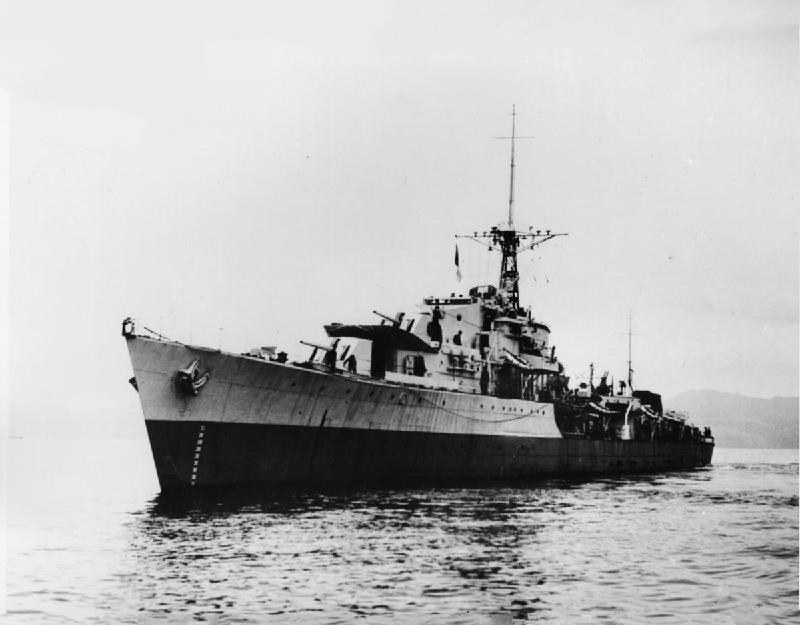
Vessel Wikidata
* This information from Wikidata is available under the Creative Commons Attribution-ShareAlike License
HMS Cassandra was a C-class destroyer of the Royal Navy, constructed by Yarrow Shipbuilders. Laid down on 30 January 1943 and launched on 29 November 1943, she was initially intended to be named HMS Tourmaline, but her name was changed to Cassandra in November 1942 to align with her revised class designation. The vessel's design featured the standard characteristics of a C-class destroyer, optimized for escort and anti-submarine duties during and after World War II. Following her commissioning, HMS Cassandra primarily operated in Northern waters, notably escorting Russian convoys and participating in the search for the German battleship Tirpitz. A significant event in her wartime service occurred on 11 December 1944, when she was torpedoed by the German U-boat U-365 under Oberleutnant zur See Diether Todenhagen. The attack resulted in the death of 62 crew members. The damaged destroyer was towed to Kola Inlet first by the frigate Bahamas and later by a Soviet Navy tugboat. U-365 was sunk two days later by a Fairey Swordfish aircraft from the carrier Campania, with all hands lost. Post-war, HMS Cassandra was repaired and placed in reserve in 1946. She later saw service in the Mediterranean Sea and Indian Ocean. The ship underwent modernization by Yarrow and Company, which included the installation of an enclosed bridge and Squid anti-submarine mortars, along with the removal of one set of torpedo tubes and her 'X' gun turret. Re-entering service in April 1960, Cassandra was assigned to the Far East as part of the 8th Destroyer Squadron. In 1961, she was deployed to the Persian Gulf during Operation Vantage to counter Iraqi threats to Kuwait, successfully deterring invasion. Her service included a notable 50,000-mile deployment from 1962-1963, covering the Far East and returning to Portsmouth. In subsequent years, Cassandra served in the Mediterranean and participated in the Indonesian Confrontation in 1964-65. She was placed in reserve and paid off in January 1966, ultimately arriving at the scrapyard at Inverkeithing on 28 April 1967 for dismantling. Throughout her service, HMS Cassandra exemplified the Royal Navy's post-war efforts in convoy escort, regional conflicts, and maritime presence during the Cold War era.
This description has been generated using GPT-4.1-NANO based on the Vessel's wikidata information and then modified by ShipIndex.org staff.