
HMS Herald
1822 Atholl-class corvette
Vessel Wikidata
* This information from Wikidata is available under the Creative Commons Attribution-ShareAlike License
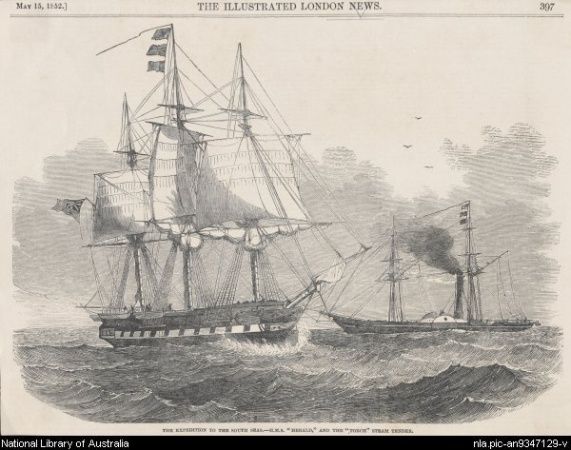
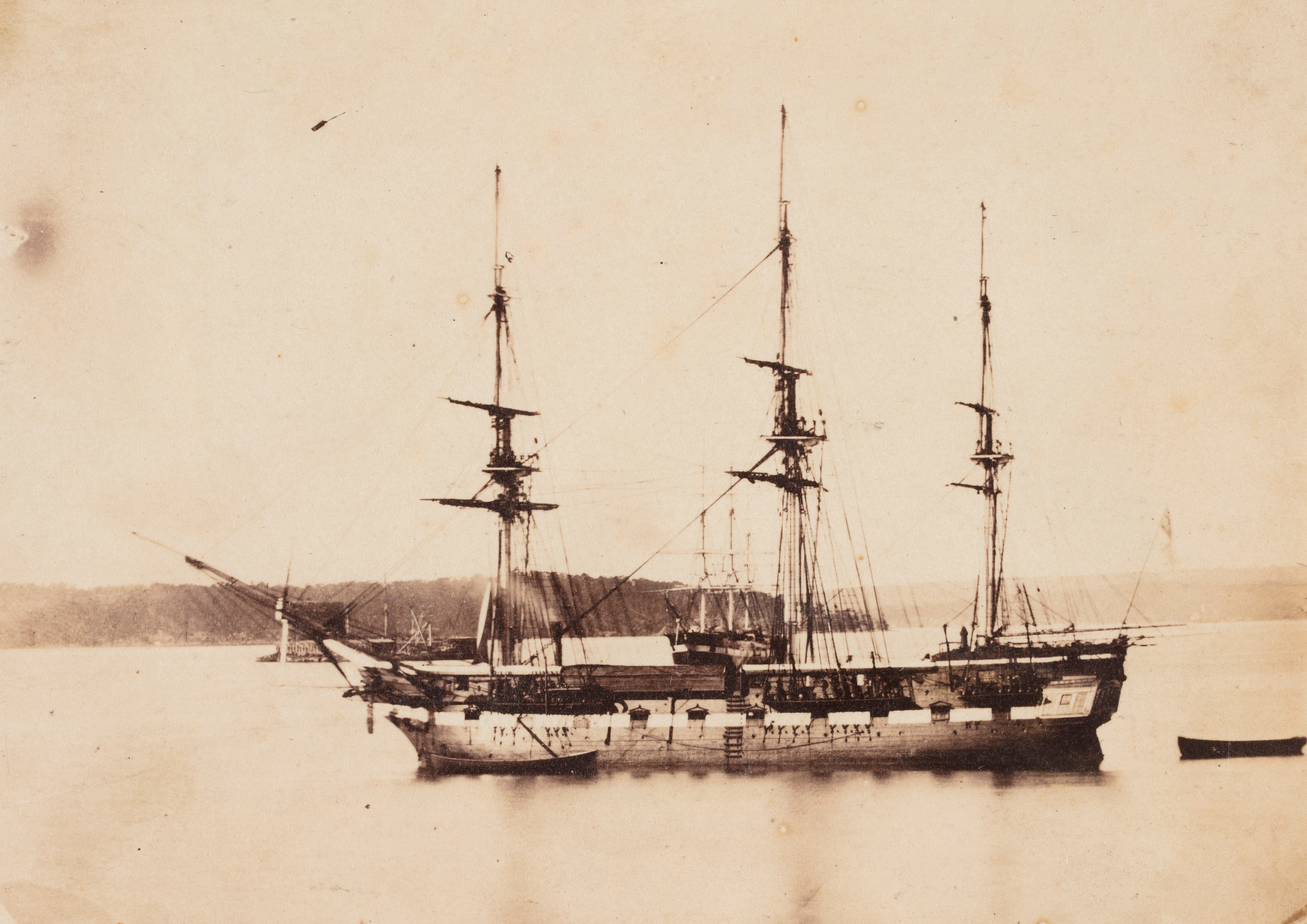
HMS Herald was an Atholl-class 28-gun sixth-rate corvette of the Royal Navy, launched in 1822 at the East India Company dockyard in Cochin, British India. Originally named HMS Termagant, she was commissioned in 1824 as HMS Herald and later converted into a survey ship in 1845. Her design classified her as a sixth-rate vessel, with a typical armament of 28 guns, though her armament was reduced to eight guns after her conversion to a survey vessel. Her early service included diplomatic and exploratory missions, such as carrying the Duke of Devonshire to Russia and participating in the First Anglo-Chinese War near Canton. She was notably involved in the 1840 expedition to New Zealand to deliver a copy of the Treaty of Waitangi, which was part of Britain’s efforts to establish sovereignty over New Zealand. During her service, she also participated in the attempts to scuttle the burning merchant ship Lucretia off Sydney in 1839. In 1845, HMS Herald was extensively modified for surveying, departing Plymouth for the Pacific, where she conducted detailed coastal surveys of British Columbia, South America, and the Arctic regions. Her Arctic explorations in 1848–1850, under Kellett, included multiple passages through the Bering Strait in search of Sir John Franklin’s lost expedition and led to her discovery of Herald Island. Her circumnavigation from 1845 to 1851, with naturalist Berthold Seemann aboard, contributed valuable botanical, zoological, and geographical knowledge. From 1852 to 1861, under Captain Henry Mangles Denham, HMS Herald conducted extensive surveys along the Australian coast, Fiji, and surrounding islands. She mapped reefs, improved navigation charts, and established navigational aids such as the first beacon on Mellish Reef. Her work significantly enhanced maritime safety in the region, especially around the Great Barrier Reef and Torres Strait. After her survey missions, she was converted into a floating chapel in 1861 and sold for breaking in 1862. Her service history underscores her importance as a versatile vessel contributing to exploration, cartography, and maritime safety in the 19th century.
This description has been generated using GPT-4.1-NANO based on the Vessel's wikidata information and then modified by ShipIndex.org staff.