
HMS Orlando
1861 screw frigate
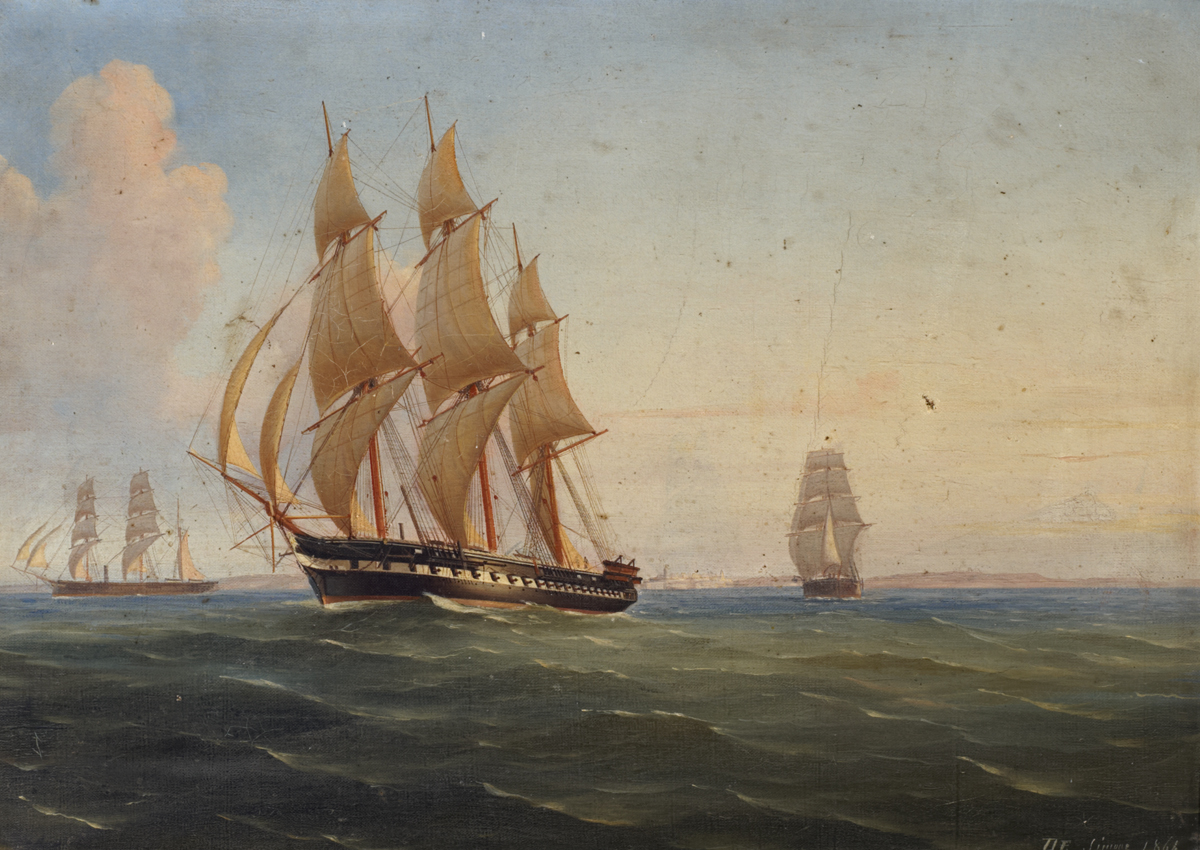
Vessel Wikidata
* This information from Wikidata is available under the Creative Commons Attribution-ShareAlike License
HMS Orlando was a Mersey-class wooden-hulled screw frigate constructed for the Royal Navy between 1856 and 1858, though she was not commissioned until 1861. As one of the longest wooden warships ever built for the Royal Navy, she measured an impressive 336 feet in length, nearly twice the length of the famous Victory of Trafalgar. Her displacement was 5,643 tons, making her a notably large and formidable vessel of her time. She was fully rigged with sails, maintaining traditional sailing capabilities, but also powered by steam, with a speed of approximately 12½ knots, reaching up to 13½ knots during trials. Orlando and her sister ship, HMS Mersey, represented the apex of wooden warship design in the mid-19th century, embodying a transition period to steam power and iron hulls. However, their extreme length posed significant structural challenges. The elongated hull placed enormous stress on the ship’s seams, which tended to open up, revealing the limitations of wooden ship construction at such scales. The length of these ships, surpassing 335 feet, was unprecedented and pushed the boundaries of wooden ship stability and durability, resulting in structural issues after voyages, notably after Orlando’s 1863 trip to the United States. Despite their size and power, the ships proved to be less effective in close-quarters combat against ships of the line, partly due to their structural limitations. The Orlando was laid up in 1866 and ultimately sold for breaking in 1871. Her construction and service history highlight the transitional phase of naval architecture, where the limits of wooden shipbuilding were reached before the advent of iron and steel hulls rendering such massive wooden vessels obsolete.
This description has been generated using GPT-4.1-NANO based on the Vessel's wikidata information and then modified by ShipIndex.org staff.