
HMS Rorqual
1936 Grampus-class submarine
Vessel Wikidata
* This information from Wikidata is available under the Creative Commons Attribution-ShareAlike License
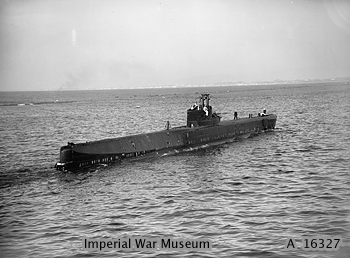
HMS Rorqual (N74) was a British Grampus-class mine-laying submarine constructed by Vickers Armstrong in Barrow, launched on 27 July 1936. As the most successful minelaying submarine of World War II, she played a significant role in maritime operations during the conflict. Her design allowed for large storage capacity, particularly within her mine casing, which enabled her to carry extensive supplies, making her suitable for long-range missions. During her wartime service, HMS Rorqual operated primarily in the Mediterranean and the Far East. In 1940, she was deployed to the Mediterranean, where she laid numerous minefields and attacked enemy shipping. Her mining efforts resulted in the sinking of several Italian merchant ships, including Loasso, Celio, Leopardi, and Salpi, as well as Italian water tankers Verde and Ticino, and various Italian vessels such as the pilot vessel F 34 / Rina Croce, and torpedo boats Calipso, Fratelli Cairoli, Generale Antonio Chinotto, Altair, and Aldebaran. She also targeted German and French vessels, sinking the troop transport Ankara, and damaging others like the Italian submarine Pier Capponi, and the auxiliary cruiser Piero Foscari. Notably, Rorqual torpedoed the Italian tanker Laura Corrado and the Italian merchant Cilicia, among others. Her operations extended to direct attacks, including an unsuccessful torpedo attack on an Italian convoy in August 1940, and a notable engagement in January 1941 where she sank the tug Ursus and damaged a floating battery after a fierce surface engagement. Rorqual’s large capacity allowed her to undertake "magic carpet runs," transporting vital supplies such as aviation fuel, kerosene, and mail to Malta—an essential supply line during the siege. She made five such runs from Alexandria and Beirut. Later in the war, she served in the Far East, part of the British Pacific Fleet, where she laid minefields and sank Japanese vessels. By war’s end, she was the only Grampus-class submarine to survive, having sunk 57,704 GRT of enemy shipping. She was decommissioned and sold for scrap in March 1946, marking a distinguished and strategically vital wartime career.
This description has been generated using GPT-4.1-NANO based on the Vessel's wikidata information and then modified by ShipIndex.org staff.