
HMS Sabrina
1806 Cormorant-class sloop-of-war
Vessel Wikidata
* This information from Wikidata is available under the Creative Commons Attribution-ShareAlike License
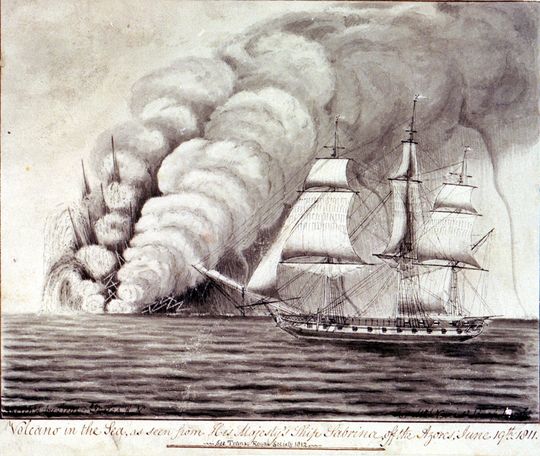
HMS Sabrina was an 18-gun ship-sloop of the Royal Navy, launched in 1806 at Southampton as part of the Cormorant-class, specifically the second batch of this class. She was constructed with a main battery that included 32-pounder carronades, a significant armament feature of her class, replacing the earlier 6-pounder guns. Throughout her service, Sabrina underwent several reclassifications: initially commissioned as an 18-gun sloop, she was re-rated as a 20-gun post-ship in 1810 and later as a 24-gun vessel in 1816, just before her sale. These ratings largely reflected her armament configuration, including carronades, rather than any physical modifications. Commissioned in September 1806 under Commander Edward Kittoe, Sabrina's early career saw her sail to the Mediterranean in January 1807. Her operations included attacking Spanish flotillas and cutting out vessels such as a brig and schooner under Spanish gunfire on the southern coast of Spain. In November 1807, she was in company with Euryalus when Niger captured the Lady Washington. In 1809, Sabrina carried news of the peace between Spain and England to Cartagena, Colombia, and attempted to intercede for prisoners held there. During the ill-fated Walcheren Campaign of 1809, Sabrina served as the flagship for Admiral Keats at one point, and Rear Admiral William Ottway appointed Commander Abraham Lowe to her command. After her return to Britain in 1810, command transferred to Commander James Tillard, who led her to Portugal. Notably, in June and July 1811, Sabrina's crew claimed a newly formed volcanic island off São Miguel, naming it Sabrina Island—a claim that led to diplomatic disputes, although the island soon subsided into the sea. Her service included capturing enemy vessels, such as Princess de Beira in December 1811 and the slave schooner Pepe off Africa in January 1812. She also participated in convoy escort duties and detention of ships, including the detention of Asia in August 1812. Sabrina's operational history reflects her active participation in naval operations during the Napoleonic Wars and related conflicts. The vessel was eventually sold in 1816 at Portsmouth, marking the end of her nearly decade-long service with the Royal Navy.
This description has been generated using GPT-4.1-NANO based on the Vessel's wikidata information and then modified by ShipIndex.org staff.