
HMS St Andrew
1670 first-rate ship of the line
Vessel Wikidata
* This information from Wikidata is available under the Creative Commons Attribution-ShareAlike License
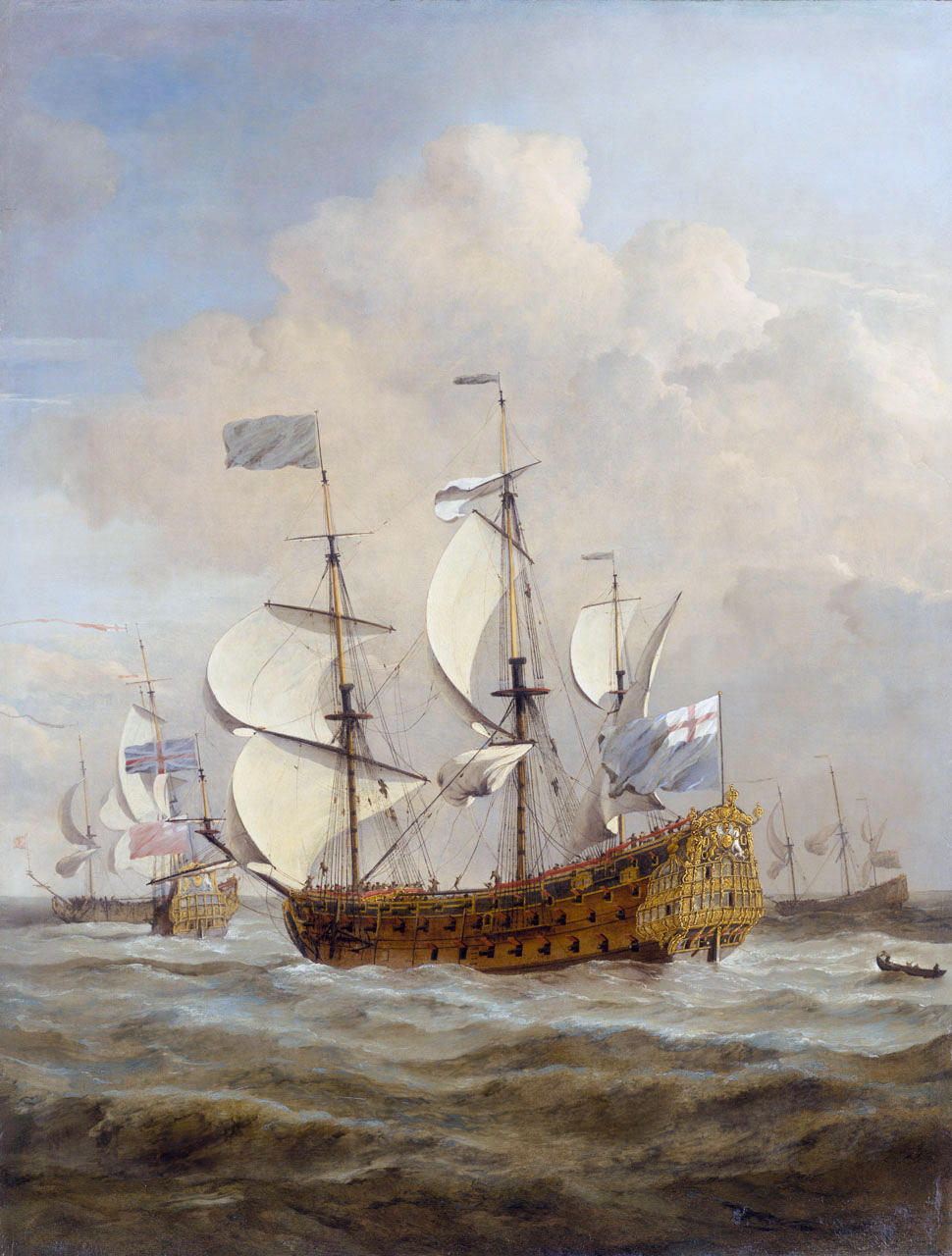
HMS St Andrew was a first-rate ship of the line in the Royal Navy, originally armed with 96 guns. She was constructed at Woolwich Dockyard, with her build overseen by Christopher Pett until his death in March 1668, after which Jonas Shish completed her construction. Launched in 1670, she represented a significant example of 17th-century naval architecture designed for major fleet actions. Throughout her service, HMS St Andrew was commanded by notable figures such as George Churchill and participated in key naval engagements, including the 1692 victory over the French navy at Barfleur and La Hogue. In 1703, she was renamed HMS Royal Anne following a rebuild at Woolwich, which increased her armament to 100 guns and upgraded her to a first-rate vessel. This reconstruction reflects her importance within the fleet and her capability as a formidable warship. In 1707, HMS Royal Anne served as the flagship of Vice-Admiral of the Blue Sir George Byng and was part of Admiral Sir Cloudesley Shovell's fleet. During her service, she was involved in the Battle of Toulon, which was ultimately unsuccessful. She is most notably associated with the tragic naval disaster off the Isles of Scilly, where Shovell and four of his ships—Association, Firebrand, Romney, and Eagle—were lost, resulting in nearly 2,000 fatalities. Remarkably, Royal Anne sustained little to no damage during this event and was able to reach Portsmouth safely. The vessel’s service concluded when she was broken up in 1727. HMS St Andrew, later known as HMS Royal Anne, remains a significant example of early 18th-century naval design and served in pivotal battles and events that shaped Royal Navy history.
This description has been generated using GPT-4.1-NANO based on the Vessel's wikidata information and then modified by ShipIndex.org staff.