
HMS Venus
1758 Venus-class fifth-rate frigate
Vessel Wikidata
* This information from Wikidata is available under the Creative Commons Attribution-ShareAlike License
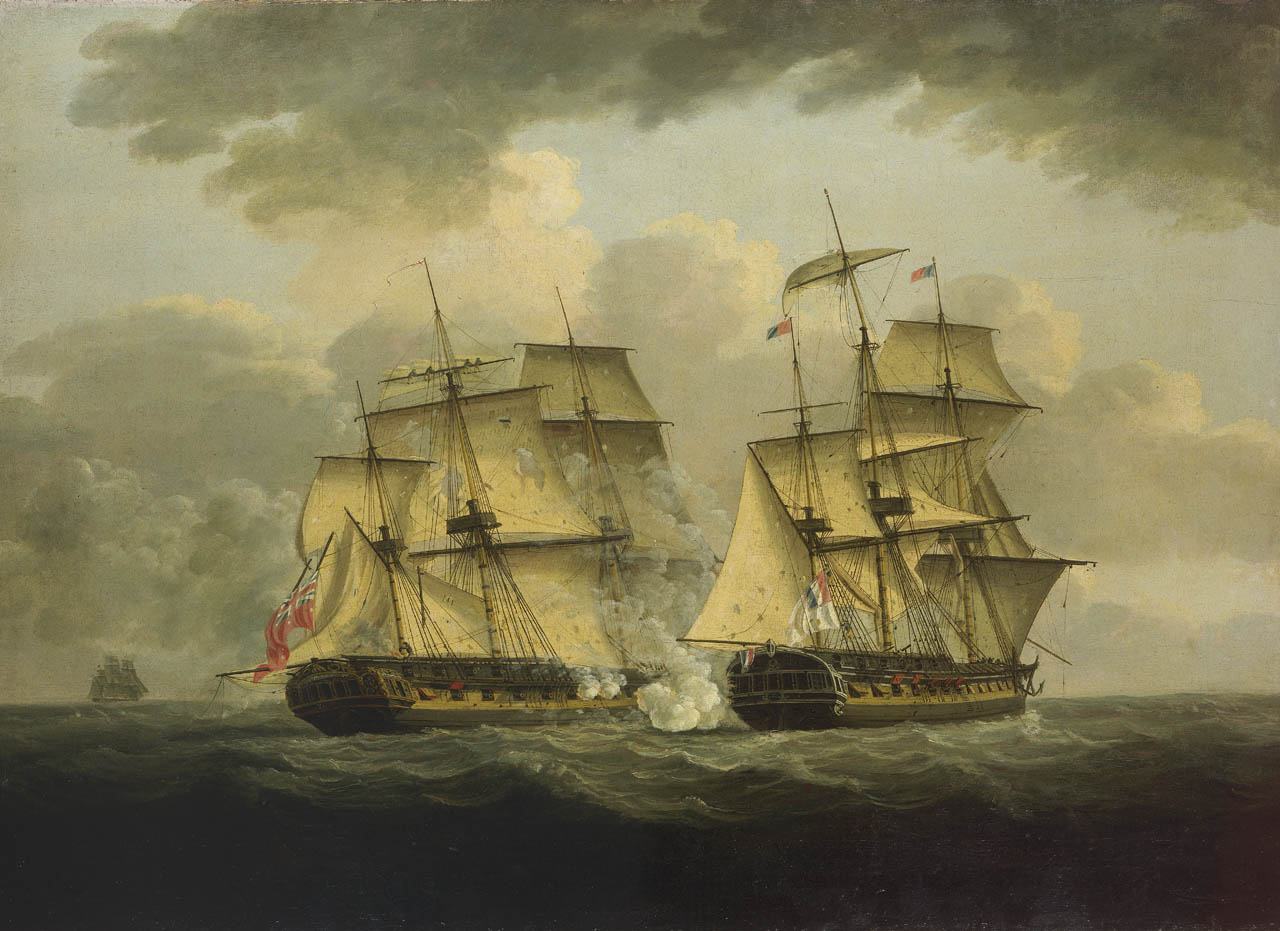
HMS Venus, launched in 1758, was the lead ship of the Venus-class fifth-rate frigates of the Royal Navy, originally armed with 36 guns. She served for over 50 years, undergoing several modifications and notable engagements before being renamed HMS Heroine in 1809 and eventually sold in 1822. Constructed as a fifth-rate frigate, Venus's early service included a significant 1759 engagement near Audierne Bay, where she, along with HMS Thames and HMS Chatham, intercepted and captured the French frigate Arethuse after a two-hour chase, suffering heavy casualties in the process. Her role extended to capturing enemy vessels such as the French East Indiaman Bertin in 1761, which was sent into Plymouth and subsequently purchased by the Royal Navy, becoming the third-rate ship Belleisle. In 1762, Venus captured a Spanish privateer, a Galgo armed with 14 guns and a crew of 136. During the American Revolutionary War, she contributed to anti-privateer actions, including her participation in the capture of the Massachusetts privateer schooner True Blue in 1778. Her service record also notes involvement in the Mount Hope Bay raids. Throughout her career, Venus engaged in several notable battles. In 1793, she fought the French frigate La Sémillante near Cape Finisterre, sustaining significant damage. She continued active service into the early 19th century, capturing privateers such as the brig Determinée in 1807, which was taken into Royal Navy service as Netley. Her endurance was exemplified in her 1805 pursuit and capture of the French privateer Hirondelle after a 65-mile chase, during which Hirondelle jettisoned guns to escape. By 1807, she was paid off and renamed Heroine. She participated in the Walcheren Campaign in 1809, notably during the reduction of Flushing, where she sustained minor damage. Following her active service, she served as a receiving ship and a temporary convict ship until her sale in 1828. Her long service history underscores her importance within the Royal Navy during a period of extensive maritime conflict.
This description has been generated using GPT-4.1-NANO based on the Vessel's wikidata information and then modified by ShipIndex.org staff.