
HMS Epervier
1812 Cruizer-class brig-sloop
Vessel Wikidata
* This information from Wikidata is available under the Creative Commons Attribution-ShareAlike License
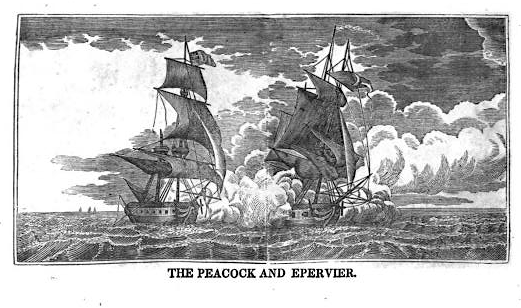
HMS Epervier was an 18-gun Cruizer-class brig-sloop of the Royal Navy, built by Ross at Rochester, England, and launched on 2 December 1812. Designed as a relatively small yet versatile warship, she was commissioned in January 1813 under Commander Richard Walter Wales. During her service with the Royal Navy, Epervier engaged in various capturing missions along North American waters, including the schooner Lively, and the vessels Active and Resolution in 1813. She also captured the American privateer brig Alfred off Cape Sable in February 1814, which was armed with 16 long 9-pounders and had a crew of approximately 94 to 108 men. Epervier’s crew at this time was notably composed mainly of invalids from the hospital, which contributed to her being considered the worst crew on her station. In April 1814, Epervier departed Port Royal, Jamaica, and called at Havana, where she took on a substantial cargo of $118,000 in specie before returning to Halifax. However, her service with the Royal Navy was cut short when she was captured by the USS Peacock off Cape Canaveral, Florida, on 29 April 1814. Despite suffering extensive damage and casualties—eight killed and 15 wounded—Epervier was salvageable, and her crew managed to sail her to Savannah, Georgia, for repairs. The U.S. Navy then commissioned her as USS Epervier. Under U.S. command, she participated in the Mediterranean Squadron during the Second Barbary War. Notably, she took part in the Battle off Cape Gata on 17 June 1815, where she contributed to the destruction of the Algerian frigate Meshuda and captured the brig Estedio at Cape Palos two days later. After the signing of a peace treaty with Algiers, Epervier was assigned to carry the treaty and captured flags back to the United States. She set sail through the Straits of Gibraltar on 14 July 1815 but was never heard from again, with reports suggesting she may have encountered a hurricane in the Atlantic around August 1815. Throughout her career, Epervier exemplified the versatility and peril of early 19th-century naval warfare, serving in both British and American service during the tumultuous years of the War of 1812 and subsequent conflicts in the Mediterranean.
This description has been generated using GPT-4.1-NANO based on the Vessel's wikidata information and then modified by ShipIndex.org staff.