
SS Shinyō Maru
Japanese passenger liner
Vessel Wikidata
* This information from Wikidata is available under the Creative Commons Attribution-ShareAlike License
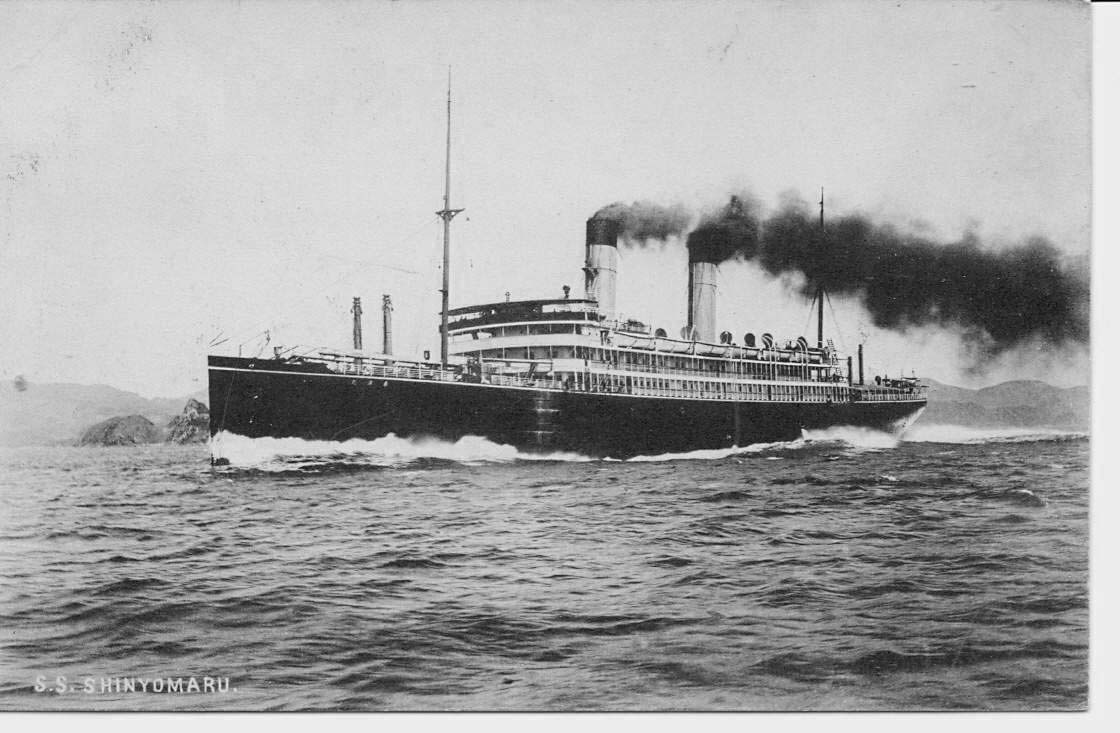
The SS Shinyō Maru was a significant early 20th-century trans-Pacific liner constructed in Nagasaki by Mitsubishi Dockyard & Engine Works in 1911. She measured 558 feet (170 meters) in length and had a breadth of 61.9 feet (18.9 meters). Her gross register tonnage was 13,426 GRT, and she displaced approximately 21,650 tons, later reported as 22,000 tons. Powered by a propulsive system of three screw propellers, she achieved a top speed of 21 knots, driven by thirteen Scotch boilers providing steam to three sets of Parsons turbines, collectively generating 17,000 horsepower. The vessel was designed to serve as a passenger liner on the trans-Pacific route connecting Hong Kong and San Francisco. She featured substantial passenger accommodations, including space for 275 first-class, 75 second-class, and 800 steerage passengers, reflecting her role in facilitating migration and travel between Asia and North America. Shinyō Maru was one of three liners specifically built for Toyo Kisen Kaisha (TKK) to compete on this route, with her sister ships being SS Tenyo Maru (1908–1933) and Chiyo Maru (1909). Her maiden trials occurred on 25 July 1911, and she was delivered to TKK on 15 August before departing for Yokohama and San Francisco on 21 August 1911. Throughout her career, Shinyō Maru represented Japan's efforts to establish a competitive presence in trans-Pacific maritime traffic during the early 1900s. TKK was the third Japanese line to run such services, following American companies Pacific Mail Steamship and Occidental and Oriental. Although her sister ships faced various fates—Chiyo Maru was damaged beyond repair after running aground in 1916—Shinyō Maru continued service under NYK management after TKK's struggles in the 1920s. She was laid up in 1932 and ultimately scrapped in 1936, marking the end of her contribution to maritime history. Her construction and service exemplify the technological and commercial efforts of Japan to establish a prominent presence in Pacific maritime routes during this period.
This description has been generated using GPT-4.1-NANO based on the Vessel's wikidata information and then modified by ShipIndex.org staff.