
SS Kaiser Wilhelm der Grosse
ship
Vessel Wikidata
* This information from Wikidata is available under the Creative Commons Attribution-ShareAlike License
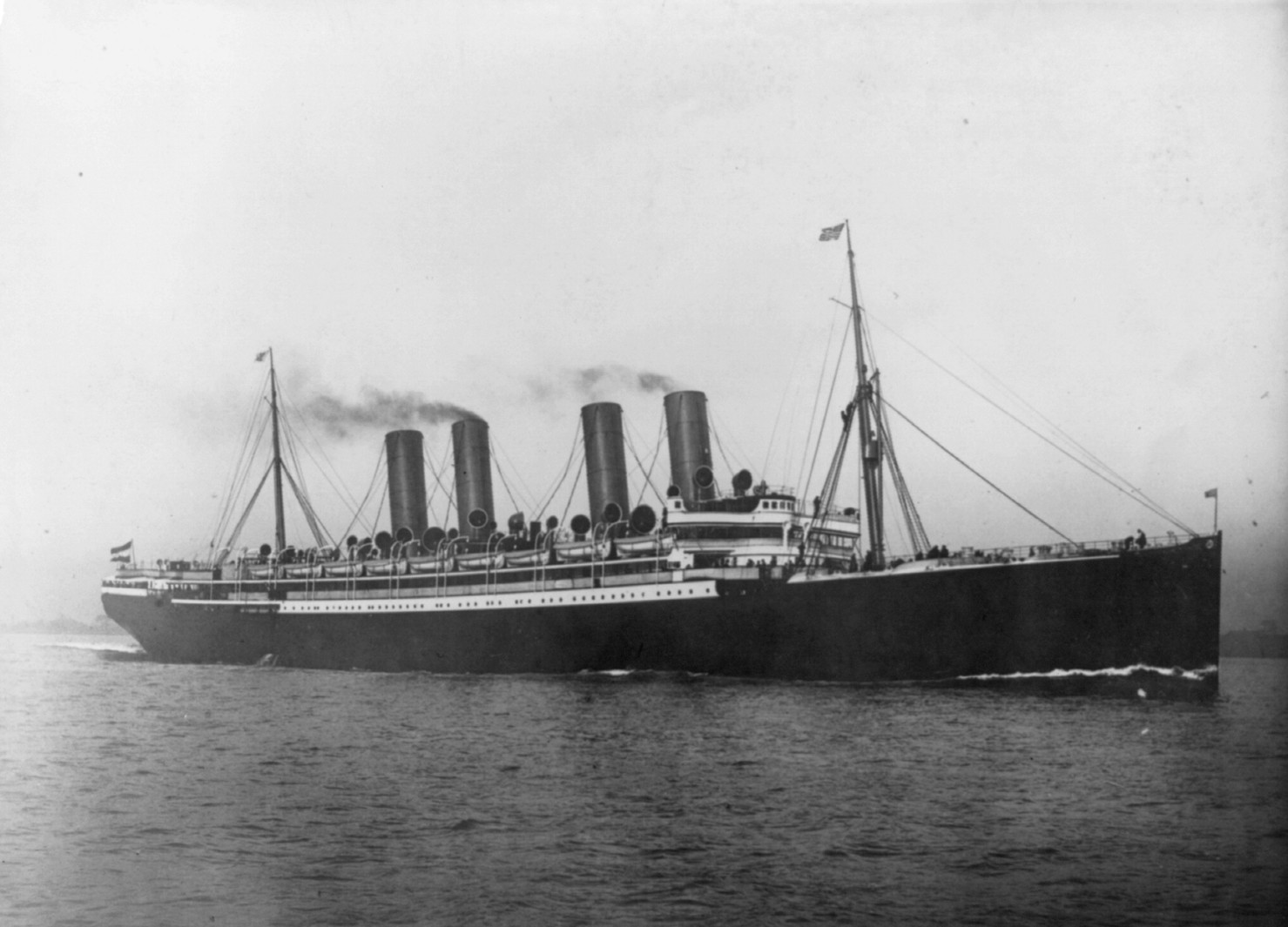
The SS Kaiser Wilhelm der Grosse was a pioneering German transatlantic ocean liner, launched in 1897 and in service until 1914. Built in Stettin for Norddeutscher Lloyd, she was notable for being the first four-funnel liner and is often considered the first "super liner." Her construction marked a significant shift in maritime engineering, emphasizing size, speed, and luxury. She measured 627.4 feet (191.2 meters) in length, with a beam of 66 feet (20.1 meters) and a depth of 35.8 feet (10.9 meters). Her tonnage was 14,349 GRT, and she displaced approximately 24,300 long tons (24,700 tons). She was equipped with two four-cylinder triple expansion steam engines powered by twin propellers, capable of reaching speeds over 20 knots (37 km/h). The vessel was notable for her luxurious interior, decorated in Baroque revival style, with statues, mirrors, tapestries, gilding, and portraits of the Imperial family, designed by Johann Poppe. She could carry up to 1,506 passengers, including 206 in first class, 226 in second, and 1,074 in third, with her crew initially numbering 488, later increased to 800. Her maiden voyage commenced on September 19, 1897, traveling from Bremerhaven to New York, establishing herself as a symbol of German maritime prowess. Kaiser Wilhelm der Grosse was the first liner equipped with a wireless telegraphy system, installed in 1900, enhancing communication and security. She held the Blue Riband for the fastest transatlantic crossing from 1898 to 1900, with an average speed of 22.3 knots. Her career included notable events such as a devastating fire in 1900 at Hoboken and a collision in Cherbourg in 1906, which resulted in casualties and hull damage. In 1913, she was refitted to serve solely as a third-class passenger vessel. During World War I, she was converted into an auxiliary cruiser, tasked with capturing enemy ships. Her service was short-lived; she was engaged in battle near Río de Oro in 1914, where she was ultimately scuttled by her crew to prevent capture after running out of ammunition. Her wreck was discovered in 1952, lying off the coast of Morocco, and partly dismantled. Kaiser Wilhelm der Grosse remains a significant symbol of early 20th-century maritime engineering and Germany’s naval ambitions.
This description has been generated using GPT-4.1-NANO based on the Vessel's wikidata information and then modified by ShipIndex.org staff.