
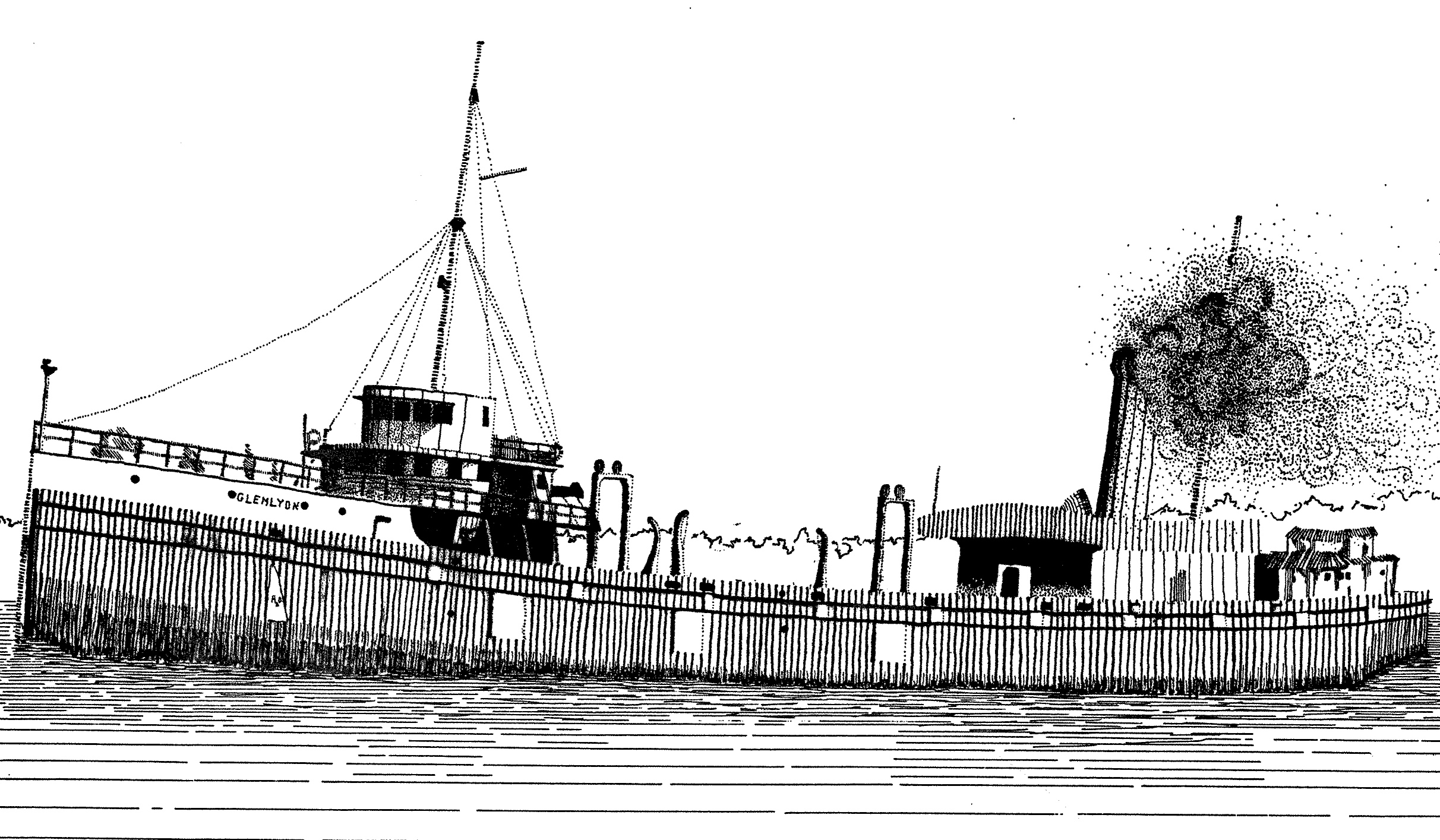
SS Glenlyon
Freighter sunk off the shore of Isle Royale in Lake Superior
Vessel Wikidata
* This information from Wikidata is available under the Creative Commons Attribution-ShareAlike License
The SS Glenlyon was a steel-hulled, steam-powered package freighter constructed in 1893 by F. W. Wheeler & Company. Originally named William H. Gratwick, the vessel was built for John Mitcell & Company of Cleveland, Ohio. It measured approximately 328 feet (100 meters) in length, with a beam of 42.5 feet (13 meters) and a depth of 20.5 feet (6.2 meters). The ship had a cargo capacity of around 3,800 tons and featured two decks and three masts. Notably, it was the first ship to be equipped with one of Wheeler’s newly developed 1,200-horsepower triple expansion steam engines, marking a technological advance in Great Lakes shipping. Throughout its service life, the Glenlyon underwent several ownership changes. Launched in February 1893, it initially functioned as a general freight carrier, hauling package freight, bulk cargo, and occasionally passengers—an uncommon role for Great Lakes vessels. In 1912, the ship was renamed Minnekahta by its new owners, and in 1914 it was acquired by the Great Lakes Transportation Company Ltd. of Midland, Ontario, which renamed it Glenlyon and registered it in Canada. On October 30, 1924, while carrying 143,000 bushels of wheat from Thunder Bay, Ontario, the ship encountered severe weather. After anchoring near the Welcome Islands, the vessel attempted to resume its voyage but was driven aground on a reef near Menagerie Island, off Isle Royale, in the early morning hours of November 1, 1924. The ship's distress call prompted rescue efforts; most of the crew was saved, though two crew members went overboard and were later found ashore. Salvage operations recovered approximately 75,000 bushels of cargo before the deteriorating condition of the wreck halted further efforts. By April 1925, the Glenlyon had broken in half and was fully submerged. Today, the wreck lies in 15 to 60 feet of water, largely intact and accessible to divers. The site includes recognizable sections such as the bow, engine room with drive shaft, propeller, boilers, and the cabin. The Glenlyon’s remains serve as a significant archaeological site and a rare example of transitional vessel design, reflecting the rapid evolution of freighter sizes during the late 19th and early 20th centuries. The wreck’s well-preserved state offers valuable insights into maritime history and Great Lakes shipbuilding.
This description has been generated using GPT-4.1-NANO based on the Vessel's wikidata information and then modified by ShipIndex.org staff.