
SS Shin'yō Maru
second World War Japanese hell ship
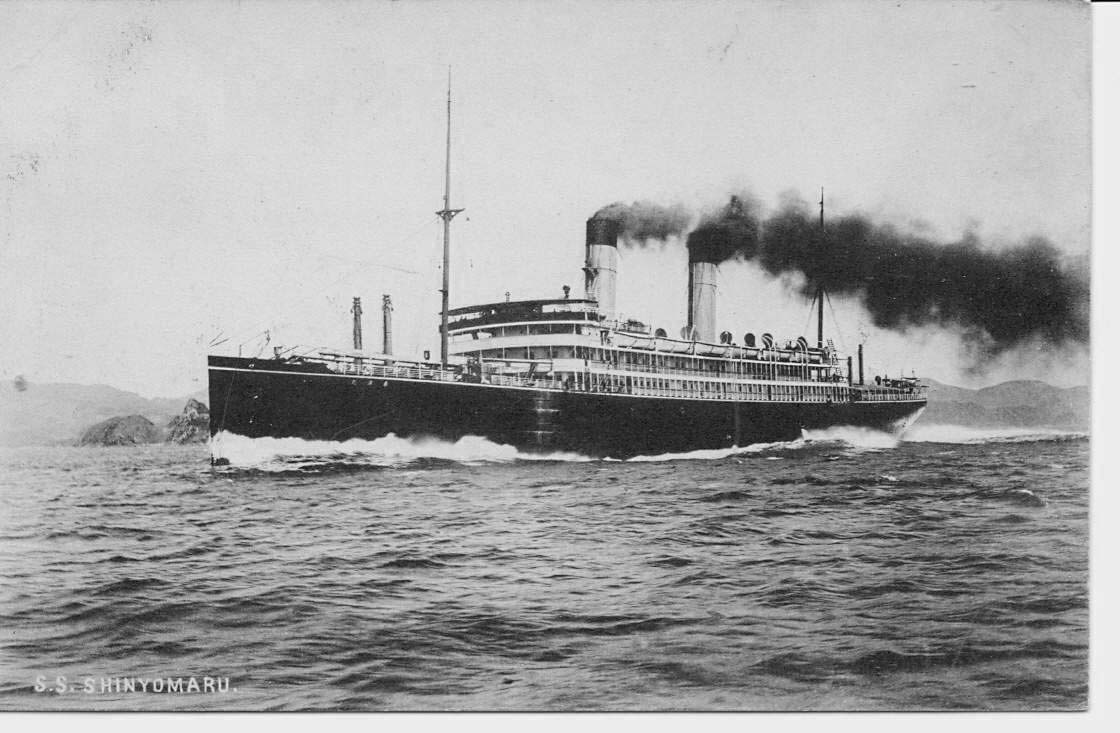
Vessel Wikidata
* This information from Wikidata is available under the Creative Commons Attribution-ShareAlike License
The SS Shin'yō Maru was a cargo steamship originally built in England in 1894 as Clan Mackay for the Clan Line. She measured 312 feet in length, with a beam of 40.2 feet and a depth of 24.7 feet. Her tonnage was 2,600 gross register tons (GRT) and 1,665 net register tons (NRT). Propelled by a single screw driven by a three-cylinder triple-expansion steam engine rated at 317 NHP, she was among the first Clan Line ships to feature a straight stem instead of a clipper bow. Throughout her extensive 50-year career, she changed ownership multiple times, beginning with her launch for Clan Line, then passing to the Adelaide Steamship Company in 1913 (renamed Ceduna), and later to Tung Tuck & Co in 1924 (renamed Tung-Tuck). Subsequently, she was acquired by Lee Yuen Steamship Co and renamed Chang Teh, then sold to China Hellenic Lines and renamed Pananis. Her register was primarily in Shanghai, and she was equipped with wireless telegraphy by 1922. During World War II, the vessel was seized by Japanese forces in 1941 and renamed Shin'yō Maru in 1943. She was repurposed as a Hell ship—used to transport prisoners of war (PoWs)—when, on September 7, 1944, she was torpedoed by the US submarine USS Paddle off Zamboanga, Mindanao. At the time, she was carrying approximately 750 PoWs, mostly Americans, along with Japanese guards. The attack resulted in the deaths of 668 PoWs, many of whom were killed either by the torpedoes or machine-gun fire from guards as they attempted to escape or were still onboard. Only 83 prisoners survived, some rescued by the surviving convoy ships and Filipino guerrillas. The sinking of Shin'yō Maru became a notable and tragic event of wartime maritime history, highlighting the brutal treatment of PoWs and the dangers faced by cargo ships used as prison transports. Commemorations, including memorials and stamps, have honored the victims of this maritime tragedy.
This description has been generated using GPT-4.1-NANO based on the Vessel's wikidata information and then modified by ShipIndex.org staff.