
Thomas Wilson
whaleback freighter
Vessel Wikidata
* This information from Wikidata is available under the Creative Commons Attribution-ShareAlike License
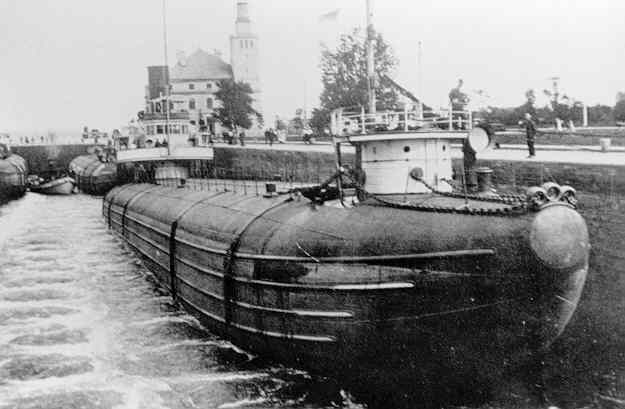
The Thomas Wilson was a notable whaleback freighter constructed in 1892, designed specifically for transporting bulk freight such as iron ore and grain across the Great Lakes. Measuring 308 feet (94 meters) in length with a beam of 38 feet (12 meters) and a hold depth of 24 feet (7 meters), the vessel was built of heavy steel plates double-riveted to steel angle frames, exemplifying the robust engineering typical of its era. Its hull featured distinctive conoidal bow and stern sections, with the central part of the hull being roughly cigar-shaped, characteristic of whaleback design. Propulsion was provided by two coal-fired Scotch boiler engines powering a three-cylinder, triple-expansion steam engine that drove a single screw propeller. The ship's deck was equipped with flush hatches, bolted directly to the surface without coamings, which was typical of the design but also a factor in its operational considerations. On June 7, 1902, while carrying a cargo of Mesabi iron ore, the Thomas Wilson departed Duluth harbor with its hatches not yet closed, under clear and calm weather conditions. The collision with the George Hadley, a wooden steamer inbound for Duluth, proved tragic. The George Hadley was directed to divert to Superior harbor but made an abrupt turn to port without proper signaling, leading the captain of the Thomas Wilson to respond with an immediate starboard turn. The collision struck the Wilson forward of its aft hatch, causing the vessel to roll over and sink within three minutes, resulting in the loss of nine crew members. The wreck now lies in 70 feet (21 meters) of water less than a mile outside the Duluth Ship Canal. The wreck remains remarkably intact, with the stern and bow largely preserved, including features such as the turret, capstan, and triple tow rings. The interior is largely undisturbed, offering valuable insights into early 20th-century maritime engineering. The site is historically significant and listed on the National Register of Historic Places, and artifacts are displayed at the Meteor Maritime Museum. The sinking of the Thomas Wilson led to the implementation of new operational procedures in Duluth harbor, reflecting its importance in maritime history.
This description has been generated using GPT-4.1-NANO based on the Vessel's wikidata information and then modified by ShipIndex.org staff.