
USCGC Northwind
1945 Wind-class icebreaker
Vessel Wikidata
* This information from Wikidata is available under the Creative Commons Attribution-ShareAlike License
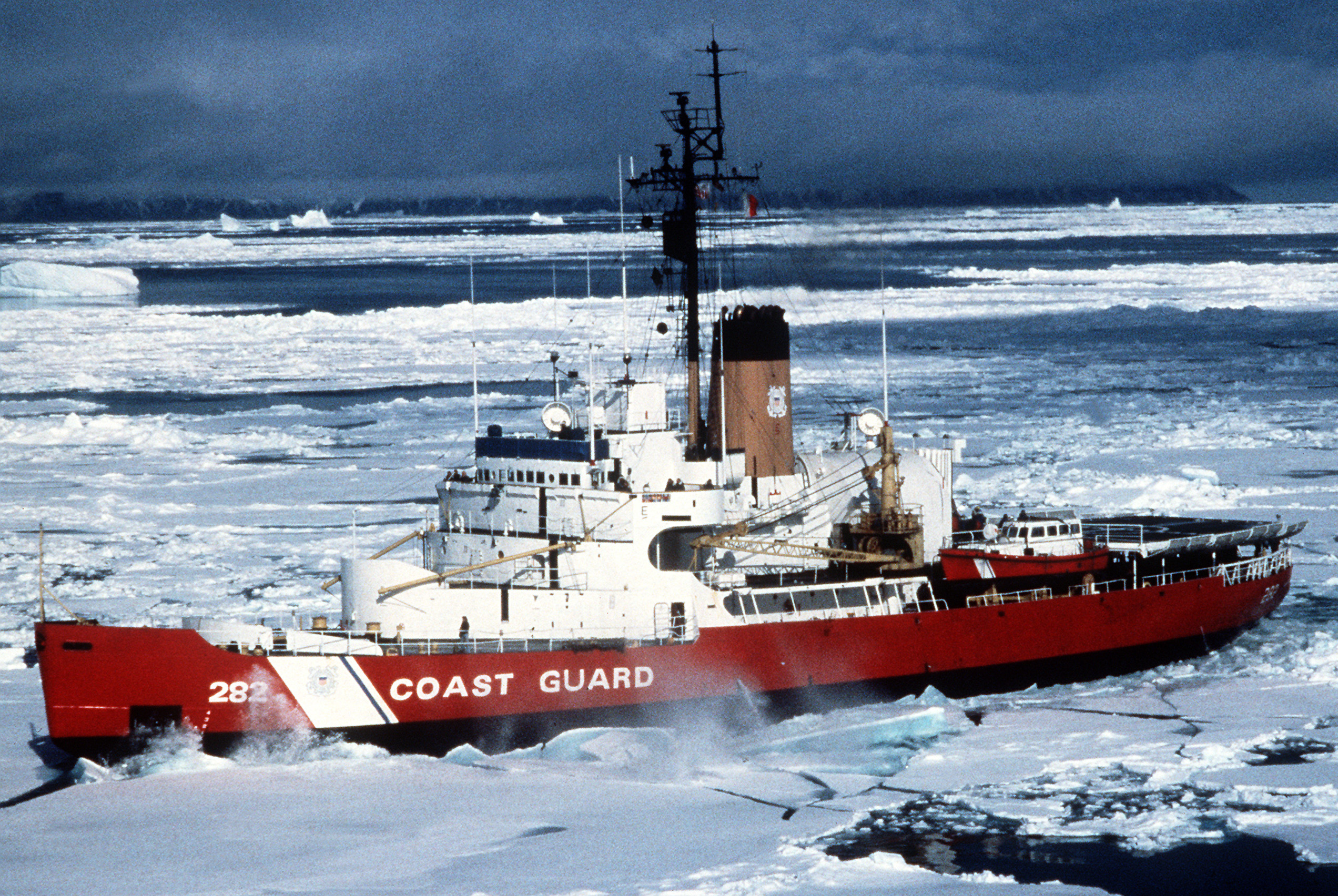
The USCGC Northwind (WAG/WAGB-282) was a distinguished Wind-class icebreaker built during World War II, notable for its robust construction and extensive service record. Laid down on July 20, 1944, at the Western Pipe and Steel Company shipyards in San Pedro, California, she was launched on February 25, 1945, and commissioned on July 28, 1945. Designed by Lieutenant Commander Edward Thiele and Gibbs & Cox, Northwind featured a hull engineered for strength and resilience, with a relatively short length relative to her powerful capabilities, including a rounded bottom and a cutaway forefoot. Her machinery was diesel-electric, chosen for controllability and damage resistance, and her hull was heavily armed due to her wartime origins, originally equipped with twin 5-inch/38 caliber deck guns, multiple Bofors 40 mm autocannons, Oerlikon 20 mm autocannons, and anti-submarine weapons like depth charges and Hedgehogs. Throughout her 44-year career, Northwind conducted a multitude of missions, including icebreaking, oceanography, hydrography, and cartography. She participated in historic operations such as Operation Nanook in 1946, assisting in establishing radio and weather stations in Greenland, and Operation Highjump in 1946-47, where she became the first U.S. Coast Guard cutter to cross the Antarctic Circle. Notably, she was involved in rescuing damaged submarines and ships trapped in ice during Antarctic expeditions and supported scientific research with helicopter deployments for the first time from an icebreaker. Northwind also played a significant role in Arctic and Bering Sea patrols, conducting extensive hydrographic surveys, oceanographic research, and environmental missions. She was instrumental in breaking ice in the Kara Sea during a classified 1965 mission attempting to transit the Northeast Passage, causing diplomatic tensions. Her notable achievements include setting icebreaking records, participating in Operation Deep Freeze expeditions to Antarctica, and assisting in law enforcement, including seizing marijuana in the Caribbean in 1984. Decommissioned on January 20, 1989, in Wilmington, North Carolina, Northwind was the last of the original Wind-class icebreakers and was scrapped in 1999. Her service was recognized with multiple commendations, underscoring her importance as a versatile and resilient vessel in U.S. maritime and polar operations.
This description has been generated using GPT-4.1-NANO based on the Vessel's wikidata information and then modified by ShipIndex.org staff.