
USS Barracuda
1924 V-boat
Vessel Wikidata
* This information from Wikidata is available under the Creative Commons Attribution-ShareAlike License
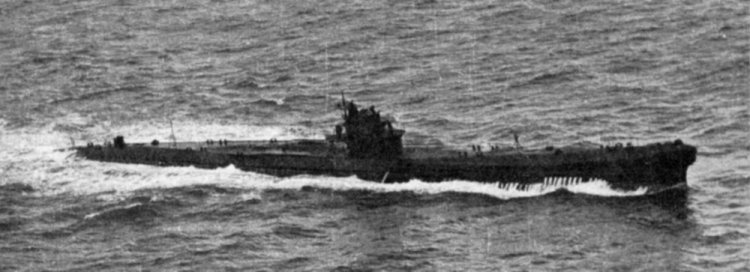
The USS Barracuda (SS-163), originally designated V-1 (SF-4), was the lead vessel of her class and the first of the U.S. Navy's "V-boats," launched on July 17, 1924, at Portsmouth Navy Yard. She was a significant early submarine designed to meet the fleet requirement of achieving a surface speed of 21 knots, enabling effective operations alongside battleships of the era. The vessel measured approximately 183 feet in length, with a beam of around 16 feet, and was initially equipped with two Busch-Sulzer direct-drive 6-cylinder 2-cycle main diesel engines, each producing 2,250 horsepower, complemented by auxiliary diesel engines for battery charging and submerged propulsion. Her early service included cruising along the New England coast and a notable voyage in the Caribbean in 1925. The vessel's armament was initially a 5-inch/51 caliber deck gun, later replaced by a 3-inch/50 caliber weapon during her service. On March 9, 1931, she was renamed Barracuda, and her hull classification was changed to SS-163. Throughout the 1930s, she operated along the west coast, in Hawaiian waters, and in the Caribbean, participating in routine fleet operations and a gravimetric survey expedition in the Caribbean in 1936. Recommissioned in September 1940, the Barracuda was assigned to the Pacific Fleet but soon returned to the Atlantic, conducting six wartime patrols southwest of Panama during World War II without engaging enemy targets. In 1942-43, she was converted into a cargo submarine by removing her main engines to increase cargo space, but this conversion proved ineffective for logistical purposes. She was primarily used for training and auxiliary duties from 1944 until her decommissioning at Philadelphia Navy Yard on March 3, 1945. The vessel was sold later that year, marking the end of her operational career. The USS Barracuda holds maritime significance as a pioneering "V-boat," reflecting early U.S. submarine design and operational concepts, and her conversion efforts illustrate the Navy’s experimentation during wartime to adapt existing vessels to new roles.
This description has been generated using GPT-4.1-NANO based on the Vessel's wikidata information and then modified by ShipIndex.org staff.