
USS Flint
1970 Kilauea-class ammunition ship
Vessel Wikidata
* This information from Wikidata is available under the Creative Commons Attribution-ShareAlike License
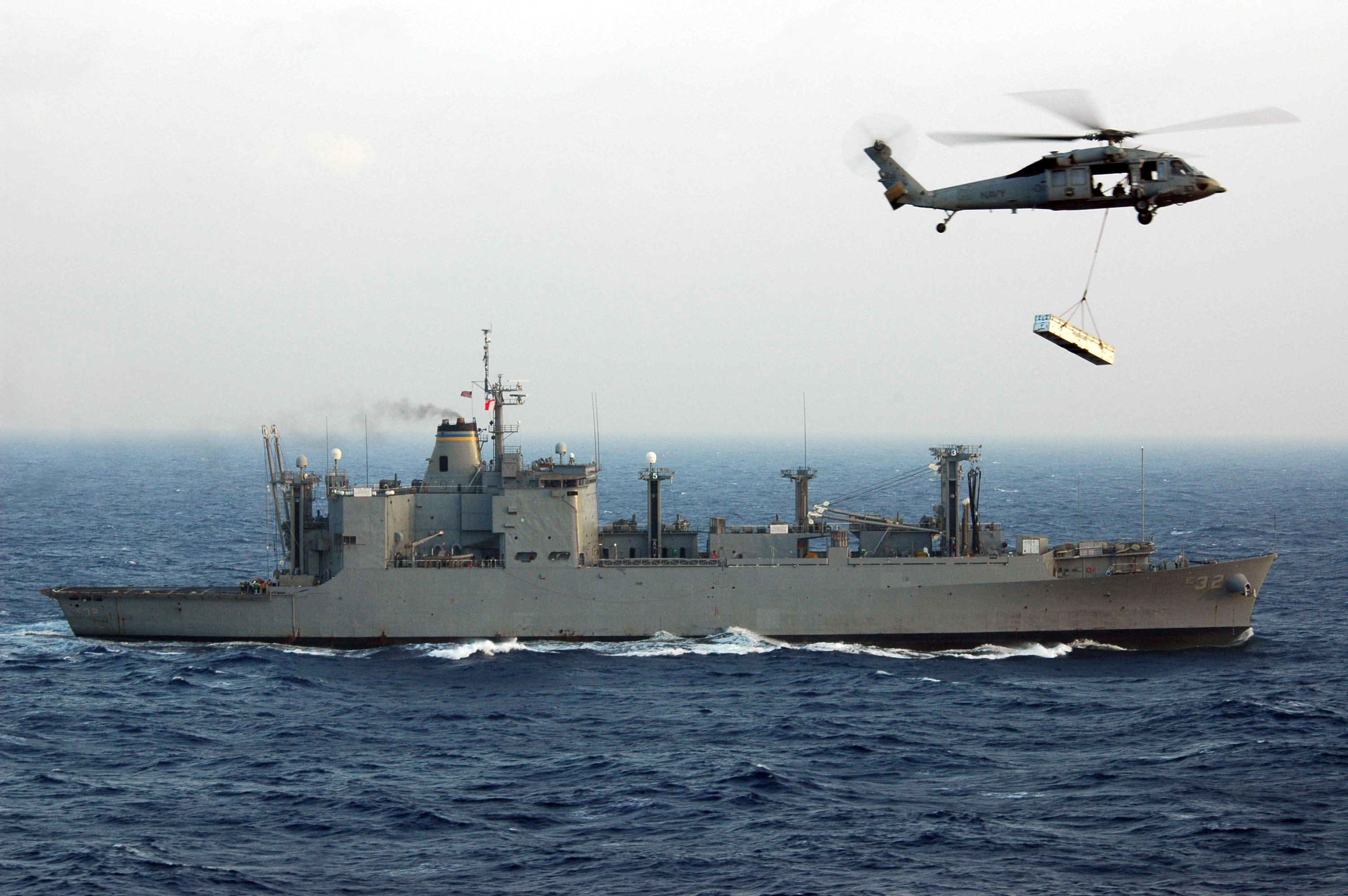
The USS Flint (AE-32/T-AE-32) is a Kilauea-class ammunition ship constructed by the Ingalls Nuclear Shipbuilding Division of Litton Industries in Pascagoula, Mississippi. Delivered to the U.S. Navy on August 30, 1971, at Charleston, South Carolina, Flint was designed to support naval operations with advanced features for ammunition replenishment and rapid deployment. The ship's hull incorporated a bulbous bow to enhance hydrodynamic efficiency, and it was equipped with the Automated Propulsion System (APS), a centralized, air-conditioned control console that provided real-time engine performance data and allowed direct engine control from the bridge. Flint's capabilities included underway replenishment at a sustained speed of 20 knots, enabling it to keep pace with fast-moving naval task forces. Its modern transfer facilities featured the STREAM tensioned replenishment method, which improved alongside fueling operations, and it could utilize two CH-46 Sea Knight helicopters for vertical replenishment (VERTREP), ferrying munitions and supplies to warships at sea. The ship's holds were specifically configured for easy handling and stowage of missiles, rocket boosters, and various munitions. It could accommodate over 400 personnel, providing substantial living and operational space. Throughout its service, Flint participated in numerous deployments, notably supporting the U.S. 7th Fleet during operations off Vietnam, including Operation Linebacker and Linebacker II, by resupplying aircraft carriers and destroyers. It also served in the Gulf of Aden during the Yom Kippur War, supported the evacuation during Operation Frequent Wind, and was involved in rescue operations, most notably saving 86 fishermen near Palawan during a typhoon in 1978. Decommissioned on August 4, 1995, after over 23 years of service, Flint was transferred to the Military Sealift Command as USNS Flint (T-AE-32). Under MSC, it operated with a smaller civilian crew and continued supporting overseas deployments in the Western Pacific and Persian Gulf. The USS Flint remains a notable example of a versatile and technologically advanced ammunition ship integral to U.S. naval logistics during the late 20th century.
This description has been generated using GPT-4.1-NANO based on the Vessel's wikidata information and then modified by ShipIndex.org staff.