
USS Independence
1814 three-masted ship of the United States Navy
Vessel Wikidata
* This information from Wikidata is available under the Creative Commons Attribution-ShareAlike License
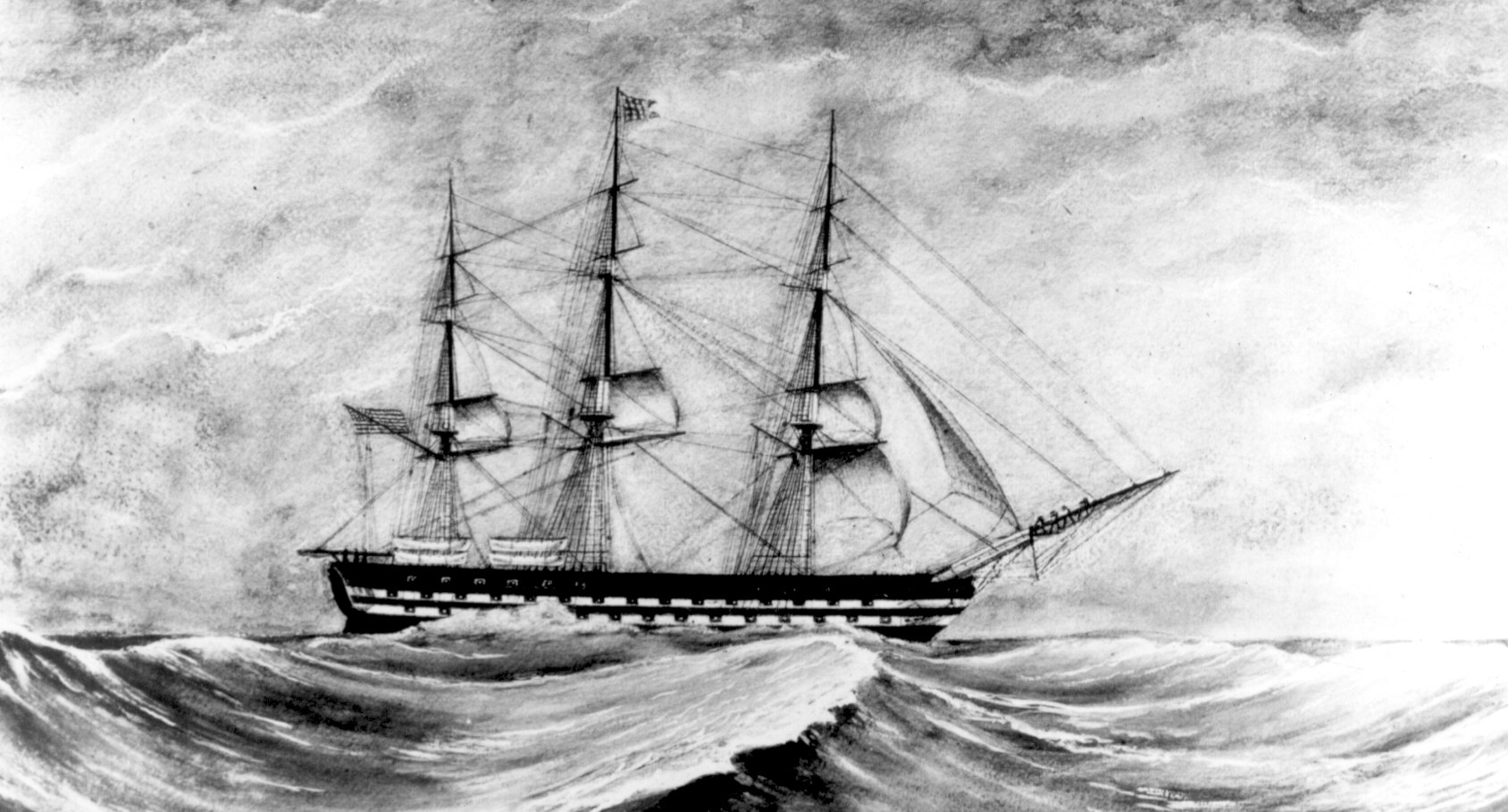
The USS Independence was a historic wooden-hulled, three-masted ship of the line, notable as the first vessel commissioned by the United States Navy. Launched on June 22, 1814, at the Boston Navy Yard, she was initially a 90-gun ship designed for line-of-battle tactics. Her construction featured a classic three-masted configuration, with a full wooden hull that exemplified early 19th-century naval architecture. During her early service, she was stationed with the USS Constitution in Boston but was unable to cruise immediately due to the British blockade, which included several 74-gun ships and the 98-gun HMS Boyne. Following the end of the War of 1812, Independence took part in a significant show of American naval strength in the Mediterranean, under Commodore William Bainbridge. She led a squadron to confront piracy and enforce peace treaties with the Barbary States, arriving in Mediterranean ports like Kronstadt, Russia, and participating in diplomatic visits including an audience with Tsar Nicholas I. Her presence demonstrated U.S. maritime power and added to the nation's prestige. In 1836, she was significantly modified—razeed, or cut down to a single covered fighting deck—reducing her from a 90-gun ship to a 54-gun frigate, which enhanced her speed and maneuverability. Recommissioned in 1837, she served as flagship in various squadrons, including the Mediterranean and Home Squadrons, and extended her reach to South America and the Pacific. She played a role in the Mexican-American War, participating in blockades, captures, and landings along the Mexican coast, including the capture of Guaymas and the occupation of Mazatlán. Throughout her service, Independence was notable for her speed and power, serving as a flagship for multiple commanders and participating in diplomatic and military missions across the Atlantic, Pacific, and South America. She was decommissioned in 1912, struck from the Navy List in 1913, and ultimately burned in 1915 after being sold, marking the end of her nearly century-long service and significance as a pioneering vessel in the U.S. Navy’s history.
This description has been generated using GPT-4.1-NANO based on the Vessel's wikidata information and then modified by ShipIndex.org staff.