
USS Tecumseh
1963 James Madison-class submarine
Vessel Wikidata
* This information from Wikidata is available under the Creative Commons Attribution-ShareAlike License
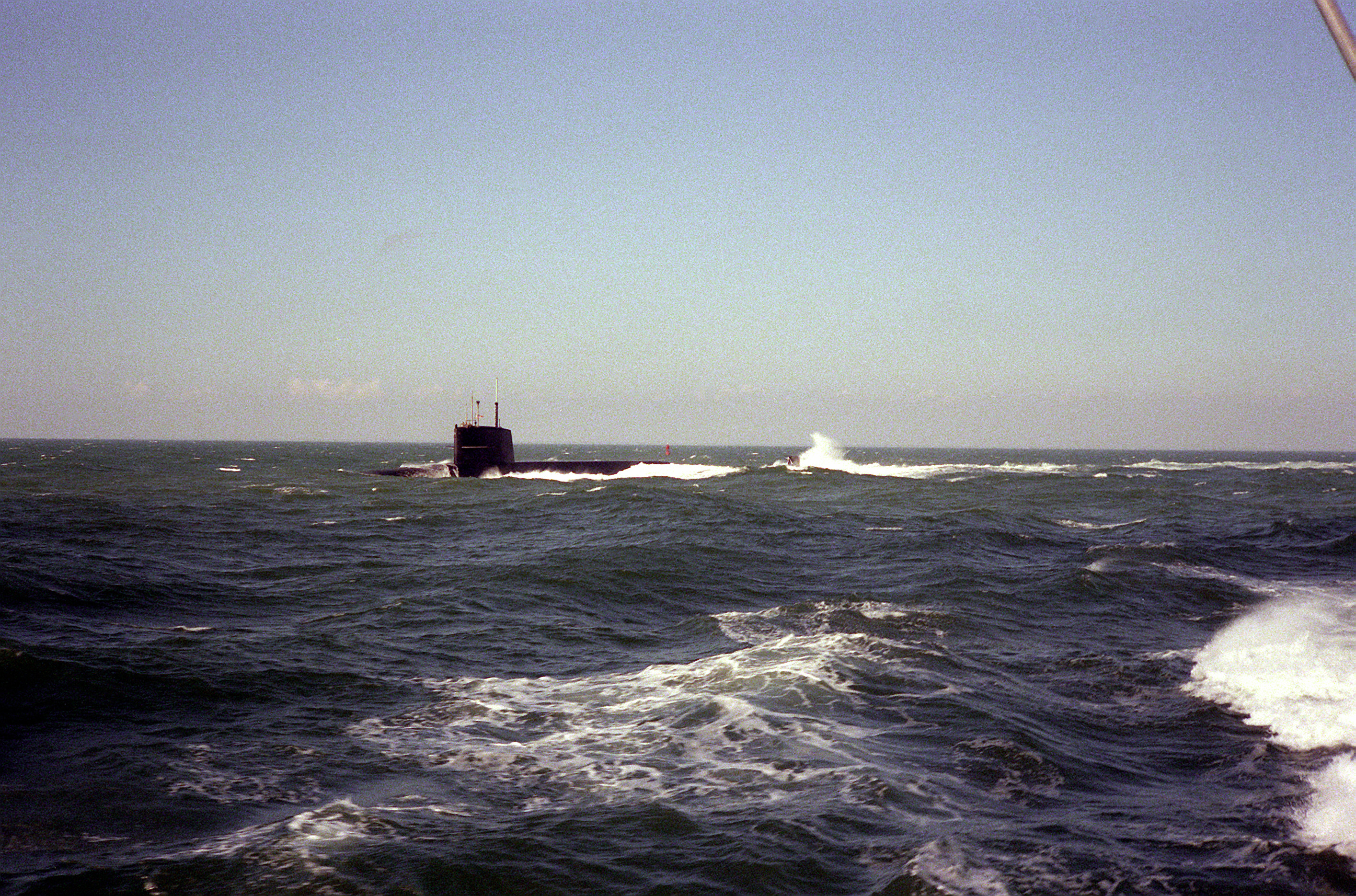
The USS Tecumseh (SSBN-628) was a James Madison-class ballistic missile submarine operated by the United States Navy. Constructed by the Electric Boat Division of General Dynamics in Groton, Connecticut, the keel was laid on June 1, 1962, following the award of the construction contract on July 20, 1961. Originally intended to be named William Penn, the vessel was renamed Tecumseh on April 11, 1962. Launched on June 22, 1963, and sponsored by Mrs. Mildred Inez (Tyner) Sikes, wife of Congressman Robert L. F. Sikes, the submarine was commissioned on May 29, 1964. The Tecumseh was initially based in Pearl Harbor, Hawaii, and began her service with deterrent patrols from the Pacific theater. Her first deployment to Guam commenced on December 17, 1964, and she conducted 21 strategic deterrent patrols in the Pacific by 1969. That year, she transferred to the Atlantic Fleet, traveling via Pearl Harbor and the Panama Canal to Newport News, Virginia, arriving on November 8, 1969. Soon after, she underwent a significant conversion to replace her Polaris ballistic missile system with the more advanced Poseidon missiles, completed in May 1970. Following overhaul, she was assigned to Charleston, South Carolina, as her new home port in February 1971. From her new base, Tecumseh conducted sea trials and deterrent patrols, including operations out of Holy Loch, Scotland, starting in February 1972, where she completed 18 patrols until 1976. She remained homeported in Charleston for much of the 1980s, with a refueling overhaul in 1983-1987, after which she successfully completed missile launches and sea trials. During the late 1980s and early 1990s, Tecumseh continued patrols from Charleston and Holy Loch, engaging in training and war games. Decommissioned on July 23, 1993, and stricken from the Naval Vessel Register, the vessel was dismantled at Bremerton, Washington, by April 1994 under the Nuclear-Powered Ship and Submarine Recycling Program. Notably, her starboard torpedo tubes and a piece of her pressure hull are preserved and displayed at the Naval Undersea Museum in Keyport, Washington, highlighting her maritime significance as a part of Cold War strategic deterrence.
This description has been generated using GPT-4.1-NANO based on the Vessel's wikidata information and then modified by ShipIndex.org staff.