
USS Macon
former rigid airship of the U.S. Navy
Vessel Wikidata
* This information from Wikidata is available under the Creative Commons Attribution-ShareAlike License
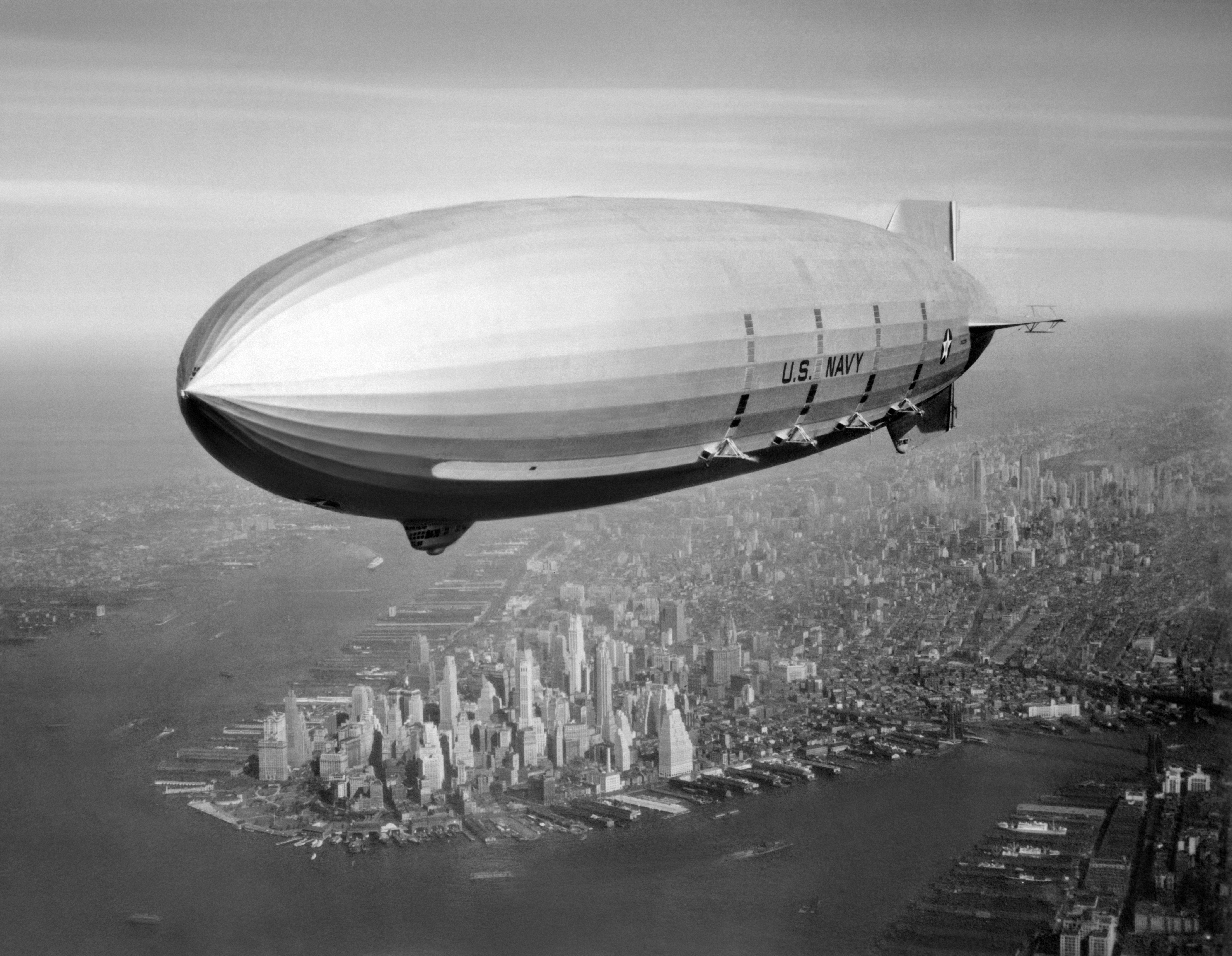
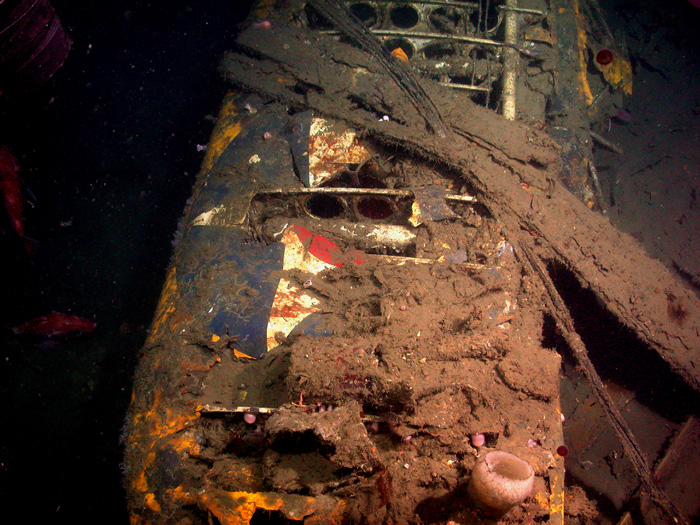
The USS Macon (ZRS-5) was a formidable rigid airship constructed by the Goodyear-Zeppelin Corporation at the Goodyear Airdock in Springfield Township, Ohio. Costing approximately $2.45 million at the time, it was one of the largest flying objects in the world, measuring about 785 feet in length—only slightly shorter than the Hindenburg—and notable for being among the largest helium-filled rigid airships, alongside her sister ship Akron. Built with a duraluminum hull reinforced by three interior keels, Macon was designed for scouting and served as a "flying aircraft carrier," capable of carrying up to five single-seat Curtiss F9C Sparrowhawk parasite biplanes or two-seat Fleet N2Y-1 trainers. Macon was powered by eight German-made Maybach VL II 12-cylinder engines, each producing 560 horsepower, mounted externally to drive propellers capable of thrust vectoring through rotatable blades, aiding in takeoff and landing. The gas cells, filled with helium and made from gelatin-latex fabric, provided buoyancy, while a system of slots in the hull facilitated water vapor condensation from engine exhaust gases for ballast management. Launched on 11 March 1933 and first flying on 21 April 1933, Macon quickly entered service, based initially at NAS Lakehurst before relocating to NAS Sunnyvale near San Francisco. She participated in fleet exercises and demonstrated her scouting capabilities, including locating ships for President Franklin D. Roosevelt during a secret voyage in 1934, showcasing the potential of naval airships in reconnaissance. However, her service was brief. On 20 February 1935, during a storm off California's Big Sur coast, Macon suffered structural failure caused by wind shear, resulting in the loss of her tail fin and puncture of gas cells. Despite efforts to control her descent, she was forced to ditch into the sea, where she sank approximately 20 miles off Point Sur. Only two crew members were lost, with the majority rescued. The wreckage remains within the Monterey Bay National Marine Sanctuary, listed on the U.S. National Register of Historic Places in 2010. The USS Macon exemplified the zenith of naval rigid airship design and operation, representing a significant technological achievement and a poignant chapter in American aeronautical history.
This description has been generated using GPT-4.1-NANO based on the Vessel's wikidata information and then modified by ShipIndex.org staff.