
SS Caribou
WWII Ship and Sinking Event
Vessel Wikidata
* This information from Wikidata is available under the Creative Commons Attribution-ShareAlike License
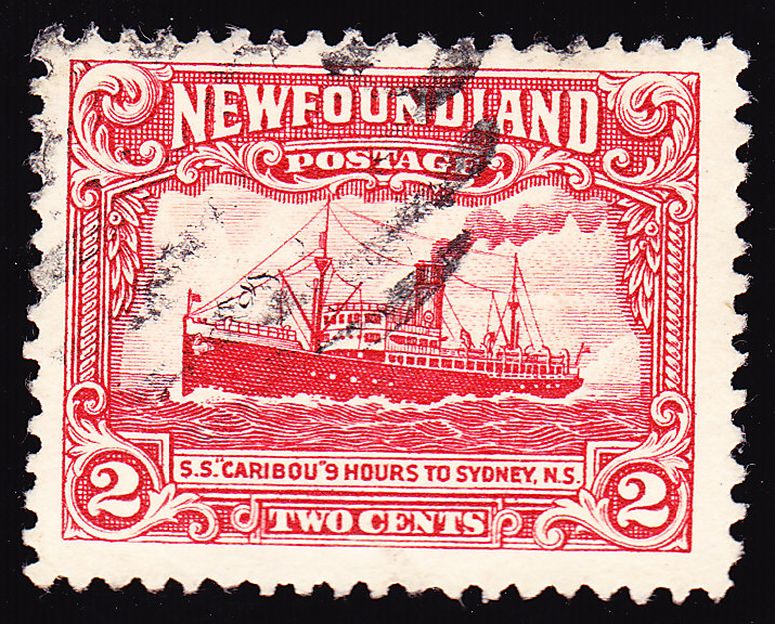
The SS Caribou was a Newfoundland Railway passenger ferry built in 1925 in Rotterdam, Netherlands. She was designed with an ice-breaking hull, allowing her to operate in the challenging conditions along the Newfoundland coast and assist during spring seal hunts. The vessel measured approximately 3,000 horsepower (2,200 kW) and could reach a speed of 14.5 knots (26.9 km/h; 16.7 mph) when fully loaded. Her features included steam-heat and electric lighting throughout her cabins, which were considered luxuries at the time, enhancing passenger comfort. Operated between Port aux Basques, in the Dominion of Newfoundland, and North Sydney, Nova Scotia, SS Caribou served from 1928 until her sinking in 1942. She was part of the three-times-weekly convoys organized by the Royal Canadian Navy, specifically the Sydney-Port aux Basques (SPAB) series, often conducted during darkness for security. On October 13, 1942, she was escorting a convoy led by the minesweeper HMCS Grandmère when she was attacked. Early in the morning of October 14, U-69, a German submarine patrolling the Gulf of St. Lawrence, torpedoed her approximately 20 nautical miles southwest of Port aux Basques. The attack caused her to sink within five minutes, resulting in the loss of 137 lives, including her captain, Benjamin Tavernor, and his two sons, who served as officers on board. Caribou carried 46 crew members and 191 passengers, comprising civilians and military personnel. The sinking was a significant event, highlighting the presence of war dangers in Canadian waters during WWII and resulting in extensive media coverage. Notably, the vessel's sinking is regarded as one of the most significant naval losses in Canadian-controlled waters during the war. In 1986, a replacement ferry named MV Caribou was launched to operate on the same route, marking a memorial tribute. The original SS Caribou’s memory was further honored in 2014 through a memorial service and the unveiling of her anchor, emphasizing her lasting historical and maritime significance.
This description has been generated using GPT-4.1-NANO based on the Vessel's wikidata information and then modified by ShipIndex.org staff.