
HMS Rosemary
1915 Arabis-class minesweeper
Vessel Wikidata
* This information from Wikidata is available under the Creative Commons Attribution-ShareAlike License
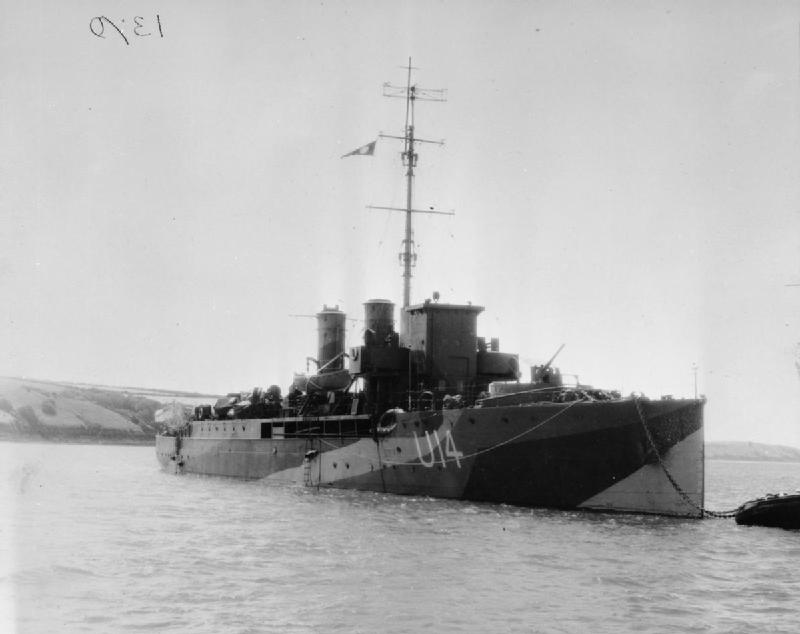
HMS Rosemary was an Arabis-class minesweeping sloop of the British Royal Navy, constructed by Richardson, Duck and Company at Thornaby-on-Tees. Laid down as yard number 661, she was launched on 22 November 1915 and commissioned into service on 5 February 1916. The vessel measured 268 feet (81.69 meters) in overall length, with a beam of 33 feet 6 inches (10.21 meters) and a draught of 11 feet (3.35 meters). Her displacement was approximately 1,200 long tons (1,200 tonnes). Rosemary was powered by two cylindrical boilers feeding a four-cylinder triple expansion steam engine rated at 2,000 indicated horsepower, enabling a top speed of 16 knots (30 km/h). Armament initially included two 4.7-inch (120 mm) guns or two 4-inch (102 mm) guns, along with two 3-pounder (47 mm) anti-aircraft guns. By 1929, her armament was listed as a single 4-inch gun and two 2-pounder "pom-pom" anti-aircraft guns, reflecting her evolving role. Rosemary’s early service involved minesweeping operations in the North Sea as part of the 10th Sloop Flotilla, replacing her sister ship Arabis after her sinking. Notably, on 4 July 1916, Rosemary was struck by a torpedo fired by German submarine U-63, which blew off her stern. She was subsequently towed back to port with the loss of three crew members. In 1917, she was transferred to escort duties in the Western Approaches and participated in mine-sweeping off Ireland. During this period, she was involved in the sinking of the minesweeper Mignonette after it struck a mine, and she also participated in convoy escort operations, notably during the attack on convoy HH.11. Post-World War I, Rosemary was engaged in mine clearance and survey operations, including the discovery of Rosemary Bank, a seamount named after her. During the 1930s, she performed fishery protection duties and conducted surveys near Rockall, supporting the fishing industry. She was placed in reserve at Portsmouth in 1930 and again in 1935, but recommissioned at the outbreak of World War II. During the Second World War, Rosemary served in convoy escort and patrol duties, including participating in Operation Aerial in 1940. Her service ended tragically in April 1943 when she responded to a storm incident involving landing craft off the Pembrokeshire coast; during rescue efforts, six crew members from Rosemary and all aboard the sinking landing craft perished. She was finally sold for scrap in 1947 and dismantled at Milford Haven.
This description has been generated using GPT-4.1-NANO based on the Vessel's wikidata information and then modified by ShipIndex.org staff.