
HMS Duke of Wellington
1852 Duke of Wellington-class first-rate ship of the line
Vessel Wikidata
* This information from Wikidata is available under the Creative Commons Attribution-ShareAlike License
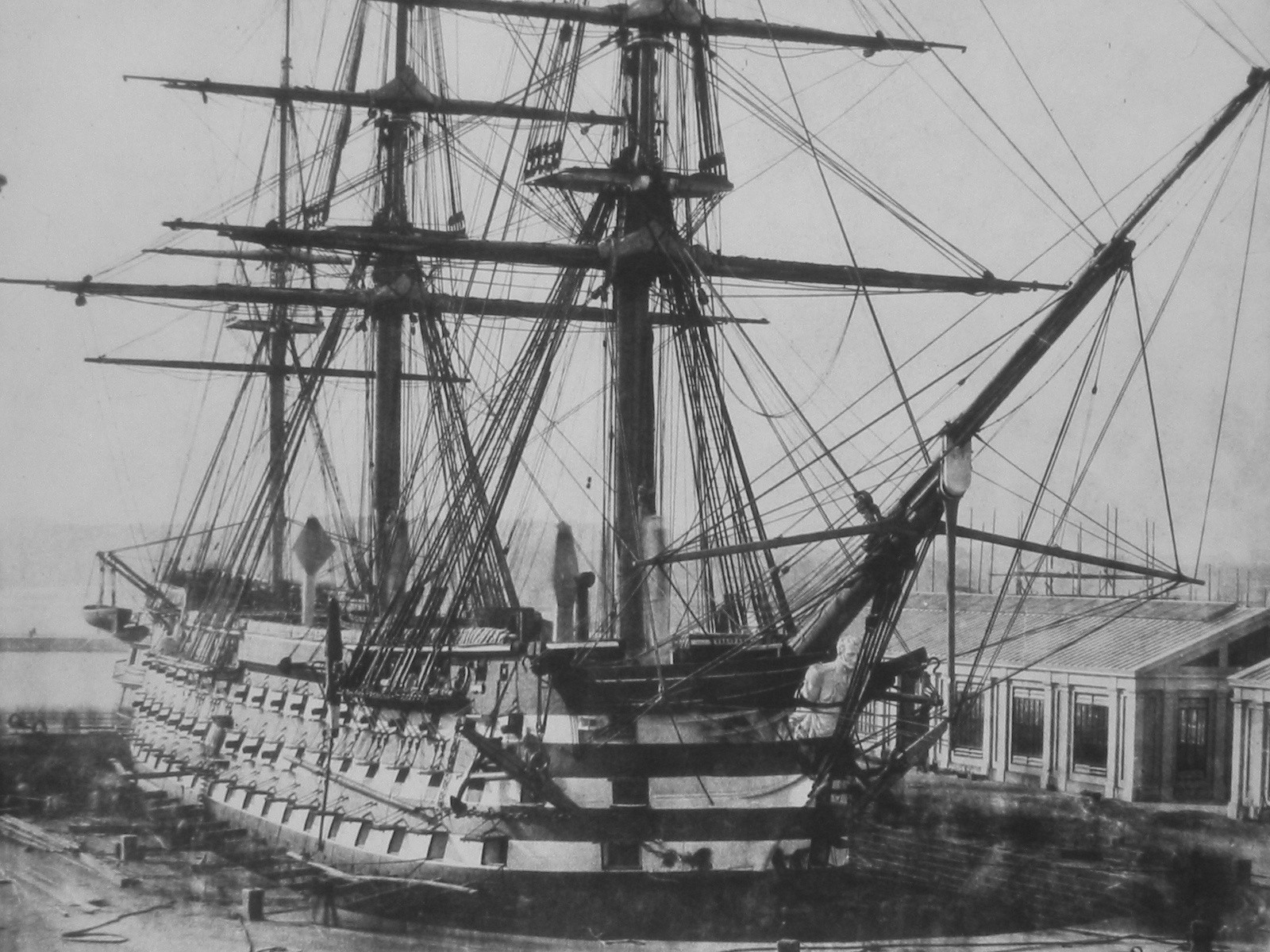
HMS Duke of Wellington was a remarkable 131-gun first-rate ship of the line of the Royal Navy, launched in 1852. As a symbol of a transitional era in naval warfare, she combined traditional sail power with early steam propulsion. The vessel measured approximately 240 feet (73.1 meters) in length and displaced about 5,892 tons. Her armament consisted of 131 cannon, primarily firing 32-pound balls, which contributed to a substantial broadside weighing a total of 382 tons. Constructed at Pembroke Dock, her design was initially conceived by Sir William Symonds but was modified after his resignation, with further adjustments made by Captain Baldwin Walker during a rapid construction program. Originally intended as a sailing ship, she was altered to include screw propulsion, utilizing 780-horsepower engines built by Robert Napier and Sons. Notably, her hull was lengthened by 30 feet during construction, and she was launched on September 14, 1852—the same day the Duke of Wellington died, after whom she was renamed and rechristened with a figurehead of the duke. HMS Duke of Wellington quickly became the most powerful warship in the world upon her completion in 1853, serving as the flagship of Sir Charles Napier. She participated actively in the Crimean War, notably leading the Baltic campaign in 1854 and later engaging in the bombardment of Sveaborg in 1855. Her steam engines, however, proved underwhelming, and structural issues limited her active service, leading to her decommissioning in 1856. Subsequently, she served as a guard ship and receiving ship at Devonport and Portsmouth, becoming a prominent and frequently photographed fixture, often depicted as the flagship of Sir Charles Napier. Throughout her later years, HMS Duke of Wellington remained an important naval presence, hosting dignitaries and participating in fleet reviews. She was finally sold for scrap in 1904, with remnants of her timbers later identified on the Thames foreshore. Her design influenced other navies, including Russia’s Imperator Nikolai I, underscoring her maritime significance as a symbol of naval transition from traditional wooden ships to steam-powered ironclads.
This description has been generated using GPT-4.1-NANO based on the Vessel's wikidata information and then modified by ShipIndex.org staff.