
Hikawa Maru
1930 Hikawa Maru-class ocean liner
Vessel Wikidata
* This information from Wikidata is available under the Creative Commons Attribution-ShareAlike License
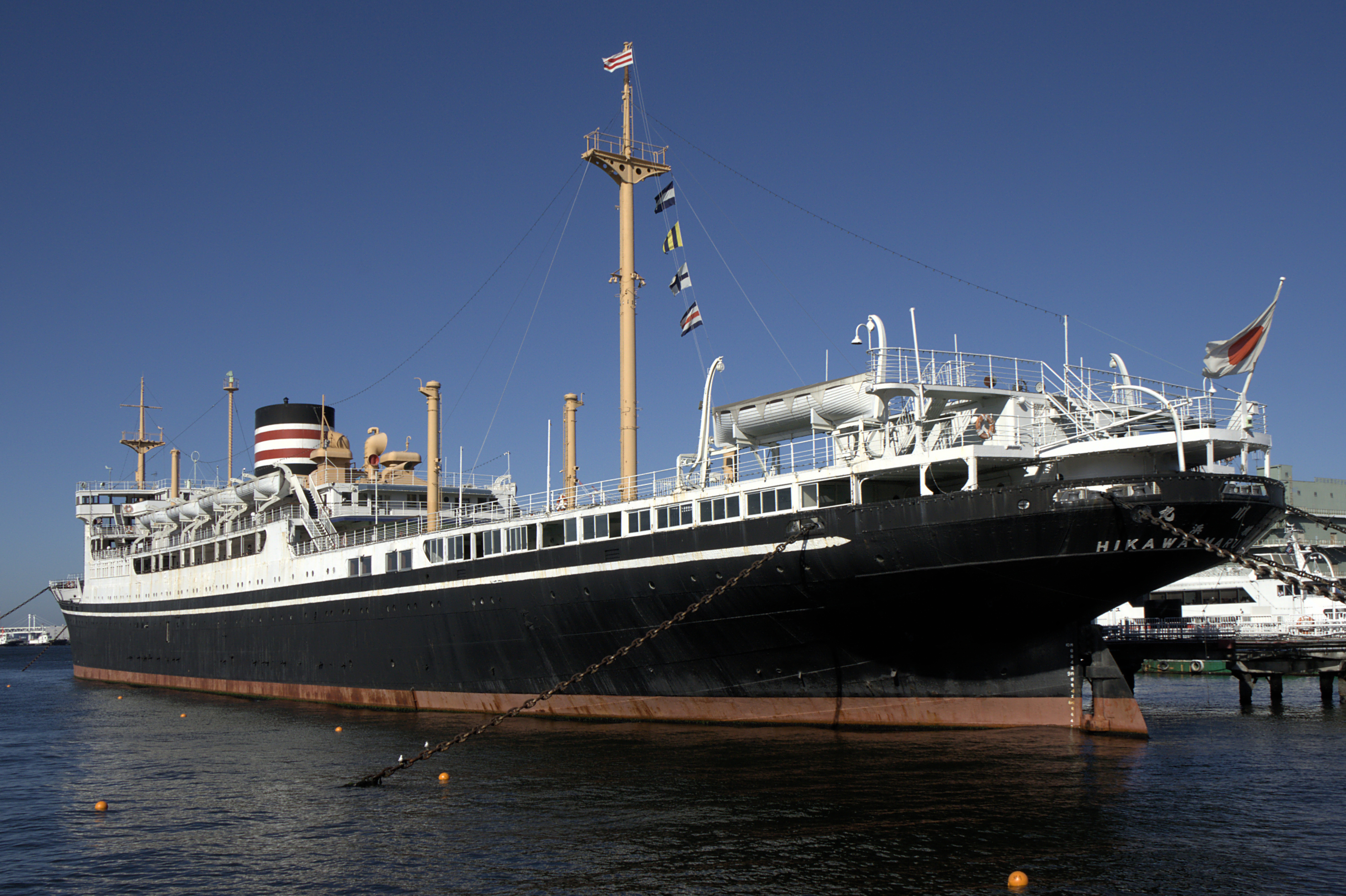
Hikawa Maru is a notable Japanese ocean liner built by the Yokohama Dock Company for the NYK Line, launched on 30 September 1929 and commencing her maiden voyage from Kobe to Seattle on 13 May 1930. She is a member of the Hikawa Maru-class, which included three ships named after Shinto shrines; her sister ships, Hie Maru and Heian Maru, were lost during World War II. Characterized by elegant Art Deco interiors and renowned service, Hikawa Maru earned the nickname "The Queen of the Pacific" due to her luxurious accommodations and reputation for quality service on her route between Yokohama, Vancouver, and Seattle. Constructed as a passenger liner, she measured approximately 11,600 gross register tons and featured a design that facilitated both passenger comfort and cargo capacity. She was notable for hosting prominent figures like Charlie Chaplin during his 1932 world tour. In her service before World War II, she transported refugees fleeing Nazi persecution, including Jewish refugees from Europe, and was involved in diplomatic and wartime activities, including the transportation of US refugees to Seattle and Japanese nationals in the lead-up to the Pacific War. In December 1941, Hikawa Maru was converted into a hospital ship by Mitsubishi Zosen, completing her conversion just before Japan's attack on Pearl Harbor. During the war, she survived three mine damages, notably in 1942, 1944, and 1945, making her one of only two large Japanese passenger ships to survive the conflict. She participated in repatriation efforts post-war, bringing Japanese soldiers and civilians home from various Pacific regions until August 1946. Post-war, she was used primarily as a cargo ship until her 1953 refit as an ocean liner, resuming her route between Yokohama and Seattle until decommissioning in 1960. Subsequently, she was permanently berthed at Yamashita Park in Yokohama in 1961 as a museum, hotel, and restaurant. Her historical significance was recognized in 2016 when she was designated an Important Cultural Property of Japan. Today, Hikawa Maru remains a preserved maritime artifact, symbolizing Japan’s maritime history and heritage.
This description has been generated using GPT-4.1-NANO based on the Vessel's wikidata information and then modified by ShipIndex.org staff.