
HMS Seahorse
1932 S-class submarine
Vessel Wikidata
* This information from Wikidata is available under the Creative Commons Attribution-ShareAlike License
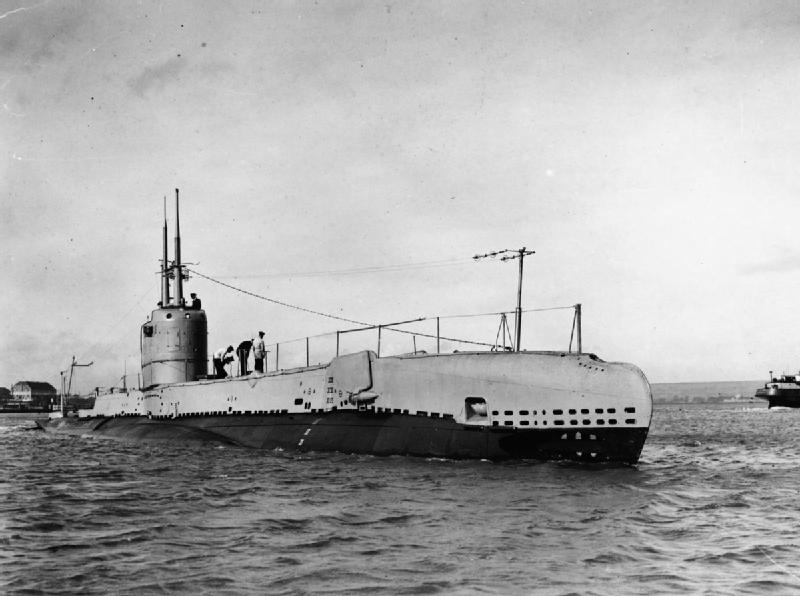
HMS Seahorse was a first-batch S-class (Swordfish class) submarine built for the Royal Navy in the early 1930s. Ordered on 13 March 1931 and laid down at Chatham Dockyard on 14 September 1931, she was launched on 15 November 1932 and commissioned on 2 October 1934, carrying the pennant number 98S. The vessel measured 202 feet 6 inches (61.7 meters) in length, with a beam of 24 feet (7.3 meters) and a mean draught of 11 feet 11 inches (3.6 meters). She displaced 730 long tons (740 tons) on the surface and 927 long tons (942 tons) submerged. The submarine was powered by two 775-horsepower diesel engines for surface travel and two 650-horsepower electric motors for submerged operation, reaching speeds of 13.75 knots on the surface and 10 knots underwater. Her operational range was approximately 3,700 nautical miles at 10 knots on the surface. HMS Seahorse was armed with six 21-inch (533 mm) torpedo tubes in the bow, with an additional six reload torpedoes, totaling twelve torpedoes. She also carried a 3-inch (76 mm) deck gun. The vessel had a crew of 38 officers and ratings and could dive to depths of 300 feet (91.4 meters). During her service in World War II, Seahorse was assigned to the 2nd Submarine Flotilla, operating primarily off Norway. Her first patrol, southwest of Stavanger, resulted in an erroneous attack by a British aircraft, damaging her ASDIC dome. She conducted subsequent patrols, including sightings of German U-boats U-36 and U-21, although torpedo attacks missed their targets. Her final patrol began on 26 December 1939 near Heligoland Bight, with her mission to patrol off Heligoland and then shift to the Elbe mouth. She did not return as scheduled, and post-war investigations suggest she was likely sunk either by a German minesweeper or rammed by a Sperrbrecher, possibly on 29 December 1939 or 7 January 1940. HMS Seahorse holds the distinction of being the first British submarine lost to enemy action in WWII, marking a significant, though tragic, chapter in maritime warfare history.
This description has been generated using GPT-4.1-NANO based on the Vessel's wikidata information and then modified by ShipIndex.org staff.