
HMAS Castlemaine
1941 Bathurst-class corvette
Vessel Wikidata
* This information from Wikidata is available under the Creative Commons Attribution-ShareAlike License
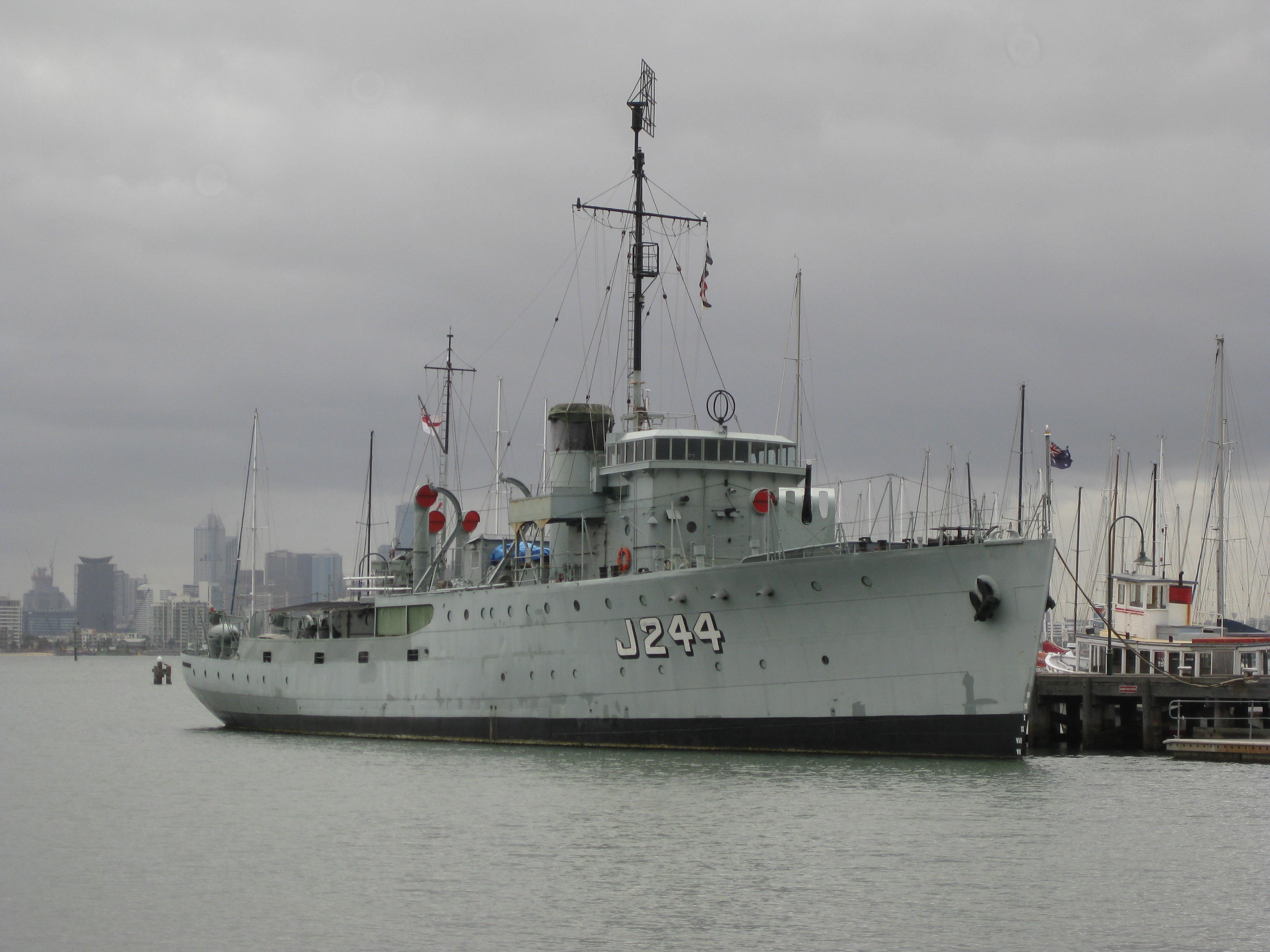
HMAS Castlemaine (J244/M244/A248) is a Bathurst-class corvette constructed during World War II, named after the city of Castlemaine, Victoria. Laid down at HMA Naval Dockyard in Williamstown, Victoria, on 17 February 1941, she was launched on 7 August 1941 and commissioned into the Royal Australian Navy on 17 June 1942. The vessel has a displacement of approximately 680 tons and was designed for multi-role duties, including anti-submarine warfare and mine-sweeping. Her top speed reached 15.5 knots, with a range of 2,850 nautical miles, and she was initially armed with a BL 4-inch Mk IX gun, later replaced in 1943 by a QF 4-inch Mk XIX gun. Throughout her wartime service, Castlemaine operated primarily in Australian waters, New Guinea, and Timor. She participated in convoy escort missions, training exercises, and notably supported Allied guerrilla operations in Timor. A significant event was her involvement in the attempted evacuation of Dutch troops, Portuguese civilians, and Australian commandos from Betano Bay in late November 1942. During this operation, Castlemaine, alongside sister ships and Kuru, engaged Japanese aircraft in air battles, with Armidale being sunk in the process. Castlemaine also saw action during attacks by Japanese aircraft in December 1942 and was credited with defending against multiple air raids. Post-1943, her duties shifted to minesweeping, escorting convoys between Queensland and New Guinea, and survey work in Australian waters. She sailed to Hong Kong for the Japanese surrender in September 1945, after which she was decommissioned into reserve on 14 December 1945. The vessel was later used as a training hulk at HMAS Cerberus. In 1973, Castlemaine was transferred to the Maritime Trust of Australia and converted into a museum ship. Today, she is berthed at Gem Pier, Williamstown, Victoria, serving as a static memorial and museum exhibit. Her preservation allows visitors to explore her engine room and learn about her wartime service, making her a significant surviving example of the Bathurst-class corvettes.
This description has been generated using GPT-4.1-NANO based on the Vessel's wikidata information and then modified by ShipIndex.org staff.